
You are using an out of date browser. It may not display this or other websites correctly.
You should upgrade or use an alternative browser.
You should upgrade or use an alternative browser.
Meteoroid explosion in Russia
- Thread starter Suzy
- Start date


And the mass - it was 10,000 tonnes.
I took Scorpius' elements and made a little addon that uses a copy of the Phobos mesh and a config file with the correct mass. Have fun!
It's a fiery ride, especially since there is no drag encoded for the meteor, so it hits the ground and then skips back out into space!
I took Scorpius' elements and made a little addon that uses a copy of the Phobos mesh and a config file with the correct mass. Have fun!
It's a fiery ride, especially since there is no drag encoded for the meteor, so it hits the ground and then skips back out into space!
Attachments

RGClark
Mathematician
- Joined
- Jan 27, 2010
- Messages
- 1,635
- Reaction score
- 1
- Points
- 36
- Location
- Philadelphia
- Website
- exoscientist.blogspot.com
Meteor expert Clark Chapman and former astronaut Rusty Schweickart urge U.S. military to re-initiate sharing of satellite detections of meteor impacts:
Russian Meteor Fallout: Military Satellite Data Should Be Shared.
by Leonard David, SPACE.com’s Space Insider Columnist
Date: 18 February 2013 Time: 09:03 AM ET
http://www.space.com/19846-russian-m...atellites.html
From links in the article, the military formerly did share this information but the policy was changed in 2009. This is important because the satellites reportedly have the capability to detect meteors down to 1 meter wide and below. This would well have the capability to determine if close asteroid flybys result in increased meteor impacts.
That video I linked previously or ones like it may also be able to address this question:
An Asteroid's Parting Shot.
By Phil Plait
Posted Tuesday, Feb. 19, 2013, at 8:00 AM
http://www.slate.com/blogs/bad_astr...eroid_2012_da14_seen_in_time_lapse_video.html
The video shows asteroid 2012 DA14 slowing moving through the frame,
and meteors and artificial satellites streaking rapidly through the frame.
Assuming we are able to distinguish the satellites, perhaps by
knowing already their positions, then perhaps we can determine if the
number of meteors shown here are higher than normal.
Better would be longer exposures that include at least the time
period of the Russian meteor impact.
Bob Clark

MaverickSawyer
Acolyte of the Probe
And the mass - it was 10,000 tonnes.
I took Scorpius' elements and made a little addon that uses a copy of the Phobos mesh and a config file with the correct mass. Have fun!
It's a fiery ride, especially since there is no drag encoded for the meteor, so it hits the ground and then skips back out into space!
NNNNAAAAAAAAAANNNN SPEEED!!!!! :lol:
RGClark
Mathematician
- Joined
- Jan 27, 2010
- Messages
- 1,635
- Reaction score
- 1
- Points
- 36
- Location
- Philadelphia
- Website
- exoscientist.blogspot.com
That video I linked previously or ones like it may also be able to address this question:
An Asteroid's Parting Shot.
By Phil Plait
Posted Tuesday, Feb. 19, 2013, at 8:00 AM
http://www.slate.com/blogs/bad_astr...eroid_2012_da14_seen_in_time_lapse_video.html
The video shows asteroid 2012 DA14 slowing moving through the frame,
and meteors and artificial satellites streaking rapidly through the frame.
Assuming we are able to distinguish the satellites, perhaps by
knowing already their positions, then perhaps we can determine if the
number of meteors shown here are higher than normal.
Better would be longer exposures that include at least the time
period of the Russian meteor impact.
The Fireballs of February.
Feb. 22, 2012
Note this was from last year, not this year in regard to this...
They all hail from the asteroid belt—but not from a single location
in the asteroid belt," he says. "There is no common source for these
fireballs, which is puzzling."
This isn't the first time sky watchers have noticed odd fireballs in
February. In fact, the "Fireballs of February" are a bit of a legend
in meteor circles.
Brown explains: "Back in the 1960s and 70s, amateur astronomers
noticed an increase in the number of bright, sound-producing deep-
penetrating fireballs during the month of February. The numbers seemed
significant, especially when you consider that there are few people
outside at night in winter. Follow-up studies in the late 1980s
suggested no big increase in the rate of February fireballs.
Nevertheless, we've always wondered if something was going on."
Indeed, a 1990 study by astronomer Ian Holliday suggests that the
'February Fireballs' are real. He analyzed photographic records of
about a thousand fireballs from the 1970s and 80s and found evidence
for a fireball stream intersecting Earth's orbit in February. He also
found signs of fireball streams in late summer and fall. The results
are controversial, however. Even Halliday recognized some big
statistical uncertainties in his results.
...
http://science.nasa.gov/science-news/science-at-nasa/2012/22feb_februaryfireballs/
February's unusual meteor and asteroid encounters. But what's key is
the article notes this has been noticed in other February's.
The article suggests greater number of fireballs in February. It also
mentions they are typically slow, long-lasting, and penetrate deep in
the atmosphere. I don't know about the slow part, but the long-lasting
and deep penetration aspects could be due to larger meteors during
February's.
If there is an association with the 2012 DA14 asteroid, then since
it has approximately a year long orbit, this could explain why the
fireballs are seen frequently in February. Note it was discovered
last year in February also during a close approach.
Also notable are the two orbital crossings per year of the asteroid
2012 DA14 with respect to the Earth's orbit:
[FONT=Courier, Monospaced]La Sagra Observatory discovers very near-Earth asteroid 2012 DA14.
Posted By Jaime Nomen
2012/03/27 05:20 CDT [/FONT]
[FONT=Courier, Monospaced]The preliminary orbit shows that 2012 DA14 has a very Earth-Like
orbit with a period of 366.24 days, just one more day than our
terrestrial year. The orbit is nearly circular but just elliptical
enough to jump inside and outside of the path of Earth two times per
year. Because objects move faster when they are closer to the Sun, the
relative motion is similar to some sports races: when the Earth is on
the outer track, it is overtaken by 2012 DA14, but when the asteroid
crosses Earth's orbit, Earth overtakes it and passes by. It is during
the orbit crossings when the closest encounters occur, and when there
is potential for a future impact.
http://www.planetary.org/blogs/guest-blogs/3418.html [/FONT]
Astronomer Steven Willner noted this could result in rather close approaches
on the second crossing as well. This could explain the observation of Ian
Halliday that there seems to be a statistical increase also in late Summer and Fall.
In any case, the Air Force needs to release its satellite detections
of these fireballs. For one thing they might be able to detect the
meteors before they have any appreciable interaction with the
atmosphere. For large meteors, of oblong shape, the atmospheric
interaction could alter their direction, thus giving a misleading
interpretation of their original orbits.
Bob Clark
Last edited by a moderator:

- Joined
- May 14, 2008
- Messages
- 10,547
- Reaction score
- 347
- Points
- 173
- Location
- East Sussex
- Website
- blog.gdwnet.com
- Preferred Pronouns
- He/Him
Staff Note: Thread Re-opened. Please keep this on topic!

Arvil
Well-known member
- Joined
- Apr 20, 2008
- Messages
- 518
- Reaction score
- 453
- Points
- 78
- Location
- Pennsylvania, USA
- Preferred Pronouns
- he/him
They say not from the asteroid, different orbital paths, it was coincidental. Defensive radar probably doesn't look very high, they would've had less than a minute or two warning, not enough even to advise the boss.
The US Congress had a hearing connected to the meteoroid called "Threats from Space: A Review of U.S. Government Efforts to Track and Mitigate Asteroids and Meteors". Witnesses were Obama's senior science adviser John P. Holdren, General William L. Shelton for the Air Force and NASA administrator Charlie Bolden.
There are transcript here, which include a lot of interesting facts in my opinion, so if you have a few minutes...
There are transcript here, which include a lot of interesting facts in my opinion, so if you have a few minutes...

- Joined
- Nov 20, 2007
- Messages
- 11,964
- Reaction score
- 765
- Points
- 188
http://www.bbc.co.uk/news/science-environment-23284371
Scientists have released microscopic images of fragments of the meteorite that hit central Russia in February.

- Joined
- Oct 30, 2009
- Messages
- 14,019
- Reaction score
- 4
- Points
- 0
RIA Novosti: Russian Team Recovers Huge Meteorite Chunk From Urals Lake
SPACE.com: Huge Chunk of Russia Meteorite Pulled from Lake
Discovery News: Huge Meteor Chunk Pulled from Lake in Russia
Universe Today: Possible Huge Meteorite Fragment Recovered From Russian Fireball
Phys.org: Russia pulls huge 'Chelyabinsk meteor chunk' from lake (Update 2)
NBC News Science: Oops! Huge Russian meteorite breaks after it's pulled out of lake
Sky & Telescope: Huge Meteorite Pulled from Russian Lake
LiveScience: Huge Chunk of Russia Meteorite Pulled from Lake
SPACE.com: Huge Chunk of Russia Meteorite Pulled from Lake
Discovery News: Huge Meteor Chunk Pulled from Lake in Russia
Universe Today: Possible Huge Meteorite Fragment Recovered From Russian Fireball
Phys.org: Russia pulls huge 'Chelyabinsk meteor chunk' from lake (Update 2)
NBC News Science: Oops! Huge Russian meteorite breaks after it's pulled out of lake
Sky & Telescope: Huge Meteorite Pulled from Russian Lake
LiveScience: Huge Chunk of Russia Meteorite Pulled from Lake
- Joined
- Oct 30, 2009
- Messages
- 14,019
- Reaction score
- 4
- Points
- 0
Sky & Telescope: New Chelyabinsk Results Yield Surprises

Prior to hitting Earth, the Chelyabinsk impactor had an orbit very similar to that of the unnamed asteroid 86039.
Jiří Bobrovička
Prior to hitting Earth, the Chelyabinsk impactor had an orbit very similar to that of the unnamed asteroid 86039.
Jiří Bobrovička

- Joined
- Jul 7, 2012
- Messages
- 1,519
- Reaction score
- 1,542
- Points
- 128
- Location
- Monte Hermoso - Argentina
- Website
- github.com
- Preferred Pronouns
- he/him
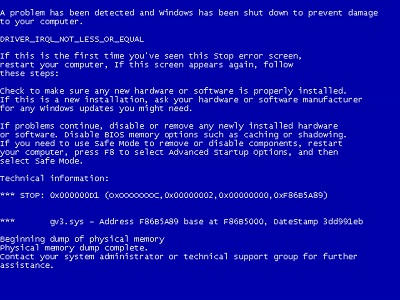
I read in a news article that 100000m2 of Windows [see image] have been damaged in Chelyabinsk. It must be amazing to see such an event. I read in a newspaper already confirmed the remains of the Russian meteorite.
Similar threads

- Replies
- 0
- Views
- 387
General Question
XR-2 Virtual cockipit working MFDs
- Replies
- 0
- Views
- 908

- Replies
- 3
- Views
- 974


- Replies
- 0
- Views
- 1K