

Using Orbiter as an "aid" in helping to understand the LRO images of the Apollo sites
After NASA recently released the images of the Apollo landing sites photographed from lunar orbit by LRO, a friend of mine argued about the "weird" shape of the LM descent stage shadows, and this is what I told him.
First, I told him that these are "late lunar afternoon shots", and thus the shadows are cast towards the east, rather than the west (as they were during the day of the landings). And the fact that it's late afternoon, means that the shadows are long. My friend still couldn't believe that was a descent stage shadow. Then I asked him, "So how is it supposed to look like?" and he said "I dunno, how is it supposed to look like?" Then I told him this...
"If I can show to you a simulation of the descent stage casting a long eastward shadow on the surface, and you compared the shapes of the shadows, and found out they match, would you then believe me?" And he said "Yes." So here's what I did...
I loaded up AMSO, landed AP11, then shot Neil and Buzz out in the ascent stage back to LO (LOL, yes really, I was interested in the descent stage, not THEM hahaha)...I then did a time accel 1000x, to the "lunar late afternoon" (which is why GET is at 400+ hours hehehe!)
So first I took a snapshot of a simulated descent stage sitting on the lunar surface at Tranquility Base (more exact coordinates, closer to the two smaller craters instead of the large one in the east which Neil "hurriedly visited" before EVA closeout).
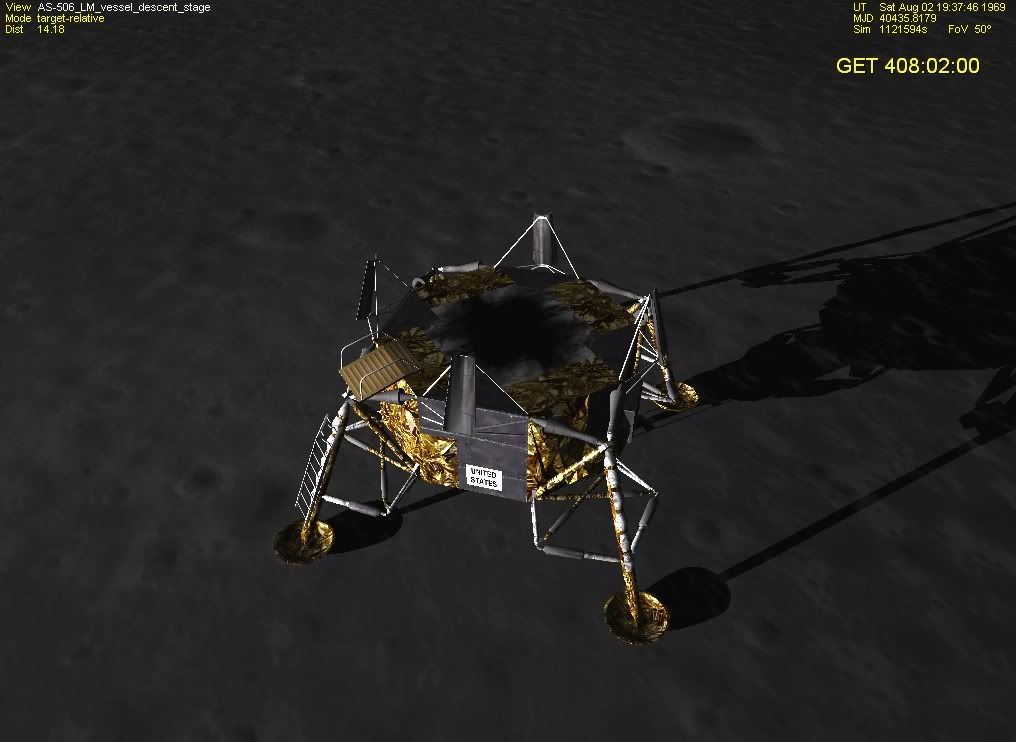
Then, I pulled out a bit and took another snapshot, and explained to him the shape of the shadow...
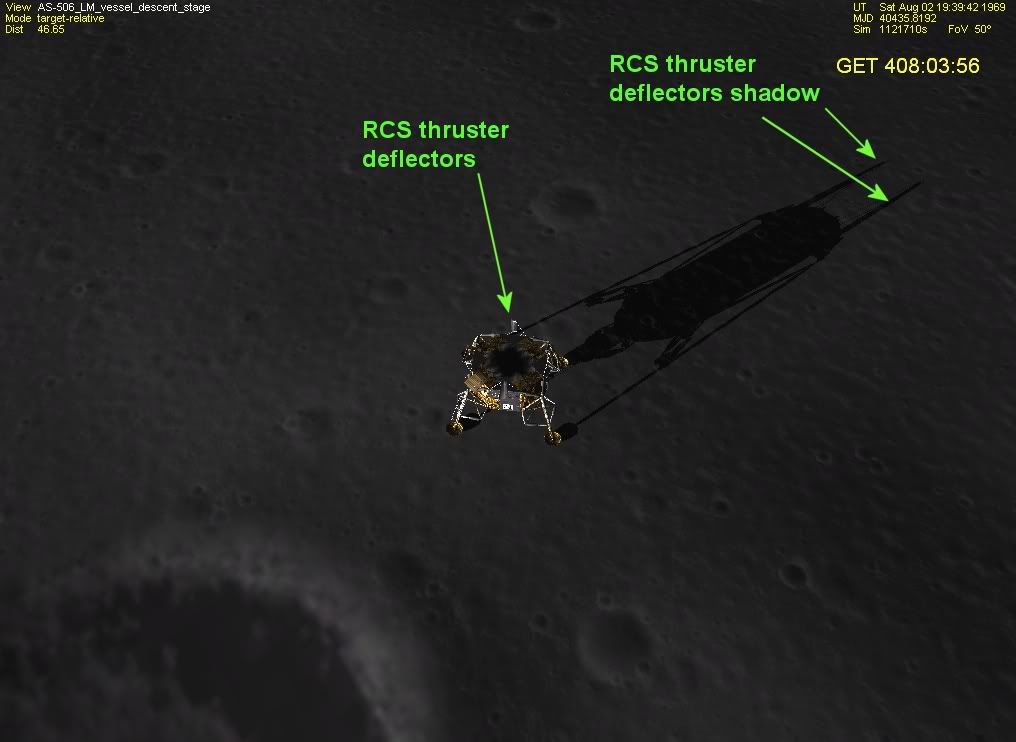
There are two "horns" on the shadow, created by the RCS thruster deflector mounts. Why am I emphasizing this? Because, when I pull out further...
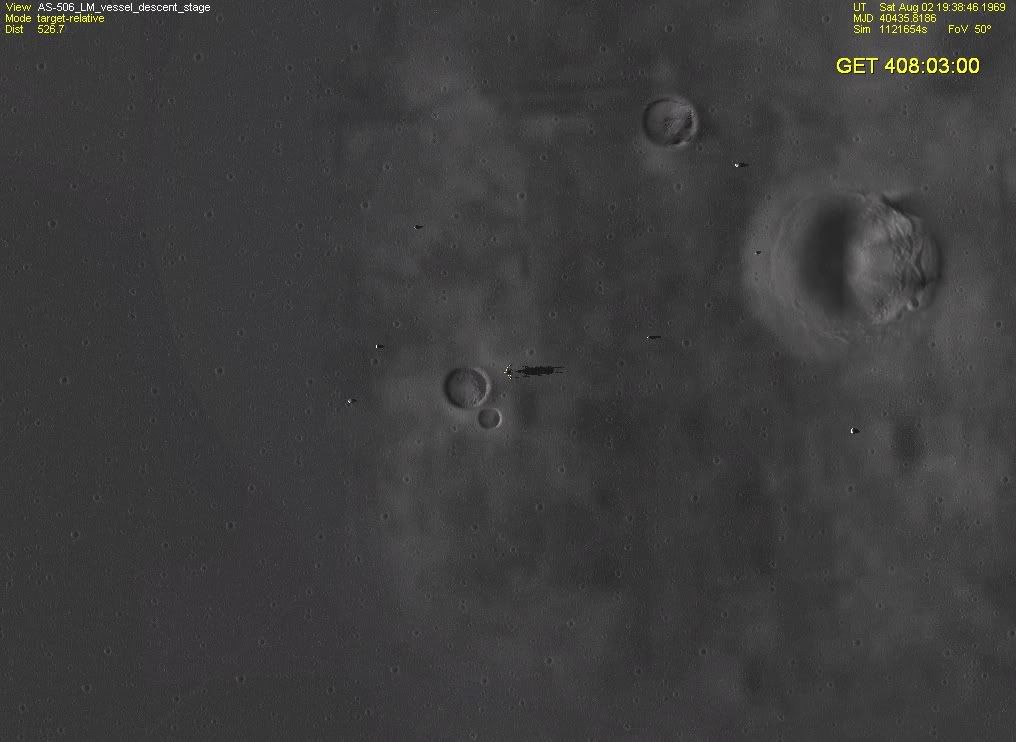
...and view the site from directly above, you can actually see those two horns at the eastern end of the long shadow.
Now compare the above image with this:

I then said to my friend, "Now compare the shadows...pretty close huh." And he was dumbstruck.
So in this case, Orbiter became a really handy "visual aid tool" to explain why the shadows look the way they are.
-RODION
After NASA recently released the images of the Apollo landing sites photographed from lunar orbit by LRO, a friend of mine argued about the "weird" shape of the LM descent stage shadows, and this is what I told him.
First, I told him that these are "late lunar afternoon shots", and thus the shadows are cast towards the east, rather than the west (as they were during the day of the landings). And the fact that it's late afternoon, means that the shadows are long. My friend still couldn't believe that was a descent stage shadow. Then I asked him, "So how is it supposed to look like?" and he said "I dunno, how is it supposed to look like?" Then I told him this...
"If I can show to you a simulation of the descent stage casting a long eastward shadow on the surface, and you compared the shapes of the shadows, and found out they match, would you then believe me?" And he said "Yes." So here's what I did...
I loaded up AMSO, landed AP11, then shot Neil and Buzz out in the ascent stage back to LO (LOL, yes really, I was interested in the descent stage, not THEM hahaha)...I then did a time accel 1000x, to the "lunar late afternoon" (which is why GET is at 400+ hours hehehe!)
So first I took a snapshot of a simulated descent stage sitting on the lunar surface at Tranquility Base (more exact coordinates, closer to the two smaller craters instead of the large one in the east which Neil "hurriedly visited" before EVA closeout).
Then, I pulled out a bit and took another snapshot, and explained to him the shape of the shadow...
There are two "horns" on the shadow, created by the RCS thruster deflector mounts. Why am I emphasizing this? Because, when I pull out further...
...and view the site from directly above, you can actually see those two horns at the eastern end of the long shadow.
Now compare the above image with this:
I then said to my friend, "Now compare the shadows...pretty close huh." And he was dumbstruck.
So in this case, Orbiter became a really handy "visual aid tool" to explain why the shadows look the way they are.
-RODION

 :thumbup:


