News Roscosmos News

http://en.rian.ru/science/20111018/167817258.html

ISS could be used for satellite assembly until 2028

16:18 18/10/2011
STAR CITY (Moscow region), October 18 (RIA Novosti)

The service life of the International Space Station (ISS) may be extended until 2028, a Russian space official said on Tuesday.

The service life of the ISS ends in 2015 but participants of the project - Canada, the European Union, Japan, Russia and the United States – have recently agreed to extend its operation until at least 2020.

“At present, experts have been instructed to find ways to extend the station’s service life until 2028,” Alexei Krasnov, the head of Roscosmos manned spaceflight programs, told the participants of the Space Forum 2011.

The orbital station could be used as an assembly line and a launch pad for experimental spacecraft, including small satellites, he said.

“These are going to be small-size satellites, but we will be able to launch them from the ISS to a variety of orbits,” Krasnov said.

NASA earlier called the ISS “an anchor for the future of human space exploration” and a major component of the U.S. human space program.

I think the idea would make a sense only after turning the ISS into an orbiting rocket fuel depot (or attaching a module of such purpose to it).
 
Parabolic Arc: Roscosmos, Kazkosmos Move Forward on Angara Launch Complex at Baikonur:
The Kazakh and Russian space agencies have signed an agreement to move forward with the long-delayed construction of the Baiterek launch complex at Baikonur, the official state news agency Kazinform reports. The launch pad will host Russia’s new Angara family of rockets.

The deal was signed in Mosow by Roscosmos head Vladimir Popovkin and his Kazakh counterpart, Talgat Musabayev, at the end of a two-day inter-governmental gathering to discuss operations and future plans for the Kazakh-owned and Russian-leased spaceport in Central Asia.

Kazinform reports that the two sides approved “tactical-technical requirements” for the Baiterek complex, which was begun in December 2004. These requirements have changed over the years as the Angara project advanced.

The key challenge now is to find funding to complete the project. According to RussianSpaceWeb.com, the cost of the project has ballooned from $223 million to $1.248 billion over the past seven years, with completion slipping to 2017. Officials have left funding decisions to a later time, Kazinform reports:
Kazkosmos submitted a draft protocol to Roscosmos on amendments to the Intergovernmental Agreement on the establishment of the cosmodrome “Baikonur” space rocket “Baiterek” on December 22, 2004, revised in the light of co-financing the project.

In turn, the Federal Space Agency informed Kazkosmos on progress in the comprehensive analysis of financial costs for the program “Angara-Baiterek”.

T. Musabayev and V. Popovkin agreed that to identify a specific decision on the issue of co-financing the project “Angara-Baiterek” they will hold another meeting in the town of Baikonur in December 2011.

{...}
 
Parabolic Arc: Roscosmos Moves to Address Space Industry’s Acute Personnel Problems:
While leaving it largely to the Europeans to update the world on the Phobos-Grunt rescue efforts, Roscosmos public affairs officials have been able to focus on many other topics, including upcoming launches, spacecraft testing and ISS operations. The space agency’s own Phobos-Grunt updates have been — like the spacecraft’s communications sessions — rare, brief and largely uninformative.

On Friday, Roscosmos published a lengthy account of a Thursday meeting of the space agency’s Board of Personnel chaired by agency Head Vladimir Popovkin. The gathering included a who’s who of the Russian federal government and space industry, including the ministers of science and education, the heads of major corporations, and rectors of the nation’s largest universities.

The topic: how to address the acute problem of attracting highly-trained replacement workers to take low-paying jobs in a badly decayed Russian space industry.

Excerpts from the press release follow:
Popovkin addressed the Board with a report which highlighted the main issues in the personnel policy of rocket-space industry. In particular, he noted that the present situation in the industry is that the “continued aging of scientific and technical personnel, the outflow of highly skilled specialists, reduced the level of income in the organization of the industry of graduates of vocational education institutions …At any moment we could lose academic schools, which were created for more than half a century of domestic space,” he said.

In order to improve personnel management and ensure the implementation of key strategic scientific and industrial challenges facing organizations Roscosmos and aerospace industry in 2012 and subsequent years required to develop and implement a comprehensive program to improve the means to motivate staff and raise the prestige of the organization, the main objectives which should be:
  • Increase in staff interest in high-performance work;
  • Develop a system of compensation and benefits staff;
  • Linking the material to promote the employee with his contribution to the final result;
  • Increasing the flexibility and diversity of material reward employees through the development of additional benefits;
  • Increasing the share of indirect compensation and non-traditional rewards.
Agreed to revise the program personnel, attracting and retaining young workers in the industry, with particular emphasis on attracting graduates of vocational schools, as well as to interact with educational institutions on a contractual basis, providing for the establishment of joint research and educational laboratories, the participation of enterprises in the training process, and teachers – in the production process, benefits and guarantees of undergraduate and graduate students, etc.

Corporate parent organizations tasked to consider creating enterprise-based research and education center with the participation of Russian universities, and first of all federal and national research university that can provide research on companies activities, training and involvement in the company of highly qualified scientific personnel.

There will also be revised order of the formation, training and appointment of employees in the personnel reserve, and part of a personnel reserve for replacement of heads of enterprises, referring to the inclusion of workers under the age of 40 years.

The heads of organizations that have graduate programs, graduate instructed to intensify, to analyze the causes of the end of postgraduate training without defending a thesis, and to take appropriate measures to create conditions for the preparation of graduate theses.

Together with trade unions or labor collective council was requested to review the position on social security and social guarantees for employees of the industry, primarily young professionals. This measure is one of the factors of motivation, incentives to attract and retain employees in the enterprise, which must be considered when concluding a collective agreement.

It was also decided to take steps to improve significantly the performance of quantitative and qualitative composition of human resources.

Colleagues expressed support during the discussion of the idea of ​​a consortium of federal universities, which train specialists to work at the enterprises of space industry.
 
http://www.reuters.com/article/2011...urce=dlvr.it&utm_medium=twitter&dlvrit=309301

Medvedev suggests prosecution for Russia space failure

MOSCOW | Sat Nov 26, 2011 10:19am EST

MOSCOW (Reuters) - Russian President Dmitry Medvedev raised the prospect of criminal prosecution for space mishaps on Saturday following a series of failed launches that have embarrassed Russia.

Earlier this month, a probe designed to bring back soil samples from the Mars moon Phobos got stuck in Earth's orbit, leaving Russia's first interplanetary mission in years with almost no chance of success.

The probe failure came less than three months after a cargo ship carrying food and fuel to the International Space Station burned up in the atmosphere shortly after launch.

"Recent failures are a strong blow to our competitiveness. It does not mean that something fatal has happened, it means that we need to carry out a detailed review and punish those guilty," Medvedev told reporters in televised comments.

"I am not suggesting putting them up against the wall like under Josef Vissarionovich (Stalin), but seriously punish either financially or, if the fault is obvious, it could be a disciplinary or even criminal punishment," he said.

Medvedev has recently made similar calls for strict punishment after disasters blamed on carelessness, corruption and problems with Russia's rusty infrastructure, such as a riverboat sinking in July that killed 122.

^^^ Is hardly going to happen, despite his frowning face.
 
The comparison with Stalin was, huh, maybe not needed... :huh:
 
How can Russia encourage young people to enter the space sector? Of course, send them to the gulag when they get something wrong! :dry:
 
How can Russia encourage young people to enter the space sector? Of course, send them to the gulag when they get something wrong! :dry:

That's a straight way to reaching heights in space DPRK-style! :lol:

If USSR had followed the same approach, Korolyov would be jailed again after his second R-7 blew up.

Actually, I'm not clear if he was speaking about putting more responsibility on the row performers or on top management. I have to agree that strengthening of the degree of responsibility is necessary for all involved in space production. We are going nowhere when factories can produce :censored:, that :censored: gets launched to orbit and turns to what it really is, instead of doing the job.

But that is not the only thing that has to be done!
For instance, they might think of reinstating exemption from drafting to the Army for the young specialists who work for space-oriented enterprises. It has been revoked couple of years ago. I don't understand why do they think Russia needs more infantry than rocket engineers.

So I'm sorry this is only confirming my quite unpleasant view of Mr. Medvedev's abilities.
 
Fail, fail, and fail again...
And we should still trust the "effective managers" everyone is talking about?
They can become "poor effective managers", "jailed effective managers", or even "effective managers, standing against the wall". But they are not and can't become a rocket engineers. No way.
 
Last edited:
Fail, fail, and fail again... And we should still trust the "effective managers" everyone is talking about?
They can become "poor effective managers", "jailed effective managers", or even "effective managers, standing against the wall". but they are not and can't become a rocket engineers. No way.

Are you suggesting to make rocket engineers always do managers' job because they are oh so bright?
 
I suggest, a man from aside can't just come and make everything reliable and effective.

Listen to our politicans: they are all about "investments" and "effective management". They know (hopefully), what to do, but don't know how. But, if we'll do some capital investment, and find someone, who can control it, it will work :) It's simple, right?

I know, that everyone should do his own job. It's the only right way to make the stuff happen, after all. But if you are controling something, you should know, how it works, right? At least, theoretically.

Philologist, economist, and so on, who don't even know what "periapsis" is, can't be a manager (or anyone else) in Roscosmos, NASA, ESA, etc, etc...

//пардон, наболело. Натерпелся на работе от "управленцев", которые сами не знают, что им нужно и что оно должно делать, но требуют собрать, да чтобы дешево было. Классовая ненависть : )
 
I suggest, a man from aside can't just come and make everything reliable and effective.

Listen to our politicans: they are all about "investments" and "effective management". They know (hopefully), what to do, but don't know how. But, if we'll do some capital investment, and find someone, who can control it, it will work :) It's simple, right?

I know, that everyone should do his own job. It's the only right way to make the stuff happen, after all. But if you are controling something, you should know, how it works, right? At least, theoretically.

Philologist, economist, and so on, who don't even know what "periapsis" is, can't be a manager (or anyone else) in Roscosmos, NASA, ESA, etc, etc...

//пардон, наболело. Натерпелся на работе от "управленцев", которые сами не знают, что им нужно и что оно должно делать, но требуют собрать, да чтобы дешево было. Классовая ненависть : )

Let's agree that substantial industry experience together with management talent is required for someone to run things at a space enterprise successfully. For instance, I don't see much wrong with Lopota, who is seemingly caring very much about success of Energia. He came from outside (Robotics industry).

At the same time, Khartov, who is a strong space engineer, is now facing real problems at Lavochkin because he does not control his people well (see how the things are grim there: http://prjnik.livejournal.com/430974.html).

And genius of management is needed today much more than a genius of engineering. As we are decades behind foreign countries in development of technologies, the best thing to do today is trying to adopt well developed technologies and become strong producers of hardware. I'd say, in a way we are back to sitting and staring at parts of a wonderful captured A-4 missile. Will a new Korolyov come to make best use of the technical and political possibilities present?
 
Parabolic Arc: Roscosmos Signs Deal With State-Owned Development Bank:
ROSCOSMOS PR — The State Corporation “Bank for Development and Foreign Economic Affairs (Vnesheconombank)” and the Federal Space Agency (Roskosmos) signed a cooperation agreement. On the part of Vnesheconombank Chairman Vladimir Dmitriev has signed, by the Russian Space Agency – Head of the Agency Vladimir Popovkin.

In line with the sectoral priorities Vnesheconombank’s investment activities, as reflected in the Memorandum on financial policies of the Bank, the Agreement provides for the establishment of strategic partnership and promote long-term, effective and mutually beneficial cooperation between the parties to implement projects and programs in the space industry, aiming at the modernization and development of the Russian Rocket space complex, including the creation of new space technologies, development and production of rocket and space technology, the development of ground space infrastructure, retooling of production facilities, energy efficiency and energy conservation in industry enterprises, the use of space activities in the national interest.

Implementing the agreement will also promote the export of Russian high-tech products and services, and strengthen the cooperative ties between participants in international space activities.

{...}
 
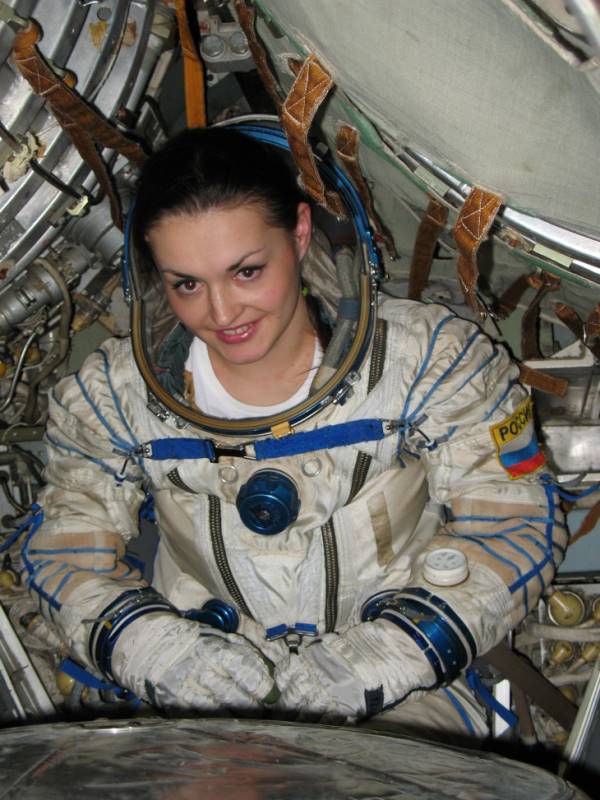
According to Vesti 24 channel, female Russian cosmonaut Yelena Serova might be chosen for a half-year long ISS mission in 2013 or 2014.

serova2.jpg


She was born April 22, 1976 in village Vozdvizhenka in Primorsky Krai (Russia's Pacific coast). In 2001, she has graduated as Test Engineer from Moscow Aviation Institute and later worked in Energia corp. and Mission Control Centre. In 2003 she has graduated her second specialty as Economist. Since 2009 she has become a Test Cosmonaut in Energia corp., and since 2011 was reassigned to united Roscosmos Cosmonaut team. Her daughter is 9 years old.

If she goes to space, she becomes the 4th Russian woman to do so.
 
Parabolic Arc: Roscosmos, ESA Discuss Ganymede Mission, Joint Rocket Development:
Roscosmos and ESA have agreed to pursue missions aimed at returning soil samples from the south pole of the moon and landing a spacecraft on Jupiter’s moon Ganymede, according to a Roscosmos press statement.

The decision was made during a Dec. 19 meeting between Roscosmos Head Vladimir Popovkin and ESA Director-General Jean-Jacques Dordain. The space agency chiefs also discussed the potential involvement of Russia in the U.S.-European ExoMars program and collaboration in developing new launch vehicles.

Earlier this year, the two space agencies established a working group to study cooperative space science activities. The working group said the two most promising projects were the lunar mission, which is set for the 2016-2020 time frame, and the Ganymede flight, which would be launched after 2020.

Other missions the group considered included: sending spacecraft to study Venus’ atmosphere and to land on the planet; launching sample return flights to near-Earth asteroids; and the developing of a new astronomical observatory. These missions will be held for possible later collaboration.

The press release provides no details on the discussion concerning Russian participation in ExoMars, which is being sought due to funding shortfalls in the United States and Europe. Discussions have focused on Russia providing a launcher and a suite of instruments for inclusion on the Mars-bound spacecraft.

The space agencies also discussed collaboration on rockets:
“The General Director of Khrunichev, Vladimir Nesterov, who co-chairs the working group on launch vehicles, outlined the main general objectives and possible areas of cooperation in the field of launch vehicle. They were cut launch costs, the use of environmentally friendly fuels, especially in the fall of spent stages (for Russia – the use of areas falling outside the continental territory), the establishment of a new manned vehicle lifting capacity of 20-25 tons, and the creation of heavy-duty vehicle (carrying capacity of more than 50 tons with an opportunity to improve in the future) to serve the manned missions of space exploration.

“According to the head of Russian Federal Space Agency, the possibility of technical realization of these projects, no doubt, but to transform them into life from an organizational point of view should be closer cooperation between enterprises of Russia and Europe. ‘The next step is to connect businesses in Europe to assess the feasibility of these projects. Boosters must meet the missions that we pledge, and do not develop by itself,’ he said.

“The meeting participants agreed with the conclusions of the working group on launch vehicles and supported the proposal to proceed with the draft with the condition to attract companies and space agencies of Europe, especially France and Germany.”​

It’s not clear precisely how these discussions might impact existing plans. Khrunichev is currently developing the much-delayed Angara booster, which is now set to make its maiden flight during the second half of 2013. (The project has been delayed so often that schedules are always a bit suspect.) Angara is a modular family of boosters designed to launch everything from small to heavy payloads.

The other major effort is the upgrade of the venerable Soyuz launcher to carry much heavier loads. That program involves replacing the existing engines on the first stage and developing larger strap-on boosters so the rocket can carry larger payloads, including a new human spaceflight vehicle.

Cooperation with ESA on mutually beneficial projects could help Russia solve its biggest problem with rocket development: a lack of funding. Angara has been financed in large part by: South Korea, whose KSLV-1 rocket uses an Angara-derived first stage; and France, which funded a new upper stage as part of the effort to bring the Soyuz launcher to Kourou. The upper stage will be used on both Soyuz and Angara.

{...}
 
Back
Top