Medium-lift vs heavy-lift launcher economics

Pipcard

mikusingularity
Addon Developer
Donator
Joined
Nov 7, 2009
Messages
3,710
Reaction score
45
Points
88
Location
Negishima Space Center
I believe that many launches of medium-lift rockets are less expensive than a few launches of heavy-lift vehicles, due to economies of scale. Medium-lift launchers also cost less to develop.

But this article claims that it's about how much you launch into orbit, not how frequently you launch.

What do you think?
 
I think that there is use for both medium and heavy-lift launchers. Sometimes, having the ability to split a mission across multiple launchers (like a communication satellite array) is better, while sometimes a brute-force heavy lift launch is needed (making exploring Mars worthwhile, deploying massive space telescopes, etc.) Both types of rockets have their merits and flaws, but using both of them in a teamwork method would provide the best solution, as well as the most flexibility for mission design and planning.
 
I believe that many launches of medium-lift rockets are less expensive than a few launches of heavy-lift vehicles, due to economies of scale. Medium-lift launchers also cost less to develop.

But this article claims that it's about how much you launch into orbit, not how frequently you launch.

What do you think?

The article is just a crappy opinion piece, no argumentation. It assumes many favorable conditions for the HLLV, without even explaining, why this favorable scenario should take place. It uses technology for cheap, that had been already very expensive in the design phase, like using the ET with one engine as upper stage (despite the ET being a rather poor choice for a upper stage design)

Also he ignores in his starting argumentation, why we can afford bigger ships to transport cargo over the Atlantic: We have the demand and the ships had been able to grow. The first container ship did only transport a few containers, not 16000 from day one. Still, the big ships only transport a small fraction of the whole market. We have essentially many hundred MLLVs and a few HLLVs, with the HLLVs growing as fast in capacity as the MLLVs, and those grow with the market.
 
What about launching a 100-ton station at once vs launching five 20-ton modules over several years?
 
What about launching a 100-ton station at once vs launching five 20-ton modules over several years?

How many 100 ton stations will you launch?

It is easier to get 100 20-ton launches than a singler 100 ton launch. The ISS is essentially 20 MLLV launches then, while it would have been 4 HLLV launches.

Next, you have to include that it is NOT just the launcher. You also need ground infrastructure. Factories to build it, transportation to get parts and fuel to the launch site, etc.

Most costs of this infrastructure increases faster than the increase in payload mass.

Then, you need test launches, before you can consider launching a single important payload.

Finally... there is one big argument: You might not need HLLVs in the future, but you will need orbital assembly operations. How can you practice this, by avoiding any orbital assembly and launch only monolithic payloads again?
 
From my experience of the forum, you won't have a lot of pro-HLLV people there I feel ;)

My opinion (and I don't pretend to hold the ultimate truth) is that they can make interplanetary missions much simpler, using "one shot" strategies and avoiding multiple LOR/POR (P stands for Planetary). Multiple launches can quickly lead to an impressive number of steps that need to be succeeded to get the mission successful.

If you played RiS you know what I mean, and personally I prefer to attempt a Mars landing in Orbiter in 1 or 2 launches (2 is still acceptable as you can split the mission in an unmanned part followed by the manned part ; 1 requires a VHLLV, like 250 tons class). :2cents:

The economical arguments well, we already had a lot of vigorous discussions about this ; my idea is that economy is something very difficult to predict, much more than launch windows and mission architecture.
 
Multiple launches can quickly lead to an impressive number of steps that need to be succeeded to get the mission successful.

Yes, but contrary to RIS, in real life a failure in one unmanned step does not result in a mission failure, only in a delay. If you use a HLLV, that has a much longer preparation time, the delays would increase in larger steps.
 
For my own barley worth it 2 pence worth,
I see the issue as one of infrastructure. Just how are these big boys to be built and funded without a slow steady revenue stream to fall back on. One launch every 6 months to a year, or a nice earner every 6 weeks.

24 months to rebuild / modify the launch site with only the hope of revenue.
Truly not being flippent but notice there is no talk of money in Star Trek
 
I believe that many launches of medium-lift rockets are less expensive than a few launches of heavy-lift vehicles, due to economies of scale. Medium-lift launchers also cost less to develop.

But this article claims that it's about how much you launch into orbit, not how frequently you launch.

What do you think?

I think that both have pros and cons.

Anyway: now we have - at the best - launch vehicles in the range of 20 tons to LEO, and we speculate about the feasibility of rockets with 100 tons-to leo or so. In Italy we say: "La Volpe e l'Uva". If 100 tons-to-LEO rockets were common, no one would raise the question about the possibility of launch large payloads in 20-tons pieces.
 
Last edited:
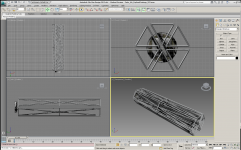
My heaviest object for GWS is 25,000kg, 55,116lbs, or 25 Metric Tons. so 100 ton rocket could lob as many as three of my heaviest objects in one shot. This could reduce the time to build GWS, save money on additional launchers, and make getting the longest of my objects into GEO with little to no problems due to length restrictions.

Coincidentally my longest object is a truss section that weighs in at just under 600lbs or 272kg it is 70' long. My ITC would carry 6 of these at one time.

I'd say the HLLV works for my purposes...
 

Attachments

  • Integrated Truss Carrier.png
    Integrated Truss Carrier.png
    422.5 KB · Views: 22
My heaviest object for GWS is 25,000kg, 55,116lbs, or 25 Metric Tons. so 100 ton rocket could lob as many as three of my heaviest objects in one shot. This could reduce the time to build GWS, save money on additional launchers, and make getting the longest of my objects into GEO with little to no problems due to length restrictions.

Coincidentally my longest object is a truss section that weighs in at just under 600lbs or 272kg it is 70' long. My ITC would carry 6 of these at one time.

I'd say the HLLV works for my purposes...

True, but how do you pack all three into a launch fairing without having a bad CG arrangement?
 
Back
Top