
You are using an out of date browser. It may not display this or other websites correctly.
You should upgrade or use an alternative browser.
You should upgrade or use an alternative browser.
Discussion History of Soviet cosmonautics
- Thread starter Alex1973
- Start date


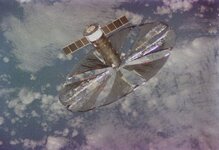
В ранние часы 4 февраля 1993 г. на орбите Земли был проведен космический эксперимент «Знамя-2», когда на отстыковавшемся от станции «Мир» грузовике «Прогресс-М15» был развёрнут 8-секционный солнечный парус диаметром 20 м. Впервые было осуществлено искусственное освещение Земли отраженным солнечным светом.
Целью эксперимента «Знамя-2» была проверка работоспособности самой идеи развёртывания на орбите сверхлёгких крупногабаритных плёночных конструкций (КГПК), формируемых центробежными силами, а также возможности управления ими. На оба вопроса был получен утвердительный ответ.
Созданное солнечным парусом размытое световое пятно на поверхности Земли имело диаметр 8 км и перемещалось со скоростью 8 км/с. Гигантский «солнечный зайчик» был виден со станции «Мир» над предрассветной Европой на протяжении 6 мин, пока не растворился в лучах восходящего Солнца над Белоруссией. Европа в то зимнее утро была покрыта густой облачностью. Но немецким метеорологам в Альпах, находившимся над облаками, удалось измерить яркость «зайчика», — она была сопоставима с яркостью полной Луны.
Несмотря на то, что эксперимент «Знамя-2» привлек внимание мировой общественности, доказав возможность освещения Земли с помощью космического зеркала, дальнейшее развитие он не получил. Эксперимент «Знамя-2,5» в 1999 г. закончился неудачей — зеркало уже диаметром 25 м при раскрытии зацепилось за не закрывшуюся антенну грузовика «Прогресс М-40». А более масштабный эксперимент «Знамя-3» с 30-м рефлектором, планируемый ЦНИИмаш уже на борту МКС в 2008 г., был отменён (одной из его задач, кстати, была отработка технологий создания космических парусных кораблей).
Нереализованные возможности
Между тем, планы были грандиозные. После завершения испытаний с 70-м рефлектором предполагалось разместить на ГСО высотой 1700 км целую группировку таких спутников с отражателями диаметром по 200 м. Случись это, выдаваемый ими свет превышал светимость Луны бы уже на два порядка, — любая ночь стала бы днём.
Идея космического освещения Земли была предложена ещё в начале XX века теоретиками космонавтики Фридрихом Цандером в СССР и Германом Обертом в Германии. С помощью космических зеркал можно не только освещать северные города во время полугодовой полярной ночи, но и переориентировать его в районы чрезвычайных ситуаций. А на базе сверхмощных концентраторов солнечного излучения предлагалось создавать системы защиты и энергоснабжения Земли из космоса.
А загорелся идеей космического освещения в 1989 г. и, самое главное, начал воплощать её в жизнь выдающийся советский и российский конструктор Владимир Сергеевич Сыромятников (именно он создал стыковочные механизмы для «Союз-Аполлон», станций «Мир» и МКС с челноками). Об этом эксперименте можно прочитать в его книге «Сто рассказов о стыковке. Часть 2».
In the early hours of February 4, 1993, the space experiment “Znamya-2” was conducted in Earth orbit. A 20-meter-diameter solar sail consisting of eight sections was deployed from the cargo spacecraft Progress M-15 after it had undocked from the Mir space station. For the first time in history, artificial illumination of the Earth using reflected sunlight was achieved.
The purpose of the “Znamya-2” experiment was to test the feasibility of deploying ultra-light large-scale film structures in orbit, formed by centrifugal forces, as well as to evaluate the possibility of controlling them. Both questions received positive answers.
The diffuse spot of light created on the Earth's surface by the solar sail had a diameter of about 8 kilometers and moved at a speed of 8 kilometers per second. This giant “sunbeam” was visible from the Mir station over pre-dawn Europe for about six minutes before disappearing into the rays of the rising Sun over Belarus. Europe was covered by dense clouds that winter morning. However, German meteorologists in the Alps, located above the cloud layer, were able to measure the brightness of the spot. It was comparable to the brightness of a full Moon.
Although the “Znamya-2” experiment attracted worldwide attention and demonstrated the possibility of illuminating the Earth using a space mirror, the project was not further developed. The “Znamya-2.5” experiment in 1999 ended unsuccessfully when the 25-meter mirror became entangled with an antenna on the Progress M-40 cargo spacecraft that had failed to retract completely during deployment. A larger experiment known as “Znamya-3,” involving a 30-meter reflector and planned by TsNIIMash aboard the International Space Station in 2008, was ultimately canceled. One of its objectives, incidentally, was to test technologies for future solar-sail spacecraft.
Unrealized Possibilities
The plans were ambitious. After testing a 70-meter reflector, engineers proposed deploying an entire constellation of satellites carrying 200-meter-diameter reflectors at an altitude of approximately 1,700 kilometers. Had this project been realized, the illumination produced would have exceeded the brightness of the full Moon by two orders of magnitude, effectively turning night into day.
The idea of illuminating the Earth from space had been proposed as early as the beginning of the twentieth century by pioneering spaceflight theorists Friedrich Zander in the Soviet Union and Hermann Oberth in Germany. Space mirrors could potentially illuminate northern cities during the long polar night and direct light toward areas affected by natural disasters and emergencies. It was also proposed that powerful space-based solar concentrators could be used for planetary energy generation and even Earth-protection systems.
In 1989, the idea of space-based illumination captured the imagination of the outstanding Soviet and Russian engineer Vladimir Sergeyevich Syromyatnikov. More importantly, he began turning the concept into reality. Syromyatnikov is best known for creating the docking mechanisms used in the Apollo–Soyuz mission, the Mir space station, and the docking systems between the International Space Station and the Space Shuttle. More information about this remarkable experiment can be found in his book “One Hundred Stories About Docking. Part Two.”
En las primeras horas del 4 de febrero de 1993 se llevó a cabo en la órbita terrestre el experimento espacial «Znamya-2». Desde la nave de carga Progress M-15, después de desacoplarse de la estación espacial Mir, se desplegó una vela solar de ocho secciones con un diámetro de 20 metros. Por primera vez en la historia se logró la iluminación artificial de la Tierra mediante luz solar reflejada.
El objetivo del experimento «Znamya-2» era comprobar la viabilidad de desplegar en órbita estructuras de película ultraligeras y de gran tamaño formadas por fuerzas centrífugas, así como evaluar la posibilidad de controlarlas. Ambas cuestiones recibieron una respuesta positiva.
La mancha luminosa difusa creada por la vela solar sobre la superficie terrestre tenía un diámetro aproximado de 8 kilómetros y se desplazaba a una velocidad de 8 kilómetros por segundo. Este gigantesco «reflejo solar» fue visible desde la estación Mir sobre la Europa previa al amanecer durante unos seis minutos, hasta desaparecer entre los rayos del Sol naciente sobre Bielorrusia. Europa estaba cubierta por densas nubes aquella mañana de invierno. Sin embargo, meteorólogos alemanes situados en los Alpes, por encima de la capa de nubes, lograron medir el brillo de la mancha luminosa. Su intensidad era comparable a la de la Luna llena.
Aunque el experimento «Znamya-2» atrajo la atención de la opinión pública mundial y demostró la posibilidad de iluminar la Tierra mediante un espejo espacial, el proyecto no tuvo continuidad. El experimento «Znamya-2,5», realizado en 1999, terminó en fracaso cuando el espejo de 25 metros quedó enganchado en una antena de la nave de carga Progress M-40 que no se había plegado completamente. Un experimento aún más ambicioso, denominado «Znamya-3», que preveía un reflector de 30 metros y que iba a ser realizado por TsNIIMash a bordo de la Estación Espacial Internacional en 2008, fue finalmente cancelado. Una de sus tareas, por cierto, consistía en probar tecnologías para futuras naves impulsadas por velas solares.
Posibilidades no realizadas
Sin embargo, los planes eran grandiosos. Tras completar las pruebas con un reflector de 70 metros, se propuso desplegar toda una constelación de satélites equipados con reflectores de 200 metros de diámetro a una altitud aproximada de 1.700 kilómetros. De haberse llevado a cabo, la iluminación producida habría superado en dos órdenes de magnitud el brillo de la Luna llena, convirtiendo prácticamente la noche en día.
La idea de iluminar la Tierra desde el espacio había sido propuesta ya a comienzos del siglo XX por los pioneros de la cosmonáutica Friedrich Zander en la Unión Soviética y Hermann Oberth en Alemania. Los espejos espaciales podrían utilizarse para iluminar ciudades del norte durante las largas noches polares y para dirigir luz hacia regiones afectadas por catástrofes o emergencias. También se propuso utilizar concentradores solares espaciales de gran potencia para crear sistemas de suministro energético e incluso de protección de la Tierra.
En 1989, la idea de la iluminación espacial cautivó al destacado ingeniero soviético y ruso Vladímir Serguéievich Syromyatnikov. Y, lo más importante, comenzó a convertirla en realidad. Syromyatnikov es conocido principalmente por haber creado los mecanismos de acoplamiento utilizados en la misión Apolo-Soyuz, en la estación Mir y en los sistemas de acoplamiento entre la Estación Espacial Internacional y los transbordadores espaciales. Se puede encontrar más información sobre este extraordinario experimento en su libro «Cien historias sobre el acoplamiento. Parte 2».
Целью эксперимента «Знамя-2» была проверка работоспособности самой идеи развёртывания на орбите сверхлёгких крупногабаритных плёночных конструкций (КГПК), формируемых центробежными силами, а также возможности управления ими. На оба вопроса был получен утвердительный ответ.
Созданное солнечным парусом размытое световое пятно на поверхности Земли имело диаметр 8 км и перемещалось со скоростью 8 км/с. Гигантский «солнечный зайчик» был виден со станции «Мир» над предрассветной Европой на протяжении 6 мин, пока не растворился в лучах восходящего Солнца над Белоруссией. Европа в то зимнее утро была покрыта густой облачностью. Но немецким метеорологам в Альпах, находившимся над облаками, удалось измерить яркость «зайчика», — она была сопоставима с яркостью полной Луны.
Несмотря на то, что эксперимент «Знамя-2» привлек внимание мировой общественности, доказав возможность освещения Земли с помощью космического зеркала, дальнейшее развитие он не получил. Эксперимент «Знамя-2,5» в 1999 г. закончился неудачей — зеркало уже диаметром 25 м при раскрытии зацепилось за не закрывшуюся антенну грузовика «Прогресс М-40». А более масштабный эксперимент «Знамя-3» с 30-м рефлектором, планируемый ЦНИИмаш уже на борту МКС в 2008 г., был отменён (одной из его задач, кстати, была отработка технологий создания космических парусных кораблей).
Нереализованные возможности
Между тем, планы были грандиозные. После завершения испытаний с 70-м рефлектором предполагалось разместить на ГСО высотой 1700 км целую группировку таких спутников с отражателями диаметром по 200 м. Случись это, выдаваемый ими свет превышал светимость Луны бы уже на два порядка, — любая ночь стала бы днём.
Идея космического освещения Земли была предложена ещё в начале XX века теоретиками космонавтики Фридрихом Цандером в СССР и Германом Обертом в Германии. С помощью космических зеркал можно не только освещать северные города во время полугодовой полярной ночи, но и переориентировать его в районы чрезвычайных ситуаций. А на базе сверхмощных концентраторов солнечного излучения предлагалось создавать системы защиты и энергоснабжения Земли из космоса.
А загорелся идеей космического освещения в 1989 г. и, самое главное, начал воплощать её в жизнь выдающийся советский и российский конструктор Владимир Сергеевич Сыромятников (именно он создал стыковочные механизмы для «Союз-Аполлон», станций «Мир» и МКС с челноками). Об этом эксперименте можно прочитать в его книге «Сто рассказов о стыковке. Часть 2».
In the early hours of February 4, 1993, the space experiment “Znamya-2” was conducted in Earth orbit. A 20-meter-diameter solar sail consisting of eight sections was deployed from the cargo spacecraft Progress M-15 after it had undocked from the Mir space station. For the first time in history, artificial illumination of the Earth using reflected sunlight was achieved.
The purpose of the “Znamya-2” experiment was to test the feasibility of deploying ultra-light large-scale film structures in orbit, formed by centrifugal forces, as well as to evaluate the possibility of controlling them. Both questions received positive answers.
The diffuse spot of light created on the Earth's surface by the solar sail had a diameter of about 8 kilometers and moved at a speed of 8 kilometers per second. This giant “sunbeam” was visible from the Mir station over pre-dawn Europe for about six minutes before disappearing into the rays of the rising Sun over Belarus. Europe was covered by dense clouds that winter morning. However, German meteorologists in the Alps, located above the cloud layer, were able to measure the brightness of the spot. It was comparable to the brightness of a full Moon.
Although the “Znamya-2” experiment attracted worldwide attention and demonstrated the possibility of illuminating the Earth using a space mirror, the project was not further developed. The “Znamya-2.5” experiment in 1999 ended unsuccessfully when the 25-meter mirror became entangled with an antenna on the Progress M-40 cargo spacecraft that had failed to retract completely during deployment. A larger experiment known as “Znamya-3,” involving a 30-meter reflector and planned by TsNIIMash aboard the International Space Station in 2008, was ultimately canceled. One of its objectives, incidentally, was to test technologies for future solar-sail spacecraft.
Unrealized Possibilities
The plans were ambitious. After testing a 70-meter reflector, engineers proposed deploying an entire constellation of satellites carrying 200-meter-diameter reflectors at an altitude of approximately 1,700 kilometers. Had this project been realized, the illumination produced would have exceeded the brightness of the full Moon by two orders of magnitude, effectively turning night into day.
The idea of illuminating the Earth from space had been proposed as early as the beginning of the twentieth century by pioneering spaceflight theorists Friedrich Zander in the Soviet Union and Hermann Oberth in Germany. Space mirrors could potentially illuminate northern cities during the long polar night and direct light toward areas affected by natural disasters and emergencies. It was also proposed that powerful space-based solar concentrators could be used for planetary energy generation and even Earth-protection systems.
In 1989, the idea of space-based illumination captured the imagination of the outstanding Soviet and Russian engineer Vladimir Sergeyevich Syromyatnikov. More importantly, he began turning the concept into reality. Syromyatnikov is best known for creating the docking mechanisms used in the Apollo–Soyuz mission, the Mir space station, and the docking systems between the International Space Station and the Space Shuttle. More information about this remarkable experiment can be found in his book “One Hundred Stories About Docking. Part Two.”
En las primeras horas del 4 de febrero de 1993 se llevó a cabo en la órbita terrestre el experimento espacial «Znamya-2». Desde la nave de carga Progress M-15, después de desacoplarse de la estación espacial Mir, se desplegó una vela solar de ocho secciones con un diámetro de 20 metros. Por primera vez en la historia se logró la iluminación artificial de la Tierra mediante luz solar reflejada.
El objetivo del experimento «Znamya-2» era comprobar la viabilidad de desplegar en órbita estructuras de película ultraligeras y de gran tamaño formadas por fuerzas centrífugas, así como evaluar la posibilidad de controlarlas. Ambas cuestiones recibieron una respuesta positiva.
La mancha luminosa difusa creada por la vela solar sobre la superficie terrestre tenía un diámetro aproximado de 8 kilómetros y se desplazaba a una velocidad de 8 kilómetros por segundo. Este gigantesco «reflejo solar» fue visible desde la estación Mir sobre la Europa previa al amanecer durante unos seis minutos, hasta desaparecer entre los rayos del Sol naciente sobre Bielorrusia. Europa estaba cubierta por densas nubes aquella mañana de invierno. Sin embargo, meteorólogos alemanes situados en los Alpes, por encima de la capa de nubes, lograron medir el brillo de la mancha luminosa. Su intensidad era comparable a la de la Luna llena.
Aunque el experimento «Znamya-2» atrajo la atención de la opinión pública mundial y demostró la posibilidad de iluminar la Tierra mediante un espejo espacial, el proyecto no tuvo continuidad. El experimento «Znamya-2,5», realizado en 1999, terminó en fracaso cuando el espejo de 25 metros quedó enganchado en una antena de la nave de carga Progress M-40 que no se había plegado completamente. Un experimento aún más ambicioso, denominado «Znamya-3», que preveía un reflector de 30 metros y que iba a ser realizado por TsNIIMash a bordo de la Estación Espacial Internacional en 2008, fue finalmente cancelado. Una de sus tareas, por cierto, consistía en probar tecnologías para futuras naves impulsadas por velas solares.
Posibilidades no realizadas
Sin embargo, los planes eran grandiosos. Tras completar las pruebas con un reflector de 70 metros, se propuso desplegar toda una constelación de satélites equipados con reflectores de 200 metros de diámetro a una altitud aproximada de 1.700 kilómetros. De haberse llevado a cabo, la iluminación producida habría superado en dos órdenes de magnitud el brillo de la Luna llena, convirtiendo prácticamente la noche en día.
La idea de iluminar la Tierra desde el espacio había sido propuesta ya a comienzos del siglo XX por los pioneros de la cosmonáutica Friedrich Zander en la Unión Soviética y Hermann Oberth en Alemania. Los espejos espaciales podrían utilizarse para iluminar ciudades del norte durante las largas noches polares y para dirigir luz hacia regiones afectadas por catástrofes o emergencias. También se propuso utilizar concentradores solares espaciales de gran potencia para crear sistemas de suministro energético e incluso de protección de la Tierra.
En 1989, la idea de la iluminación espacial cautivó al destacado ingeniero soviético y ruso Vladímir Serguéievich Syromyatnikov. Y, lo más importante, comenzó a convertirla en realidad. Syromyatnikov es conocido principalmente por haber creado los mecanismos de acoplamiento utilizados en la misión Apolo-Soyuz, en la estación Mir y en los sistemas de acoplamiento entre la Estación Espacial Internacional y los transbordadores espaciales. Se puede encontrar más información sobre este extraordinario experimento en su libro «Cien historias sobre el acoplamiento. Parte 2».
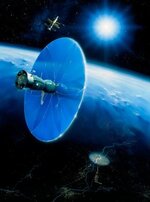
Художественная иллюстрация российского проекта космического зеркала «Знамя-2», на которой изображен освещенный город.
An artistic illustration of the Russian Znamya-2 space mirror project, depicting an illuminated city.
Una ilustración artística del proyecto ruso del espejo espacial Znamya-2, que representa una ciudad iluminada.
An artistic illustration of the Russian Znamya-2 space mirror project, depicting an illuminated city.
Una ilustración artística del proyecto ruso del espejo espacial Znamya-2, que representa una ciudad iluminada.


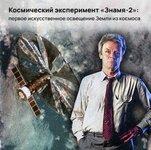
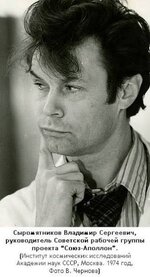
Владимир Сергеевич Сыромятников ( 1933 — 2006) — советский и российский учёный в области инженерных наук, основоположник космической стыковочной техники, конструктор, доктор технических наук, профессор. Лауреат Ленинской премии.
Действительный член Российской академии космонавтики, Американского Интститута по Аэронавтике и Астронавтике (1995) и Международной академии астронавтики. В мае 2006 года был избран членом-корреспондентом Российской академии наук. Владимира Сыромятникова вполне заслуженно называют «отцом советской космической стыковочной техники».
Начиная с 1970-х годов, он, как один из самых активных участников проекта «Союз-Аполлон», начал «стыковаться» с американскими специалистами сначала на Земле, чтобы состыковать космонавтов и астронавтов на космической орбите. В эти годы Сыромятников выступал разработчиком унифицированного стыковочного узла (АПАС) для первой международной стыковки кораблей «Союз» и «Аполлон». Впоследствии, под руководством Сыромятникова был разработан и воплощён в жизнь ряд унифицированных стыковочных узлов, установленных на МКС и всех летающих к ней кораблях, в том числе на шаттлах.
Сыромятников также принимал участие в разработке ракет-носителей, первого спутника, кораблей «Восток» и «Восход», станций «Венера» и «Марс», орбитальных станций «Салют» и комплекса «Мир», ракетно-космической системы «Энергия — Буран».
В 1990 году по инициативе В. С. Сыромятникова в рамках РКК «Энергия» был образован Консорциум «Космическая регата». Консорциум основал и реализовал проект «Знамя» — серию экспериментов по первому в мире раскрытию в космосе и работе космических отражателей. Работа над проектами «Знамя» осуществлялось под техническим руководством В. С. Сыромятникова.
Автор проекта многоразового пилотируемого корабля гибридного типа, который был им запатентован.
25 мая 2006 года избран членом-корреспондентом Российской академии наук.
Профессор МГТУ имени Баумана.
Автор книг «100 рассказов о стыковке и других приключениях в космосе и на Земле». «Система стыковки космических аппаратов», «Пилотируемые космические корабли» (1984 г.), «100 рассказов о стыковке и других приключениях в космосе и на земле», «100 Stories about docking» (английское издание в переводе автора), более 170 научных статей и 120 изобретений.
На фото: Сыромятников Владимир Сергеевич, руководитель советской рабочей группы проекта "Союз - Аполлон". (Институт космических исследований Академии наук СССР, Москва, 1974 год, фото В. Чернова).
Vladimir Sergeyevich Syromyatnikov (1933–2006) was a Soviet and Russian scientist in the field of engineering sciences, a pioneer of space docking technology, a designer, Doctor of Technical Sciences, and professor. He was a recipient of the Lenin Prize.
He was a full member of the Russian Academy of Cosmonautics, the American Institute of Aeronautics and Astronautics (1995), and the International Academy of Astronautics. In May 2006, he was elected a Corresponding Member of the Russian Academy of Sciences. Vladimir Syromyatnikov is rightly referred to as the “father of Soviet space docking technology.”
Beginning in the 1970s, as one of the most active participants in the Apollo–Soyuz Project, he began “docking” with American specialists on Earth in order to make the docking of Soviet cosmonauts and American astronauts possible in orbit. During these years, Syromyatnikov developed the universal docking system (APAS) used in the first international docking between the Soyuz and Apollo spacecraft. Later, under his leadership, a series of universal docking mechanisms was designed and implemented. These systems were installed on the International Space Station and on all spacecraft visiting it, including the Space Shuttles.
Syromyatnikov also participated in the development of launch vehicles, the first artificial satellite, the Vostok and Voskhod spacecraft, the Venera and Mars planetary stations, the Salyut orbital stations, the Mir space station complex, and the Energia–Buran space transportation system.
In 1990, on the initiative of V. S. Syromyatnikov, the “Space Regatta” Consortium was established within RSC Energia. The consortium created and carried out the “Znamya” project, a series of experiments involving the first-ever deployment and operation of space reflectors in orbit. Work on the Znamya projects was conducted under the technical leadership of V. S. Syromyatnikov.
He was also the author of a patented concept for a reusable hybrid-type crewed spacecraft.
On May 25, 2006, he was elected a Corresponding Member of the Russian Academy of Sciences.
He was a professor at the Bauman Moscow State Technical University.
He authored the books:
“100 Stories about Docking and Other Adventures in Space and on Earth”
“Spacecraft Docking System”
“Manned Spacecraft” (1984)
“100 Stories about Docking and Other Adventures in Space and on Earth”
“100 Stories about Docking” (English edition translated by the author)
He also authored more than 170 scientific papers and held over 120 inventions and patents.
Pictured: Vladimir Sergeevich Syromyatnikov, head of the Soviet working group for the Soyuz-Apollo project. (Space Research Institute of the USSR Academy of Sciences, Moscow, 1974, photo by V. Chernov).
Vladimir Serguéievich Syromyatnikov (1933–2006) fue un científico soviético y ruso en el campo de las ciencias de la ingeniería, fundador de la tecnología de acoplamiento espacial, diseñador, doctor en ciencias técnicas y profesor. Fue galardonado con el Premio Lenin.
Fue miembro de pleno derecho de la Academia Rusa de Cosmonáutica, del Instituto Americano de Aeronáutica y Astronáutica (1995) y de la Academia Internacional de Astronáutica. En mayo de 2006 fue elegido miembro correspondiente de la Academia Rusa de Ciencias. Vladimir Syromyatnikov es justamente considerado el “padre de la tecnología soviética de acoplamiento espacial”.
A partir de la década de 1970, como uno de los participantes más activos del Proyecto Apolo-Soyuz, comenzó a “acoplarse” con especialistas estadounidenses en la Tierra para hacer posible el acoplamiento de cosmonautas soviéticos y astronautas estadounidenses en órbita. Durante esos años, Syromyatnikov desarrolló el sistema universal de acoplamiento (APAS) utilizado en el primer acoplamiento internacional entre las naves Soyuz y Apolo. Posteriormente, bajo su dirección, se diseñó e implementó una serie de mecanismos universales de acoplamiento instalados en la Estación Espacial Internacional y en todas las naves que la visitan, incluidos los transbordadores espaciales.
Syromyatnikov también participó en el desarrollo de vehículos lanzadores, del primer satélite artificial, de las naves Vostok y Vosjod, de las estaciones planetarias Venera y Mars, de las estaciones orbitales Salyut, del complejo orbital Mir y del sistema espacial Energía-Burán.
En 1990, por iniciativa de V. S. Syromyatnikov, se creó dentro de RKK Energía el Consorcio “Regata Espacial”. El consorcio fundó y llevó a cabo el proyecto “Znamya”, una serie de experimentos destinados al primer despliegue y funcionamiento en el espacio de reflectores espaciales. El trabajo en los proyectos Znamya se realizó bajo la dirección técnica de V. S. Syromyatnikov.
También fue autor de un proyecto patentado de nave espacial tripulada reutilizable de tipo híbrido.
El 25 de mayo de 2006 fue elegido miembro correspondiente de la Academia Rusa de Ciencias.
Fue profesor de la Universidad Técnica Estatal Bauman de Moscú.
Es autor de los libros:
“100 relatos sobre el acoplamiento y otras aventuras en el espacio y en la Tierra”
“Sistema de acoplamiento de naves espaciales”
“Naves espaciales tripuladas” (1984)
“100 relatos sobre el acoplamiento y otras aventuras en el espacio y en la Tierra”
“100 Stories about Docking” (edición en inglés traducida por el propio autor)
Asimismo, publicó más de 170 artículos científicos y fue autor de más de 120 inventos y patentes.
En la imagen: Vladimir Sergeevich Syromyatnikov, jefe del grupo de trabajo soviético para el proyecto Soyuz-Apolo. (Instituto de Investigación Espacial de la Academia de Ciencias de la URSS, Moscú, 1974, fotografía de V. Chernov).
Действительный член Российской академии космонавтики, Американского Интститута по Аэронавтике и Астронавтике (1995) и Международной академии астронавтики. В мае 2006 года был избран членом-корреспондентом Российской академии наук. Владимира Сыромятникова вполне заслуженно называют «отцом советской космической стыковочной техники».
Начиная с 1970-х годов, он, как один из самых активных участников проекта «Союз-Аполлон», начал «стыковаться» с американскими специалистами сначала на Земле, чтобы состыковать космонавтов и астронавтов на космической орбите. В эти годы Сыромятников выступал разработчиком унифицированного стыковочного узла (АПАС) для первой международной стыковки кораблей «Союз» и «Аполлон». Впоследствии, под руководством Сыромятникова был разработан и воплощён в жизнь ряд унифицированных стыковочных узлов, установленных на МКС и всех летающих к ней кораблях, в том числе на шаттлах.
Сыромятников также принимал участие в разработке ракет-носителей, первого спутника, кораблей «Восток» и «Восход», станций «Венера» и «Марс», орбитальных станций «Салют» и комплекса «Мир», ракетно-космической системы «Энергия — Буран».
В 1990 году по инициативе В. С. Сыромятникова в рамках РКК «Энергия» был образован Консорциум «Космическая регата». Консорциум основал и реализовал проект «Знамя» — серию экспериментов по первому в мире раскрытию в космосе и работе космических отражателей. Работа над проектами «Знамя» осуществлялось под техническим руководством В. С. Сыромятникова.
Автор проекта многоразового пилотируемого корабля гибридного типа, который был им запатентован.
25 мая 2006 года избран членом-корреспондентом Российской академии наук.
Профессор МГТУ имени Баумана.
Автор книг «100 рассказов о стыковке и других приключениях в космосе и на Земле». «Система стыковки космических аппаратов», «Пилотируемые космические корабли» (1984 г.), «100 рассказов о стыковке и других приключениях в космосе и на земле», «100 Stories about docking» (английское издание в переводе автора), более 170 научных статей и 120 изобретений.
На фото: Сыромятников Владимир Сергеевич, руководитель советской рабочей группы проекта "Союз - Аполлон". (Институт космических исследований Академии наук СССР, Москва, 1974 год, фото В. Чернова).
Vladimir Sergeyevich Syromyatnikov (1933–2006) was a Soviet and Russian scientist in the field of engineering sciences, a pioneer of space docking technology, a designer, Doctor of Technical Sciences, and professor. He was a recipient of the Lenin Prize.
He was a full member of the Russian Academy of Cosmonautics, the American Institute of Aeronautics and Astronautics (1995), and the International Academy of Astronautics. In May 2006, he was elected a Corresponding Member of the Russian Academy of Sciences. Vladimir Syromyatnikov is rightly referred to as the “father of Soviet space docking technology.”
Beginning in the 1970s, as one of the most active participants in the Apollo–Soyuz Project, he began “docking” with American specialists on Earth in order to make the docking of Soviet cosmonauts and American astronauts possible in orbit. During these years, Syromyatnikov developed the universal docking system (APAS) used in the first international docking between the Soyuz and Apollo spacecraft. Later, under his leadership, a series of universal docking mechanisms was designed and implemented. These systems were installed on the International Space Station and on all spacecraft visiting it, including the Space Shuttles.
Syromyatnikov also participated in the development of launch vehicles, the first artificial satellite, the Vostok and Voskhod spacecraft, the Venera and Mars planetary stations, the Salyut orbital stations, the Mir space station complex, and the Energia–Buran space transportation system.
In 1990, on the initiative of V. S. Syromyatnikov, the “Space Regatta” Consortium was established within RSC Energia. The consortium created and carried out the “Znamya” project, a series of experiments involving the first-ever deployment and operation of space reflectors in orbit. Work on the Znamya projects was conducted under the technical leadership of V. S. Syromyatnikov.
He was also the author of a patented concept for a reusable hybrid-type crewed spacecraft.
On May 25, 2006, he was elected a Corresponding Member of the Russian Academy of Sciences.
He was a professor at the Bauman Moscow State Technical University.
He authored the books:
“100 Stories about Docking and Other Adventures in Space and on Earth”
“Spacecraft Docking System”
“Manned Spacecraft” (1984)
“100 Stories about Docking and Other Adventures in Space and on Earth”
“100 Stories about Docking” (English edition translated by the author)
He also authored more than 170 scientific papers and held over 120 inventions and patents.
Pictured: Vladimir Sergeevich Syromyatnikov, head of the Soviet working group for the Soyuz-Apollo project. (Space Research Institute of the USSR Academy of Sciences, Moscow, 1974, photo by V. Chernov).
Vladimir Serguéievich Syromyatnikov (1933–2006) fue un científico soviético y ruso en el campo de las ciencias de la ingeniería, fundador de la tecnología de acoplamiento espacial, diseñador, doctor en ciencias técnicas y profesor. Fue galardonado con el Premio Lenin.
Fue miembro de pleno derecho de la Academia Rusa de Cosmonáutica, del Instituto Americano de Aeronáutica y Astronáutica (1995) y de la Academia Internacional de Astronáutica. En mayo de 2006 fue elegido miembro correspondiente de la Academia Rusa de Ciencias. Vladimir Syromyatnikov es justamente considerado el “padre de la tecnología soviética de acoplamiento espacial”.
A partir de la década de 1970, como uno de los participantes más activos del Proyecto Apolo-Soyuz, comenzó a “acoplarse” con especialistas estadounidenses en la Tierra para hacer posible el acoplamiento de cosmonautas soviéticos y astronautas estadounidenses en órbita. Durante esos años, Syromyatnikov desarrolló el sistema universal de acoplamiento (APAS) utilizado en el primer acoplamiento internacional entre las naves Soyuz y Apolo. Posteriormente, bajo su dirección, se diseñó e implementó una serie de mecanismos universales de acoplamiento instalados en la Estación Espacial Internacional y en todas las naves que la visitan, incluidos los transbordadores espaciales.
Syromyatnikov también participó en el desarrollo de vehículos lanzadores, del primer satélite artificial, de las naves Vostok y Vosjod, de las estaciones planetarias Venera y Mars, de las estaciones orbitales Salyut, del complejo orbital Mir y del sistema espacial Energía-Burán.
En 1990, por iniciativa de V. S. Syromyatnikov, se creó dentro de RKK Energía el Consorcio “Regata Espacial”. El consorcio fundó y llevó a cabo el proyecto “Znamya”, una serie de experimentos destinados al primer despliegue y funcionamiento en el espacio de reflectores espaciales. El trabajo en los proyectos Znamya se realizó bajo la dirección técnica de V. S. Syromyatnikov.
También fue autor de un proyecto patentado de nave espacial tripulada reutilizable de tipo híbrido.
El 25 de mayo de 2006 fue elegido miembro correspondiente de la Academia Rusa de Ciencias.
Fue profesor de la Universidad Técnica Estatal Bauman de Moscú.
Es autor de los libros:
“100 relatos sobre el acoplamiento y otras aventuras en el espacio y en la Tierra”
“Sistema de acoplamiento de naves espaciales”
“Naves espaciales tripuladas” (1984)
“100 relatos sobre el acoplamiento y otras aventuras en el espacio y en la Tierra”
“100 Stories about Docking” (edición en inglés traducida por el propio autor)
Asimismo, publicó más de 170 artículos científicos y fue autor de más de 120 inventos y patentes.
En la imagen: Vladimir Sergeevich Syromyatnikov, jefe del grupo de trabajo soviético para el proyecto Soyuz-Apolo. (Instituto de Investigación Espacial de la Academia de Ciencias de la URSS, Moscú, 1974, fotografía de V. Chernov).
"Многочисленные полеты автоматических станций к Венере, Марсу и дальним планетам Солнечной системы создали впечатление, что это задача скорее сегодняшнего, чем завтрашнего дня. Во всяком случае, пилотируемые полеты к Марсу и Венере давно перестали быть объектом научно-фантастической литературы. Вместе с тем возможное решение этих задач в рамках современной технологии, т. е. с использованием только ЖРД, представляется крайне громоздким и чрезвычайна дорогим. Один из самых «скромных» вариантов экспедиции на Марс предусматривает при полезной нагрузке межпланетного корабля 50 т выведение на низкую орбиту элементов конструкции корабля и топлива общей массой 500 – 700 т пятью – семью пусками ракет типа «Сатурн-5».
Но пугает не сама начальная масса, а необходимость проведения большого объема сложных монтажных работ в космосе. Выведение же совокупного полезного груза массой 500 – 1000 т, как уже отмечалось, будет ординарной задачей для ведущих космических держав уже к концу 80-х годов. Следует отметить, что для решения задачи полета к Марсу с помощью электрореактивных двигателей малой тяги и ЯЭУ или при использовании твердофазного ядерного реактора со скоростью истечения около 9 км/с общая выводимая на опорную орбиту масса составит 150 – 200 т. Продолжительность марсианской экспедиции во всех случаях примерно одинакова – 2 года 8 месяцев.
Уменьшение продолжительности экспедиции в 2 раза потребует увеличения энергетических затрат на порядок. В то же время уменьшение срока экспедиций к планетам весьма желательно. Здесь открываются широкие перспективы перед двигателями с высокими энергетическими показателями, в частности, газофазными ядерными двигателями, термоядерными и импульсными термоядерными двигателями. Нетрудно видеть, что речь здесь идет о двигателях, проблема создания которых на грани современных технологических возможностей. В связи с этим, во всяком случае на первых этапах пилотируемых межпланетных полетов, значительный выигрыш может быть достигнут за счет применения двигателей с использованием внешних источников электромагнитного излучения в качестве двигателей большой тяги при старте с орбиты ИСЗ".(А.С.Дмитриев, В.А.Кошелев.
"Космические двигатели будущего").
...................................................................
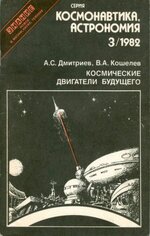
Цит.по: Александр Сергеевич Дмитриев,
Владимир Алексеевич Кошелев
КОСМИЧЕСКИЕ ДВИГАТЕЛИ БУДУЩЕГО
Серия «Космонавтика, астрономия»
НОВОЕ В ЖИЗНИ, НАУКЕ, ТЕХНИКЕ
№ 3, 1982 г.
ИЗДАТЕЛЬСТВО «ЗНАНИЕ»
Москва 1982 год
“Numerous flights of automatic spacecraft to Venus, Mars, and the distant planets of the Solar System have created the impression that this task belongs more to today than to tomorrow. In any case, crewed flights to Mars and Venus have long ceased to be merely subjects of science fiction literature.
At the same time, the possible solution of these tasks within the framework of modern technology, that is, using only liquid-propellant rocket engines, appears to be extremely cumbersome and extraordinarily expensive.
One of the most “modest” variants of a Mars expedition assumes that, with a useful payload of the interplanetary spacecraft of 50 tons, the components of the spacecraft structure and fuel, with a total mass of 500–700 tons, would have to be placed into low Earth orbit by five to seven launches of Saturn-5 type rockets.
However, it is not the initial mass itself that is frightening, but rather the necessity of carrying out a large volume of complex assembly work in space.
The launch of a combined payload with a mass of 500–1000 tons, as already mentioned, would become a routine task for leading space powers by the end of the 1980s.
It should be noted that for solving the problem of a flight to Mars using low-thrust electric propulsion engines and nuclear electric power systems, or using a solid-core nuclear reactor with an exhaust velocity of approximately 9 km/s, the total mass placed into the initial orbit would amount to 150–200 tons.
The duration of a Mars expedition in all cases would be approximately the same — 2 years and 8 months.
Reducing the duration of the expedition by half would require an increase in energy expenditure by an order of magnitude.
At the same time, reducing the duration of planetary expeditions is highly desirable.
Here, broad prospects open up for engines with high energy performance characteristics, in particular gas-phase nuclear engines, fusion engines, and pulsed fusion propulsion systems.
It is not difficult to see that these are propulsion systems whose creation lies at the very edge of modern technological capabilities.
Therefore, at least during the initial stages of crewed interplanetary flights, significant advantages may be achieved through the use of engines powered by external sources of electromagnetic radiation, serving as high-thrust propulsion systems during departure from Earth satellite orbit.”
(A. S. Dmitriev, V. A. Koshelev.
“Space Engines of the Future”)
..........................................................
Source:
Alexander Sergeyevich Dmitriev,
Vladimir Alekseyevich Koshelev
SPACE ENGINES OF THE FUTURE
Series: “Cosmonautics, Astronomy”
NEW IN LIFE, SCIENCE AND TECHNOLOGY
No. 3, 1982
“Znanie” Publishing House
Moscow, 1982
“Los numerosos vuelos de estaciones automáticas a Venus, Marte y a los planetas lejanos del Sistema Solar han creado la impresión de que esta tarea pertenece más al presente que al futuro. En cualquier caso, los vuelos tripulados a Marte y Venus hace mucho que dejaron de ser únicamente un tema de la literatura de ciencia ficción.
Al mismo tiempo, la posible solución de estas tareas dentro del marco de la tecnología moderna, es decir, utilizando únicamente motores cohete de combustible líquido, parece extremadamente compleja y extraordinariamente costosa.
Una de las variantes más “modestas” de una expedición a Marte contempla que, con una carga útil de la nave interplanetaria de 50 toneladas, los elementos de la estructura de la nave y el combustible, con una masa total de 500–700 toneladas, tendrían que ser colocados en una órbita baja terrestre mediante cinco a siete lanzamientos de cohetes del tipo Saturno-5.
Sin embargo, no es la propia masa inicial lo que resulta preocupante, sino la necesidad de realizar un gran volumen de complejos trabajos de montaje en el espacio.
La puesta en órbita de una carga útil conjunta con una masa de 500–1000 toneladas, como ya se ha mencionado, se convertiría en una tarea habitual para las principales potencias espaciales a finales de la década de 1980.
Cabe señalar que, para resolver el problema de un vuelo a Marte mediante motores eléctricos de propulsión de bajo empuje y sistemas de energía nuclear, o utilizando un reactor nuclear de núcleo sólido con una velocidad de expulsión de aproximadamente 9 km/s, la masa total colocada en la órbita inicial sería de 150–200 toneladas.
La duración de una expedición marciana en todos los casos sería aproximadamente la misma: 2 años y 8 meses.
Reducir la duración de la expedición a la mitad requeriría aumentar los gastos energéticos en un orden de magnitud.
Al mismo tiempo, reducir la duración de las expediciones a los planetas es un objetivo muy deseable.
Aquí se abren amplias perspectivas para motores con elevados indicadores energéticos, en particular motores nucleares en fase gaseosa, motores de fusión y motores termonucleares de impulso.
No es difícil comprender que se trata de sistemas de propulsión cuya creación se encuentra en el límite de las posibilidades tecnológicas actuales.
Por ello, al menos durante las primeras etapas de los vuelos interplanetarios tripulados, se podría obtener una importante ventaja mediante el uso de motores que empleen fuentes externas de radiación electromagnética como sistemas de gran empuje durante la salida desde la órbita terrestre.”
(A. S. Dmitriev, V. A. Koshelev.
“Los motores espaciales del futuro”)
..........................................................
Fuente:
Alexander Serguéievich Dmitriev,
Vladimir Alekseyevich Koshelev
LOS MOTORES ESPACIALES DEL FUTURO
Serie: “Cosmonáutica, astronomía”
NUEVO EN LA VIDA, LA CIENCIA Y LA TECNOLOGÍA
N.º 3, 1982
Editorial “Znanie”
Moscú, 1982
Но пугает не сама начальная масса, а необходимость проведения большого объема сложных монтажных работ в космосе. Выведение же совокупного полезного груза массой 500 – 1000 т, как уже отмечалось, будет ординарной задачей для ведущих космических держав уже к концу 80-х годов. Следует отметить, что для решения задачи полета к Марсу с помощью электрореактивных двигателей малой тяги и ЯЭУ или при использовании твердофазного ядерного реактора со скоростью истечения около 9 км/с общая выводимая на опорную орбиту масса составит 150 – 200 т. Продолжительность марсианской экспедиции во всех случаях примерно одинакова – 2 года 8 месяцев.
Уменьшение продолжительности экспедиции в 2 раза потребует увеличения энергетических затрат на порядок. В то же время уменьшение срока экспедиций к планетам весьма желательно. Здесь открываются широкие перспективы перед двигателями с высокими энергетическими показателями, в частности, газофазными ядерными двигателями, термоядерными и импульсными термоядерными двигателями. Нетрудно видеть, что речь здесь идет о двигателях, проблема создания которых на грани современных технологических возможностей. В связи с этим, во всяком случае на первых этапах пилотируемых межпланетных полетов, значительный выигрыш может быть достигнут за счет применения двигателей с использованием внешних источников электромагнитного излучения в качестве двигателей большой тяги при старте с орбиты ИСЗ".(А.С.Дмитриев, В.А.Кошелев.
"Космические двигатели будущего").
...................................................................
Цит.по: Александр Сергеевич Дмитриев,
Владимир Алексеевич Кошелев
КОСМИЧЕСКИЕ ДВИГАТЕЛИ БУДУЩЕГО
Серия «Космонавтика, астрономия»
НОВОЕ В ЖИЗНИ, НАУКЕ, ТЕХНИКЕ
№ 3, 1982 г.
ИЗДАТЕЛЬСТВО «ЗНАНИЕ»
Москва 1982 год
“Numerous flights of automatic spacecraft to Venus, Mars, and the distant planets of the Solar System have created the impression that this task belongs more to today than to tomorrow. In any case, crewed flights to Mars and Venus have long ceased to be merely subjects of science fiction literature.
At the same time, the possible solution of these tasks within the framework of modern technology, that is, using only liquid-propellant rocket engines, appears to be extremely cumbersome and extraordinarily expensive.
One of the most “modest” variants of a Mars expedition assumes that, with a useful payload of the interplanetary spacecraft of 50 tons, the components of the spacecraft structure and fuel, with a total mass of 500–700 tons, would have to be placed into low Earth orbit by five to seven launches of Saturn-5 type rockets.
However, it is not the initial mass itself that is frightening, but rather the necessity of carrying out a large volume of complex assembly work in space.
The launch of a combined payload with a mass of 500–1000 tons, as already mentioned, would become a routine task for leading space powers by the end of the 1980s.
It should be noted that for solving the problem of a flight to Mars using low-thrust electric propulsion engines and nuclear electric power systems, or using a solid-core nuclear reactor with an exhaust velocity of approximately 9 km/s, the total mass placed into the initial orbit would amount to 150–200 tons.
The duration of a Mars expedition in all cases would be approximately the same — 2 years and 8 months.
Reducing the duration of the expedition by half would require an increase in energy expenditure by an order of magnitude.
At the same time, reducing the duration of planetary expeditions is highly desirable.
Here, broad prospects open up for engines with high energy performance characteristics, in particular gas-phase nuclear engines, fusion engines, and pulsed fusion propulsion systems.
It is not difficult to see that these are propulsion systems whose creation lies at the very edge of modern technological capabilities.
Therefore, at least during the initial stages of crewed interplanetary flights, significant advantages may be achieved through the use of engines powered by external sources of electromagnetic radiation, serving as high-thrust propulsion systems during departure from Earth satellite orbit.”
(A. S. Dmitriev, V. A. Koshelev.
“Space Engines of the Future”)
..........................................................
Source:
Alexander Sergeyevich Dmitriev,
Vladimir Alekseyevich Koshelev
SPACE ENGINES OF THE FUTURE
Series: “Cosmonautics, Astronomy”
NEW IN LIFE, SCIENCE AND TECHNOLOGY
No. 3, 1982
“Znanie” Publishing House
Moscow, 1982
“Los numerosos vuelos de estaciones automáticas a Venus, Marte y a los planetas lejanos del Sistema Solar han creado la impresión de que esta tarea pertenece más al presente que al futuro. En cualquier caso, los vuelos tripulados a Marte y Venus hace mucho que dejaron de ser únicamente un tema de la literatura de ciencia ficción.
Al mismo tiempo, la posible solución de estas tareas dentro del marco de la tecnología moderna, es decir, utilizando únicamente motores cohete de combustible líquido, parece extremadamente compleja y extraordinariamente costosa.
Una de las variantes más “modestas” de una expedición a Marte contempla que, con una carga útil de la nave interplanetaria de 50 toneladas, los elementos de la estructura de la nave y el combustible, con una masa total de 500–700 toneladas, tendrían que ser colocados en una órbita baja terrestre mediante cinco a siete lanzamientos de cohetes del tipo Saturno-5.
Sin embargo, no es la propia masa inicial lo que resulta preocupante, sino la necesidad de realizar un gran volumen de complejos trabajos de montaje en el espacio.
La puesta en órbita de una carga útil conjunta con una masa de 500–1000 toneladas, como ya se ha mencionado, se convertiría en una tarea habitual para las principales potencias espaciales a finales de la década de 1980.
Cabe señalar que, para resolver el problema de un vuelo a Marte mediante motores eléctricos de propulsión de bajo empuje y sistemas de energía nuclear, o utilizando un reactor nuclear de núcleo sólido con una velocidad de expulsión de aproximadamente 9 km/s, la masa total colocada en la órbita inicial sería de 150–200 toneladas.
La duración de una expedición marciana en todos los casos sería aproximadamente la misma: 2 años y 8 meses.
Reducir la duración de la expedición a la mitad requeriría aumentar los gastos energéticos en un orden de magnitud.
Al mismo tiempo, reducir la duración de las expediciones a los planetas es un objetivo muy deseable.
Aquí se abren amplias perspectivas para motores con elevados indicadores energéticos, en particular motores nucleares en fase gaseosa, motores de fusión y motores termonucleares de impulso.
No es difícil comprender que se trata de sistemas de propulsión cuya creación se encuentra en el límite de las posibilidades tecnológicas actuales.
Por ello, al menos durante las primeras etapas de los vuelos interplanetarios tripulados, se podría obtener una importante ventaja mediante el uso de motores que empleen fuentes externas de radiación electromagnética como sistemas de gran empuje durante la salida desde la órbita terrestre.”
(A. S. Dmitriev, V. A. Koshelev.
“Los motores espaciales del futuro”)
..........................................................
Fuente:
Alexander Serguéievich Dmitriev,
Vladimir Alekseyevich Koshelev
LOS MOTORES ESPACIALES DEL FUTURO
Serie: “Cosmonáutica, astronomía”
NUEVO EN LA VIDA, LA CIENCIA Y LA TECNOLOGÍA
N.º 3, 1982
Editorial “Znanie”
Moscú, 1982
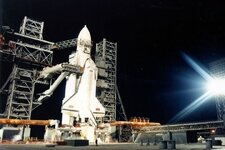
«Энергия» — «Буран» — космическая программа советской многоразовой транспортной космической системы (МТКС). Свой первый и единственный космический полёт орбитальный космический корабль-космоплан системы «Буран» совершил в беспилотном режиме 15 ноября 1988 года.
Energia-Buran was the space program of the Soviet reusable space transportation system (RTS). The Buran orbital spacecraft-cosmoplane completed its first and only unmanned spaceflight on November 15, 1988.
Energia-Buran fue el programa espacial del sistema soviético de transporte espacial reutilizable (RTS). La nave espacial orbital-cosmoplano Buran completó su primer y único vuelo espacial no tripulado el 15 de noviembre de 1988.
Energia-Buran was the space program of the Soviet reusable space transportation system (RTS). The Buran orbital spacecraft-cosmoplane completed its first and only unmanned spaceflight on November 15, 1988.
Energia-Buran fue el programa espacial del sistema soviético de transporte espacial reutilizable (RTS). La nave espacial orbital-cosmoplano Buran completó su primer y único vuelo espacial no tripulado el 15 de noviembre de 1988.
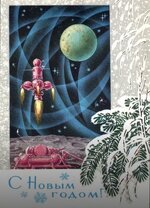
Новогодние космические открытки в СССР.
Открытка "С Новым годом". 1972 год.
Художник С. Кузнецов .
New Year's space cards in the USSR.
"Happy New Year" card. 1972.
Artist: S. Kuznetsov.
Tarjetas espaciales de Año Nuevo en la URSS.
Tarjeta de «Feliz Año Nuevo». 1972.
Artista: S. Kuznetsov.
Открытка "С Новым годом". 1972 год.
Художник С. Кузнецов .
New Year's space cards in the USSR.
"Happy New Year" card. 1972.
Artist: S. Kuznetsov.
Tarjetas espaciales de Año Nuevo en la URSS.
Tarjeta de «Feliz Año Nuevo». 1972.
Artista: S. Kuznetsov.
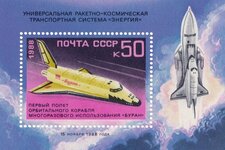
Космическая филателия в СССР.
1988 год. Почтовая марка ПЕРВЫЙ ПОЛЕТ ОРБИТАЛЬНОГО КОСМИЧЕСКОГО КОРАБЛЯ «БУРАН».
30.12.1988
Печать: глубокая
Бумага: мелованная
Тип перфорации: рамочная
Художник: Р. Стрельников
Space Philately in the USSR.
1988. Postage stamp: FIRST FLIGHT OF THE BURAN ORBITAL SPACE SHIP.
December 30, 1988
Print: Intaglio
Paper: Coated
Perforation: Frame
Artist: R. Strelnikov
Filatelia espacial en la URSS.
1988. Sello postal: PRIMER VUELO DE LA NAVE ESPACIAL ORBITAL BURAN.
30 de diciembre de 1988
Impresión: Grabado calcográfico
Papel: Estucado
Perforación: Marco
Artista: R. Strelnikov
1988 год. Почтовая марка ПЕРВЫЙ ПОЛЕТ ОРБИТАЛЬНОГО КОСМИЧЕСКОГО КОРАБЛЯ «БУРАН».
30.12.1988
Печать: глубокая
Бумага: мелованная
Тип перфорации: рамочная
Художник: Р. Стрельников
Space Philately in the USSR.
1988. Postage stamp: FIRST FLIGHT OF THE BURAN ORBITAL SPACE SHIP.
December 30, 1988
Print: Intaglio
Paper: Coated
Perforation: Frame
Artist: R. Strelnikov
Filatelia espacial en la URSS.
1988. Sello postal: PRIMER VUELO DE LA NAVE ESPACIAL ORBITAL BURAN.
30 de diciembre de 1988
Impresión: Grabado calcográfico
Papel: Estucado
Perforación: Marco
Artista: R. Strelnikov

