

"Пуск первого штатного МКС(многоразовый космический комплекс) «Энергия–Буран» 1Л был запланирован на 15 октября 1988 года. При осуществлении автоматической программы запуска МКС, которая реализует последовательное прохождение более 350 команд на исполнение и проверку всех
операций по подготовке носителя к полету за 41-й сек. до включения двигателей, произошел отбой. Причиной явилась неотстыковка платы системы прицеливания из-за заклинивания механизма соединения. Топливо с изделия было слито, причины определены
однозначно и устранены. Повторный пуск комплекса 1Л был реализован 15 ноября 1988 года успешно. Орбитальный комплекс «Буран»
совершил два витка вокруг Земли и автоматически приземлился на
специальном аэродроме на Байконуре при сильном встречно-боковом ветре (до 25 м/с) с большой точностью. Касание посадочной полосы с точностью до 80 м, отклонение от расчетной белой полосы – 1,5 м. Снаряжение ОК «Буран» было несколько нештатным: отсутствовали системы жизнеобеспечения и энергетическая установка для
энергообеспечения ОК при штатной продолжительности полета.
К первым летным испытаниям комплекса 6СЛ и 1Л надежность двигателей 11Д521 и 11Д122 была резко увеличена.
На момент запуска комплекса 6СЛ было испытано уже 135 двигателей 11Д521 в 432 огневых прожигах с общей наработкой 46 900
сек., что соответствовало 335 летным циклам. По двигателю 11Д122 были проведены 472 испытания на 96 двигателях с общей
наработкой 63 360 сек., что составило 138 летных циклов.
При пуске комплекса 1Л двигатель 11Д521 прошел 546 испытаний на 193 двигателях с общей наработкой 73 500 сек. (507 летных
циклов). В результате чего двигатель 11Д521 имел гарантированно 10 ресурсов по продолжительности работы при 5% увеличения величины тяги.
Двигатель 11Д122 к этому полету прошел 504 огневых испытания на 105 двигателях, имел общую наработку 80 000 сек. (174
летных циклов) и имел гарантированный трехкратный ресурс работы.
Таким образом, при обеспечении наземной и летной отработки МКС «Энергия–Буран» создан уникальный комплекс наземных стендов и экспериментальных установок, который может обеспечить надежную отработку всех перспективных и больших ракетносителей, разгонных блоков, многоразовых космических транспортных средств, орбитальных многоразовых кораблей и станций".(Олег Бакланов."Космос – моя судьба").
......................................................................
Цит.по: Олег Дмитриевич Бакланов
КОСМОС – МОЯ СУДЬБА
Записки из «Матросской тишины»
I том
Редактор-составитель В.П. Лысенко
_______________________________
Директор АНО «ОСЛН» Л.Г. Рудин
Дизайн, компьютерная верстка А.Е. Успенский
Корректор Л.И. Смирнова
Общество сохранения
литературного наследия / Москва /2012 год
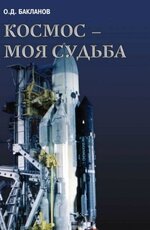
На фото слева - обложка книги "Космос - моя судьба": на фото справа - автор книги Олег Бакланов.
"The launch of the first operational Energia–Buran reusable space transportation system (RSTS), vehicle 1L, was scheduled for October 15, 1988. During execution of the automatic launch sequence, which involved the sequential processing and verification of more than 350 commands over the final 41 seconds before engine ignition, the countdown was aborted.
The cause was the failure of a guidance-system board to disconnect because of a jammed coupling mechanism. The propellants were drained from the vehicle, the cause was identified unambiguously and corrected. The second launch attempt of vehicle 1L was successfully carried out on November 15, 1988.
The Buran orbital spacecraft completed two orbits around Earth and landed automatically on a specially prepared runway at Baikonur despite strong crosswinds and headwinds (up to 25 m/s), achieving remarkable accuracy. Touchdown occurred within 80 meters of the target point, and the deviation from the designated centerline was only 1.5 meters.
The Buran orbiter was not fully equipped for this mission: life-support systems and the onboard power system required for a full-duration operational flight were not installed.
Before the first flight tests of vehicles 6SL and 1L, the reliability of the 11D521 and 11D122 engines had been significantly improved.
By the time of the 6SL launch, 135 model 11D521 engines had undergone 432 hot-fire tests with a total operating time of 46,900 seconds, equivalent to 335 flight cycles.
For the 11D122 engine, 472 tests had been conducted on 96 engines, with a total operating time of 63,360 seconds, equivalent to 138 flight cycles.
By the time of the 1L mission, the 11D521 engine had undergone 546 hot-fire tests on 193 engines, accumulating 73,500 seconds of operation (507 flight cycles). As a result, the 11D521 engine possessed a guaranteed service life equivalent to ten full mission durations while providing a 5% increase in thrust.
The 11D122 engine, by that time, had completed 504 hot-fire tests on 105 engines, accumulated 80,000 seconds of operation (174 flight cycles), and possessed a guaranteed threefold service-life margin.
Thus, during the ground and flight testing of the Energia–Buran system, a unique complex of ground-test stands and experimental facilities was created. This infrastructure became capable of supporting the reliable development and testing of future heavy launch vehicles, upper stages, reusable space transportation systems, reusable orbital spacecraft, and space stations."
(Oleg Baklanov, Space – My Destiny)
..............................................................
Quoted from:
Oleg Dmitrievich Baklanov
SPACE – MY DESTINY
Notes from Matrosskaya Tishina Prison
Volume I
Compiler and editor: V.P. Lysenko
Director of the Society for the Preservation of Literary Heritage: L.G. Rudin
Design and layout: A.E. Uspensky
Proofreader: L.I. Smirnova
Society for the Preservation of Literary Heritage
Moscow, 2012
The photo on the left shows the cover of the book "Space is My Destiny": the photo on the right shows the book's author, Oleg Baklanov.
"El lanzamiento del primer sistema espacial reutilizable operativo Energía–Burán (vehículo 1L) estaba programado para el 15 de octubre de 1988. Durante la ejecución de la secuencia automática de lanzamiento, que implicaba la ejecución y verificación consecutiva de más de 350 órdenes durante los últimos 41 segundos antes del encendido de los motores, se produjo una cancelación automática.
La causa fue que una placa del sistema de guiado no se desacopló debido al bloqueo de un mecanismo de unión. El combustible fue drenado del vehículo, la causa fue identificada de forma inequívoca y eliminada. El segundo intento de lanzamiento del vehículo 1L se realizó con éxito el 15 de noviembre de 1988.
La nave orbital Burán completó dos órbitas alrededor de la Tierra y aterrizó automáticamente en una pista especialmente preparada en Baikonur, a pesar de fuertes vientos laterales y de frente (de hasta 25 m/s), logrando una precisión extraordinaria. El contacto con la pista se produjo con una precisión de 80 metros y la desviación respecto a la línea central prevista fue de tan solo 1,5 metros.
El equipamiento del orbitador Burán para esta misión no era completamente estándar: carecía de sistemas de soporte vital y de la instalación energética necesaria para una misión de duración completa.
Antes de las primeras pruebas de vuelo de los vehículos 6SL y 1L, la fiabilidad de los motores 11D521 y 11D122 había aumentado considerablemente.
Para el lanzamiento del complejo 6SL, se habían probado ya 135 motores 11D521 en 432 encendidos experimentales, con un tiempo total de funcionamiento de 46.900 segundos, equivalente a 335 ciclos de vuelo.
En el caso del motor 11D122, se realizaron 472 pruebas sobre 96 motores, acumulando un tiempo total de funcionamiento de 63.360 segundos, equivalente a 138 ciclos de vuelo.
Para la misión 1L, el motor 11D521 había superado 546 pruebas de encendido sobre 193 motores, acumulando 73.500 segundos de funcionamiento (507 ciclos de vuelo). Como resultado, el motor 11D521 disponía de una vida útil garantizada equivalente a diez misiones completas, manteniendo además un incremento del 5 % en el empuje.
El motor 11D122, para entonces, había completado 504 pruebas de encendido sobre 105 motores, acumulando 80.000 segundos de funcionamiento (174 ciclos de vuelo), y poseía una reserva garantizada equivalente a tres ciclos completos de servicio.
De este modo, durante las pruebas terrestres y de vuelo del sistema Energía–Burán, se creó un complejo único de bancos de ensayo e instalaciones experimentales. Esta infraestructura permitía realizar con gran fiabilidad el desarrollo y la validación de futuros lanzadores pesados, etapas superiores, sistemas espaciales reutilizables, vehículos orbitales reutilizables y estaciones espaciales."
(Oleg Baklanov, El espacio: mi destino)
..............................................................
Citado de:
Oleg Dmitrievich Baklanov
EL ESPACIO: MI DESTINO
Apuntes desde la prisión Matrósskaya Tishiná
Tomo I
Editor y compilador: V.P. Lysenko
Director de la Sociedad para la Conservación del Patrimonio Literario: L.G. Rudin
Diseño y maquetación: A.E. Uspenski
Correctora: L.I. Smirnova
Sociedad para la Conservación del Patrimonio Literario
Moscú, 2012
La foto de la izquierda muestra la portada del libro "El espacio es mi destino"; la foto de la derecha muestra al autor del libro, Oleg Baklanov.

операций по подготовке носителя к полету за 41-й сек. до включения двигателей, произошел отбой. Причиной явилась неотстыковка платы системы прицеливания из-за заклинивания механизма соединения. Топливо с изделия было слито, причины определены
однозначно и устранены. Повторный пуск комплекса 1Л был реализован 15 ноября 1988 года успешно. Орбитальный комплекс «Буран»
совершил два витка вокруг Земли и автоматически приземлился на
специальном аэродроме на Байконуре при сильном встречно-боковом ветре (до 25 м/с) с большой точностью. Касание посадочной полосы с точностью до 80 м, отклонение от расчетной белой полосы – 1,5 м. Снаряжение ОК «Буран» было несколько нештатным: отсутствовали системы жизнеобеспечения и энергетическая установка для
энергообеспечения ОК при штатной продолжительности полета.
К первым летным испытаниям комплекса 6СЛ и 1Л надежность двигателей 11Д521 и 11Д122 была резко увеличена.
На момент запуска комплекса 6СЛ было испытано уже 135 двигателей 11Д521 в 432 огневых прожигах с общей наработкой 46 900
сек., что соответствовало 335 летным циклам. По двигателю 11Д122 были проведены 472 испытания на 96 двигателях с общей
наработкой 63 360 сек., что составило 138 летных циклов.
При пуске комплекса 1Л двигатель 11Д521 прошел 546 испытаний на 193 двигателях с общей наработкой 73 500 сек. (507 летных
циклов). В результате чего двигатель 11Д521 имел гарантированно 10 ресурсов по продолжительности работы при 5% увеличения величины тяги.
Двигатель 11Д122 к этому полету прошел 504 огневых испытания на 105 двигателях, имел общую наработку 80 000 сек. (174
летных циклов) и имел гарантированный трехкратный ресурс работы.
Таким образом, при обеспечении наземной и летной отработки МКС «Энергия–Буран» создан уникальный комплекс наземных стендов и экспериментальных установок, который может обеспечить надежную отработку всех перспективных и больших ракетносителей, разгонных блоков, многоразовых космических транспортных средств, орбитальных многоразовых кораблей и станций".(Олег Бакланов."Космос – моя судьба").
......................................................................
Цит.по: Олег Дмитриевич Бакланов
КОСМОС – МОЯ СУДЬБА
Записки из «Матросской тишины»
I том
Редактор-составитель В.П. Лысенко
_______________________________
Директор АНО «ОСЛН» Л.Г. Рудин
Дизайн, компьютерная верстка А.Е. Успенский
Корректор Л.И. Смирнова
Общество сохранения
литературного наследия / Москва /2012 год
На фото слева - обложка книги "Космос - моя судьба": на фото справа - автор книги Олег Бакланов.
"The launch of the first operational Energia–Buran reusable space transportation system (RSTS), vehicle 1L, was scheduled for October 15, 1988. During execution of the automatic launch sequence, which involved the sequential processing and verification of more than 350 commands over the final 41 seconds before engine ignition, the countdown was aborted.
The cause was the failure of a guidance-system board to disconnect because of a jammed coupling mechanism. The propellants were drained from the vehicle, the cause was identified unambiguously and corrected. The second launch attempt of vehicle 1L was successfully carried out on November 15, 1988.
The Buran orbital spacecraft completed two orbits around Earth and landed automatically on a specially prepared runway at Baikonur despite strong crosswinds and headwinds (up to 25 m/s), achieving remarkable accuracy. Touchdown occurred within 80 meters of the target point, and the deviation from the designated centerline was only 1.5 meters.
The Buran orbiter was not fully equipped for this mission: life-support systems and the onboard power system required for a full-duration operational flight were not installed.
Before the first flight tests of vehicles 6SL and 1L, the reliability of the 11D521 and 11D122 engines had been significantly improved.
By the time of the 6SL launch, 135 model 11D521 engines had undergone 432 hot-fire tests with a total operating time of 46,900 seconds, equivalent to 335 flight cycles.
For the 11D122 engine, 472 tests had been conducted on 96 engines, with a total operating time of 63,360 seconds, equivalent to 138 flight cycles.
By the time of the 1L mission, the 11D521 engine had undergone 546 hot-fire tests on 193 engines, accumulating 73,500 seconds of operation (507 flight cycles). As a result, the 11D521 engine possessed a guaranteed service life equivalent to ten full mission durations while providing a 5% increase in thrust.
The 11D122 engine, by that time, had completed 504 hot-fire tests on 105 engines, accumulated 80,000 seconds of operation (174 flight cycles), and possessed a guaranteed threefold service-life margin.
Thus, during the ground and flight testing of the Energia–Buran system, a unique complex of ground-test stands and experimental facilities was created. This infrastructure became capable of supporting the reliable development and testing of future heavy launch vehicles, upper stages, reusable space transportation systems, reusable orbital spacecraft, and space stations."
(Oleg Baklanov, Space – My Destiny)
..............................................................
Quoted from:
Oleg Dmitrievich Baklanov
SPACE – MY DESTINY
Notes from Matrosskaya Tishina Prison
Volume I
Compiler and editor: V.P. Lysenko
Director of the Society for the Preservation of Literary Heritage: L.G. Rudin
Design and layout: A.E. Uspensky
Proofreader: L.I. Smirnova
Society for the Preservation of Literary Heritage
Moscow, 2012
The photo on the left shows the cover of the book "Space is My Destiny": the photo on the right shows the book's author, Oleg Baklanov.
"El lanzamiento del primer sistema espacial reutilizable operativo Energía–Burán (vehículo 1L) estaba programado para el 15 de octubre de 1988. Durante la ejecución de la secuencia automática de lanzamiento, que implicaba la ejecución y verificación consecutiva de más de 350 órdenes durante los últimos 41 segundos antes del encendido de los motores, se produjo una cancelación automática.
La causa fue que una placa del sistema de guiado no se desacopló debido al bloqueo de un mecanismo de unión. El combustible fue drenado del vehículo, la causa fue identificada de forma inequívoca y eliminada. El segundo intento de lanzamiento del vehículo 1L se realizó con éxito el 15 de noviembre de 1988.
La nave orbital Burán completó dos órbitas alrededor de la Tierra y aterrizó automáticamente en una pista especialmente preparada en Baikonur, a pesar de fuertes vientos laterales y de frente (de hasta 25 m/s), logrando una precisión extraordinaria. El contacto con la pista se produjo con una precisión de 80 metros y la desviación respecto a la línea central prevista fue de tan solo 1,5 metros.
El equipamiento del orbitador Burán para esta misión no era completamente estándar: carecía de sistemas de soporte vital y de la instalación energética necesaria para una misión de duración completa.
Antes de las primeras pruebas de vuelo de los vehículos 6SL y 1L, la fiabilidad de los motores 11D521 y 11D122 había aumentado considerablemente.
Para el lanzamiento del complejo 6SL, se habían probado ya 135 motores 11D521 en 432 encendidos experimentales, con un tiempo total de funcionamiento de 46.900 segundos, equivalente a 335 ciclos de vuelo.
En el caso del motor 11D122, se realizaron 472 pruebas sobre 96 motores, acumulando un tiempo total de funcionamiento de 63.360 segundos, equivalente a 138 ciclos de vuelo.
Para la misión 1L, el motor 11D521 había superado 546 pruebas de encendido sobre 193 motores, acumulando 73.500 segundos de funcionamiento (507 ciclos de vuelo). Como resultado, el motor 11D521 disponía de una vida útil garantizada equivalente a diez misiones completas, manteniendo además un incremento del 5 % en el empuje.
El motor 11D122, para entonces, había completado 504 pruebas de encendido sobre 105 motores, acumulando 80.000 segundos de funcionamiento (174 ciclos de vuelo), y poseía una reserva garantizada equivalente a tres ciclos completos de servicio.
De este modo, durante las pruebas terrestres y de vuelo del sistema Energía–Burán, se creó un complejo único de bancos de ensayo e instalaciones experimentales. Esta infraestructura permitía realizar con gran fiabilidad el desarrollo y la validación de futuros lanzadores pesados, etapas superiores, sistemas espaciales reutilizables, vehículos orbitales reutilizables y estaciones espaciales."
(Oleg Baklanov, El espacio: mi destino)
..............................................................
Citado de:
Oleg Dmitrievich Baklanov
EL ESPACIO: MI DESTINO
Apuntes desde la prisión Matrósskaya Tishiná
Tomo I
Editor y compilador: V.P. Lysenko
Director de la Sociedad para la Conservación del Patrimonio Literario: L.G. Rudin
Diseño y maquetación: A.E. Uspenski
Correctora: L.I. Smirnova
Sociedad para la Conservación del Patrimonio Literario
Moscú, 2012
La foto de la izquierda muestra la portada del libro "El espacio es mi destino"; la foto de la derecha muestra al autor del libro, Oleg Baklanov.

