Space Shuttle replacement project

george7378

DON'T PANIC
Addon Developer
Donator
Joined
Jun 26, 2009
Messages
1,045
Reaction score
0
Points
36
Hi everyone,

I am doing a project to try and answer the question 'what is the best replacement design for the space shuttle' and I was wondering whether there are any papers, articles or research that you could direct me to? I have started by explaining the different designs of spacecraft (Apollo-style capsule, winged craft, SSTO, etc...) and I now need to try and explain which is best. I'd be happy for things like statistics for different craft, research on the different types, and also possible calculations that I could do to compare the different types.

Thanks.
 
'what is the best replacement design for the space shuttle' is really only part of the question. The rest of it is ''what is the best replacement design for the space shuttle for mission type x'

If you want something to do LEO and back then maybe another shuttle is best? One that improves on reliability and reusability?

If you want to go BEO then maybe a capsule is best.

You really need to design the follow on mission before it's possible to work out a successor.
 
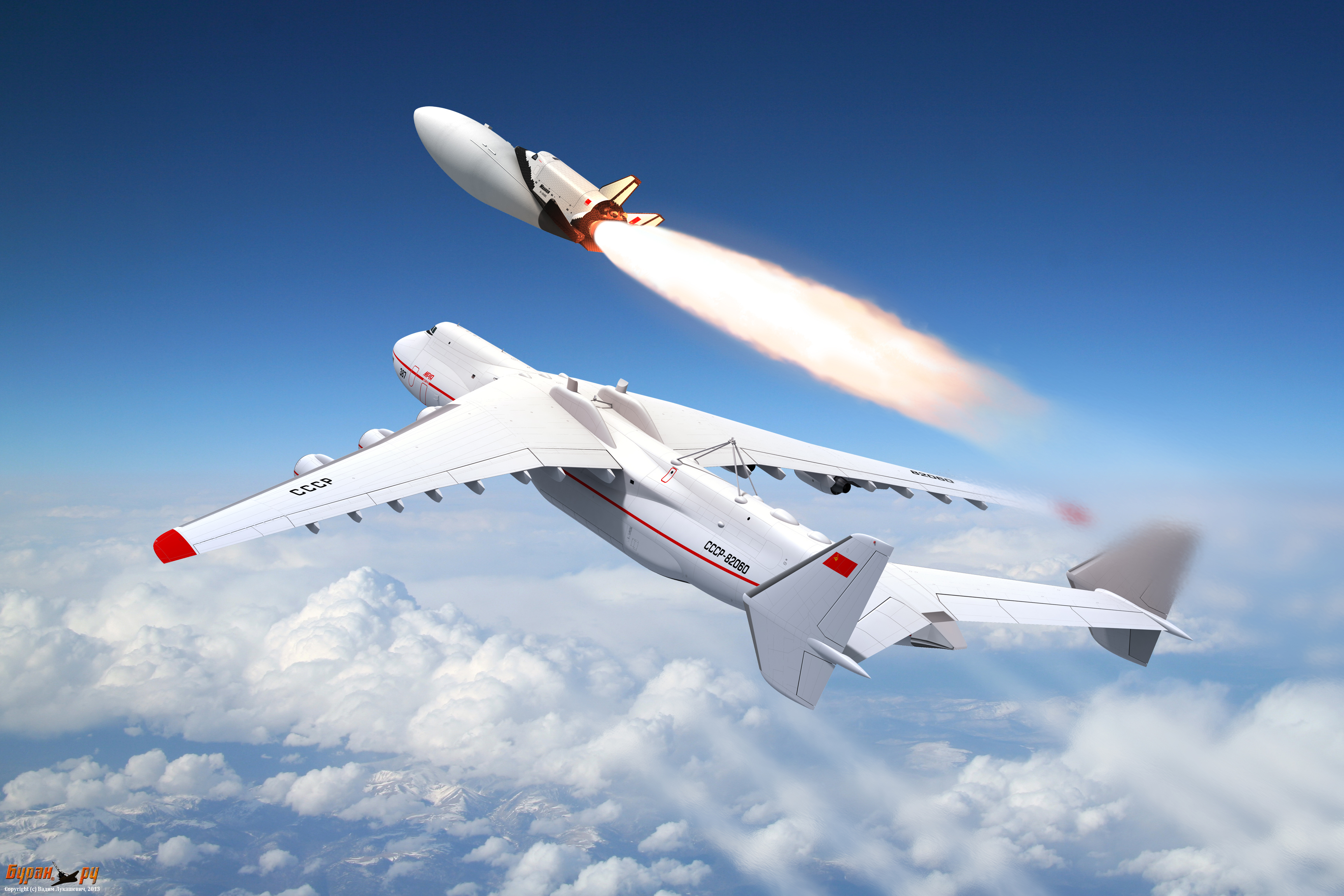
I'd always wondered about a three-stage mostly reusable system for launching craft to LEO. So much propellant is used to get rockets up the first 20km or so it's unbelievable. I quite like the idea of a cargo aircraft as stage 1 taking you up to about 15km altitude and 0.7mach. Fully developed already and reliable, reusable and cheap.

Stage 2 is SCRAM or some hypersonic air-breathing winged vessel as second stage taking you up to probably 30-50km and mach 5-10. Final part of stage-2 flight would be for the winged vessel to pitch up putting you on a trajectory that takes you out of the atmosphere to 80-100km apogee.

From there, it releases the third stage which can be a conventional disposable rocket stage with your payload to LEO. You wouldn't be able to send up large cargoes and there are probably large problems with it, but thoughts that I've had whilst I've been supposed to be doing other things.
 
It actually seems like it might be a better idea to ask 'where should NASA's next manned space program focus its efforts' as the 'replacement design' question is probably too broad to actually answer.
 
Another problem with that as NASA don't decide where they fly, Congress decides (in theory based on the national interest - in practice on whatever wins them seats in the next election).

SLS is currently the replacement for the shuttle. You can read more about it here.
 
There were several "replacement shuttle" concepts in the 1980s. There was also NASP (National Aero Space Plane) and the Space Launch Initiative (which led to things like the X-33 and DC-Y concepts), and things such as the HL-20 Personnel Launch System and Orbital Space Plane, which would have launched on expendable boosters and worked in tandem with the Shuttle, performing mainly a crew transfer role.

A capsule alone isn't going to give you BEO exploration. You need stuff like departure stages and habitats and landers and equipment platforms as well.

Of course, capsules can also perform the role of LEO crew transfer pretty well. Spaceplanes do however still have some advantages over axisymmetric, parachute or rocket recovered vehicles. It should be noted however, that many capsules make use of a lifting reentry- like a spaceplane, so are in effect lifting vehicles, even if they are recovered via parachute or are axisymmetric.


The primary purpose of the shuttle was as a LEO deployment, construction, repair, and recovery vehicle. Having a shuttle with an airlock, RMS and a crew is not needed for some things (as the ISS demonstrates- it has all of these things onboard), but would be helpful for some satellite deployment scenarios. The problem is, use of a space platform for this purpose has not yet become viable.

In practice the Shuttle often acted as a very expensive, very heavy payload fairing.

Still, some research into potential RLVs would be pretty interesting, but you still have issues with flight-rates and stuff like that. I think with an RLV you really want a system that is as simple and straightforward as possible, and I think the method suggested by agentgonzo is potential to be... ungainly. Ideally for an RLV, you want an SSTO, which has no seperate parts to be mated together, only one set of systems that need to be refurbished, no seperation events, and no seperate recovery events.

Of course, an SSTO has... physical problems, which makes it less than ideal. But there are a lot of different ways to handle these problems.

But one thing is for sure: if you try to make a shuttle successor, don't make it like the Shuttle. More easily handlable RCS propellants would help. And a more durable TPS. And maybe engines better optimised for cost of refurbishment (even if this comes at a cost to performance). And boosters that don't have to be broken up, sent all the way to Utah, bent back into shape, fueled, sent all the way back, and re-built. And of course more optimised ground handling procedures would help as well.

And there is another thing about STS: it was tied to humans. It really doesn't make sense for a launch vehicle. They just add mass and danger. Having the capability for a vehicle to be crewed is nice, but don't make it obligatory. For example, it made no sense on STS-51L to risk the lives of seven people just for a communication satellite. In addition, extra cost goes toward all sort of astronaut related factors, which means flying the vehicle unmanned on cargo flights will reduce cost/kg to orbit.

SLS is the worst project that the US space program has ever seen. It is expensive, lacking totally in innovation, unecessary, and existent entirely because of pork-barrel relationships and bad politics.
 
Last edited:
Another problem with that as NASA don't decide where they fly, Congress decides (in theory based on the national interest - in practice on whatever wins them seats in the next election).

SLS is currently the replacement for the shuttle. You can read more about it here.
Why do the SLS show the same orange tank as the shuttle? As far as I understand it, the orangeness of the ET for the shuttle was due to the SOFI (spray on foam insulation) that turns orange when it oxidises. This was used to prevent ice buildup on the ET that would detatch at T-0 and strike the delicate orbiter.

Without a sidealong orbiter on the SLS, there is no need for the SOFI, so no need for the ET to be orange.
 
That's a good question and I don't know, probably because it's a shuttle derived tank and everyone 'knows' the shuttle tanks are orange.

The only reason I can think off is that not only does SOFI stop ice buildup it also insulates the tank - keeping the cold in, this reduces boiloff so maybe thats a reason to keep it? Weight of the SOFI would have to be taken into account vs the boiloff rates though.
 
The orange insulation is not only there to prevent ice buildup that could damage the Orbiter. It's there to guard against some other problematic effects, such as LH2 boiloff and the formation of liquid air.

The Delta IV has similar insulation foam:

Delta_IV_Heavy_rocket_on_launch_pad.jpg


Apparently the S-II stage had similar foam, but this was painted white like the first few STS external tanks.
 
I see no reason at all to make a space shuttle replacement, unless it's going to be a space shuttle. Only a shuttle can replace a shuttle.

Having made that point, what's the point?

The only mission I can see for the shuttle replacement is to go up and collect trash, bring it back for disposal or research.

There will probably never be another LEO space station, and we've proven that a truck is the worst way to get the parts into space.

Now that the prototypical discussion is all academic. Lets talk orbiter...

If you want to make a shuttle replacement that's near tech, go for it.
If you want to make a shuttle replacement that's sci-fi, go for it.
It's your project, let nothing get in your way! The only limit is your imagination!
 
A truck isn't necessarily the worst way to get stuff into space, but STS sure proved that an expensive and failed truck is.

Of course it would be easier to justify if you were using an RLV as that truck, rather than a heavy and expensive payload fairing.

If you want to get rid of trash, you just deorbit it. If you want to recover things, then a spaceplane makes sense. But good luck spending several billion dollars to recover something and put it in a museum. :dry:
 
But good luck spending several billion dollars to recover something and put it in a museum. :dry:
In a way it's a shame that the Shuttle turned out to be so expensive to run. Originally it was supposed to be cheap and frequent. It didn't hit either of these objectives and so was not used for a lot of things it was originally intended. If it was as cheap, safe and regular as promised, then spaceflight now would have been very different - repair/retrieval missions would have been very economically viable and it could have been common practise to launch a bird for a few years, bring it down for maintainance, refit it then relaunch it. With the price and infrequency of shuttle launches being what they turned out to be rather than what they were planned to be, this just wasn't an economic option - and that's a shame.

Cheaper/frequent shuttle flights would have changed the space industry to use and want cheap/frequent retrieval missions that would have in turn bred more shuttles.
 
^Agreed

I also like to think if you build lots of anything, the price comes down exponentially.

An F-16 cost 14 Mil, we built several hundred. It was and is a throw away fighter. One engine, One pilot. small loss.

However a B-2 cost 2 Bil, we built 21. It was and is a high value bomber. Two crew members, 4 engines. Huge loss.

I think if we had applied the same theory, build a bunch of shuttles, we could have seen more savings, and a smaller loss.

I also think sending seven people on a mission and bringing them all back is a bad idea. 3 or 4 could have accomplished the same missions, and been far less risky to the riders. 7 members to the ISS just to drop off 3 is an OK idea. 4 members to the ISS to pick up 3 and return all 7 is OK at end of mission, in the mean time 4 up, and 4 return, with three different crew, is more economy. But this is all academic, and I digress.

George7378, build your add-on. It's cheap, and easy, and nobody dies for real. who knows we all might have some fun along the way.
 
I also like to think if you build lots of anything, the price comes down exponentially.
...
I think if we had applied the same theory, build a bunch of shuttles, we could have seen more savings, and a smaller loss.

According to this page, the last shuttle built cost $1.7 billion. Probably a good deal more if you include development costs, but still comparable to the cost you quote for a B-2. Average cost to launch a shuttle: $450 million. I haven't seen any figures for B-2 sortie costs, but I'm probably safe in guessing they're a whole lot less than $450 million.
If NASA had bought 10, or 20, or 100 shuttles, the unit cost would have come down, but it still would have cost hundreds of millions for each launch. Much of that cost comes from the hordes of skilled workers required to refurbish the shuttle after each mission. With ten times as many orbiters, you would need ten times as many workers to maintain the same flight rate per orbiter. More VABs and launchpads would likely also need to be built. Otherwise you'd get the same flight rate from the shuttle program as a whole, but with each orbiter flying a lot less often. Not to mention you'd need more astronauts, more mission control staff, more trainers, and so on. Also, and not to be morbid, but after each shuttle disaster you'd have an even more enormous capital asset sitting on the ground for years, accomplishing nothing but still costing you a ton of money.

I also think sending seven people on a mission and bringing them all back is a bad idea. 3 or 4 could have accomplished the same missions, and been far less risky to the riders.

I doubt that fewer crew on each shuttle mission would have improved anything. Everybody had a job to do, so with fewer people on board they would just get less done, requiring more flights to accomplish the same goals. Given the same failure rate, more launches means more risk of losing a crew. Also, more launches equals more expenses.

The basic problem with the STS was that 1970s technology (and timeless politics) could not deliver a reusable launch vehicle at a reasonable price. Too many things needed too much work between flights, like the SSMEs, the ludicrously finicky TPS, and who thought shipping SRBs across the country to refuel them was a good idea?
It was a grand dream, but let's face it, STS would have been replaced long ago if there hadn't been so many vested interests, in NASA, congress, and industry, keeping it alive.
Perhaps something like Skylon will make the dream a reality before too many more decades pass.

 
'what is the best replacement design for the space shuttle' is really only part of the question. The rest of it is ''what is the best replacement design for the space shuttle for mission type x'

If you want something to do LEO and back then maybe another shuttle is best? One that improves on reliability and reusability?

If you want to go BEO then maybe a capsule is best.

You really need to design the follow on mission before it's possible to work out a successor.

Yeah, it's always depressed me how every branch of the military, with their huge budgets, get to have all manner of vehicles for a wide range of missions, while NASA, with its puny budget, always had to pick ONE design for ONE type of mission, and milk it for all its worth, then scrap it entirely and move on to another one.

Where's my damn Starfleet?! :facepalm:
 
Something that needs to be remembered is that the STS orbiter itself caused very few problems. Challenger was destroyed due to SRB O-ring burn through, and Columbia was lost due to foam impacts from the ET. The technologies in the Orbiter itself were very sound, the issue was arrangement of the various components of the stack.

A HL-20 style craft on top of a rocket stack, built with essentially the same tech as the space shuttle, would be a hell of a thing in my book. We learned a lot from the STS program - such a craft would let us utilize it to LEO safely and more efficiently. Wings for some crossrange capability coming in isn't the end of the world.
 
SSTO or go home. To make a craft actually useful it and highly resistant against political change you have to operate it without all the chaos and attention to the smallest details like with STS. In essence we need a space 747 if we want another shuttle atleast in my opinion.

Of course it will take 100+ years to get the tech to get to this point in any seriousness and on top of that you need a reason to fly it so often.

For just about any other reason capsule is better.
 
I have no problems with a reuseable TSTO.

Better a TSTO in the air than a SSTO on the drawing board.
 
SSTO or go home. To make a craft actually useful it and highly resistant against political change you have to operate it without all the chaos and attention to the smallest details like with STS. In essence we need a space 747 if we want another shuttle at least in my opinion.
Of course it will take 100+ years to get the tech to get to this point in any seriousness and on top of that you need a reason to fly it so often.
For just about any other reason capsule is better.

No,it won't. It could be done, like, tomorrow if it were tried.
The required engines and stages already exist.


Bob Clark
 
Last edited:
Back
Top