Viscosity of Kerosene and Liquid Ogygen

Notebook

Addon Developer
Addon Developer
News Reporter
Donator
Joined
Nov 20, 2007
Messages
11,965
Reaction score
765
Points
188
Went looking for these values, and while Kerosene, seems to be fairly easy to pin down, Lox is more tricky. I assume there is a good reason for this?
Any chemists out there know why?

N.
 
Maybe the reason is, that oxygen is a two-atom molecule, maybe there is a standard viscosity for such liquids.
 
Your'e probably right! I don't know. The reason I ask, is a book I have gave a ratio of about 16:1 for the relative viscosities. I just found that large, and went looking for values, and, then it got tricky...

N.
 
Your'e probably right! I don't know. The reason I ask, is a book I have gave a ratio of about 16:1 for the relative viscosities. I just found that large, and went looking for values, and, then it got tricky...

N.

Well, liquid oxygen is cryogenic, so that alone should be pretty viscous. And I remember from rocket accident movies, that it spills very fast....

EDIT: And from what I have found quickly, another interesting fact: The density of liquid oxygen at -183°C is lower (1.14 g/L) as the density of the gas at 0°C (1.429 g/L).

EDIT2: Maybe this page can help you... I have not found the data yet, but I am almost sure the numbers are there. Maybe 4 eyes find the data in half the time...

http://webbook.nist.gov/chemistry/

EDIT3: Cool, found the data, and looks like a linear formula:

Oxygen
 
Many thanks Urwumpe, they are good links, as always they generate more questions!
I was looking at how turbo-pumps move volume from the tanks to the engines, and the data I have often qoutes density, but never refers to the viscosity of the liquids the pumps are moving.

I missed your updates.

N.
 
Many thanks Urwumpe, they are good links, as always they generate more questions!
I was looking at how turbo-pumps move volume from the tanks to the engines, and the data I have often qoutes density, but never refers to the viscosity of the liquids the pumps are moving.

Viscosity appear in two places in such systems: In the hydrodynamic function of the pump blades and the equations for the pipes. In general you don't need viscosity for simulating the engine, but for designing it.
 
In general you don't need viscosity for simulating the engine, but for designing it.
Thats an interesting comment. As usual most of this relates to Blue Streak(sorry), and the design and testing of it. Considering it had a lot of links to Convair ATLAS I couldn't find much about fluid flow.
It must have been important, they built this structure:-

http://i89.photobucket.com/albums/k207/Notebook_04/BlueStreakFlowTestRig.jpg

just to test the, well, flow.

N.
 
Well, sure, it was not possible to just run a simulation at that time.

Today, you have computer tools which can calculate the flow under different accelerations and vibration levels.
 
From what I've read they were most interested in the mass flow from the tanks toward the turbo-pumps.
It implies the delivery may have been restricted, more than the "suction" from the pumps?
There wasn't much pressure in the tanks during flight.

N.
 
From what I've read they were most interested in the mass flow from the tanks toward the turbo-pumps.
It implies the delivery may have been restricted, more than the "suction" from the pumps?
There wasn't much pressure in the tanks during flight.

You always have hydrostatic pressure and this depends on the local acceleration. Also, the pumps require a high enough head pressure at their inlet, so they don't cavitate.
 
Indeed, as I understand it the turbo-pumps would transfer a low pressure input to a high pressure output, and at the same time the mass flow is constatnt?
 
Indeed, as I understand it the turbo-pumps would transfer a low pressure input to a high pressure output, and at the same time the mass flow is constatnt?

Of course! ;)

A pump does not generate mass. What changes at the exit of the pump is the volume flow.
 
is handling two such different liquids at much the same input and output pressures.
Its remarakble.

N.

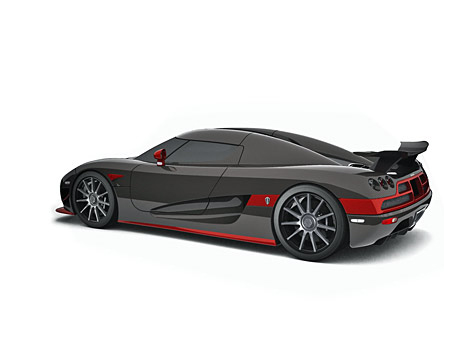
Well, for the fact that it is not Russian, yes. The Russians already build way cuter rocket engines at that time, and today really make the Konigeggs among the rocket engines...
 
I'm back where I started, its all good engineering! It seems the viscosity counts for little in this design. However I'll have to look at how it changes(lox) after it runs through the engine bell.

N.
 
I'm back where I started, its all good engineering! It seems the viscosity counts for little in this design. However I'll have to look at how it changes(lox) after it runs through the engine bell.

N.

I am not sure it undergoes a phase change. Expander cycle engines do that intentionally, but other engines usually prefer to prevent this.
 
Well, for the fact that it is not Russian, yes. The Russians already build way cuter rocket engines at that time, and today really make the Konigeggs among the rocket engines...

koenigsegg_supercar.jpg
?


What does the 'egg' mean anyway? King's Egg never made much sense to me.....
 
What does the 'egg' mean anyway? King's Egg never made much sense to me.....

Was founded in 1994 by Christian von Königsegg, who likely traces his family back to the barony of Königsegg. Their name comes from "Castrum Egge", a early medieval fortress, which was later renamed "Festung Königsegg"/Fortress Königsegg.
 
I'm back where I started, its all good engineering! It seems the viscosity counts for little in this design. However I'll have to look at how it changes(lox) after it runs through the engine bell.

N.
If I understand it correctly from the mechanical engineers I work with, the design of the pump (size, power, etc) is a function of the mass flow and pressure gain. The viscosity really only comes into play when designing the impeller so that it does not impart too much shear stress to the fluid resulting in cavitation (excessive blade pitch will do this, for example).
 
Last edited:
Thanks for that tblaxland, that makes sense.
Opened a real can of worms with this, I now have values for Lox in centi-Stokes, PascalSeconds, in centi-Poisse? and some odd unit called the SSU. Oh well, back to the calculator! When I was a lad it was in RedwoodSeconds

N.
 
Back
Top