Accidentally stumbled upon this - Space Shuttle Concepts

Turbinator

New member
Joined
Dec 12, 2009
Messages
1,145
Reaction score
0
Points
0
Location
Tellurian
One of hundredths of NASA website sub-pages, with a ton of interesting Space Shuttle related reading:

http://history.nasa.gov/SP-432/


Like this:

Automated orbital beam builder:
p66.jpg

p71.jpg


They used to dream big back then. What happened?


.
 
Last edited:
I absolutely love that style of artwork from back then. It somehow looked more real than today's computer generated crap.
 
Challenger

No. I don't think it was Challenger that caused any plans to be scrapped. It was more along the lines of economics.

Basically Apollo and its related programs didn't have to have an economic return. Apollo was about two things, beating out the Russians and getting some science back. Sure there were spin-offs, but that wasn't the driving factor.

The shuttle was not about exploration at all, it was a truck, and an experiment to see what types of things could get into space and perhaps do an economical return. When this wasn't forthcoming, nasa axed the program. Irregardless of age of the vehicles. If there was any hint shuttle type vehicles was going to be cost-effective, there'd have be a successor in the works long before this year's retirement.

So what, they built a space station.. Are they gonna build an ISS-2? Not likely. Are we gonna build a moon-base? Not likely. A mars base? No. If they send dudes to the asteroids, how many will they visit? One? Two?

The point being, is Nasa will try something once or twice and then drop it. Some idiot politician starts looking into the economic return and sees none, then the budget gets reduced.
 
..and for a little something not 100% space related, but still futuristic, take a look here at OMNI magazine. I only wish I could find a complete set of these in .pdf format.

http://www.omnimagonline.com/
http://www.apogeebooks.com/omnimag/ads/ads.html
http://zzmaster.best.vwh.net/SF/omni_index.html
http://en.wikipedia.org/wiki/Omni_(magazine)#Further_reading

And if you like classic computing, just before the age of home computing with the likes of c64 and amiga and atari and apple II, then check out --

http://www.atariage.com/forums/topic/167235-byte-magazine/
There's a great scanning project for all the old BYTE magazines there.

And other classic computing magazines --
http://atarimagazines.com/

There's more, but that sort of stuff might not interest everyone here.
But this will, I found more of the old-style 70's conceptual art here --

http://history.nasa.gov/series95.html
http://history.nasa.gov/SP-432/sp432.htm
http://www.spaceflight.nasa.gov/shuttle/reference/green/
http://www.nss.org/resources/library/shuttledecision/index.htm


This book, available for really cheap, under $10.00 is just chock-full of 70's shuttle artwork --
ShuttleBook.jpg


As is this book, online at -- http://history.nasa.gov/SP-407/sp407.htm
cover.jpg


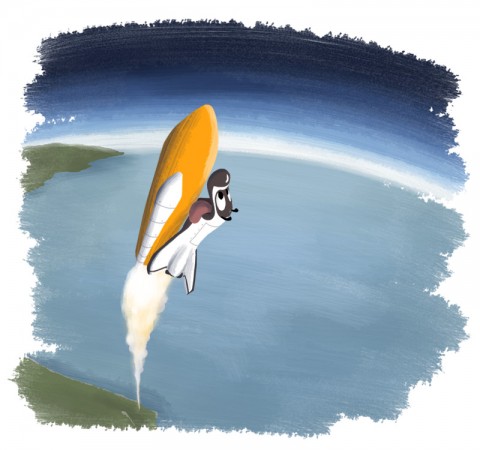
And I found this to be cute and cuddly --
shuttle2-480x450.jpg


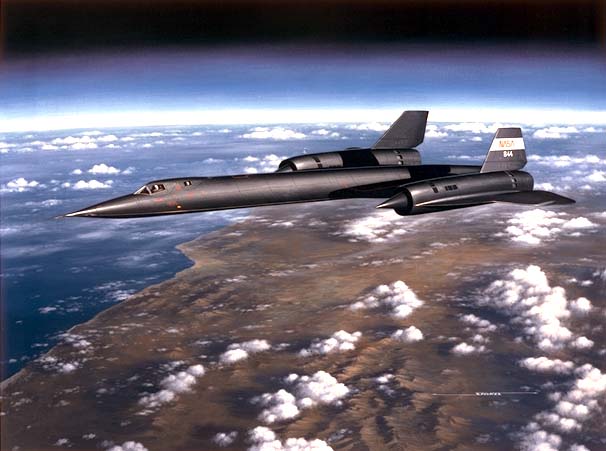
Google searching -- http://www.google.com/images?hl=en&...=UTF-8&source=og&sa=N&tab=wi&biw=1024&bih=606 -- brings up stuff like this
5_81.jpg


146600main_sts1anniv-AC76-1713.jpg


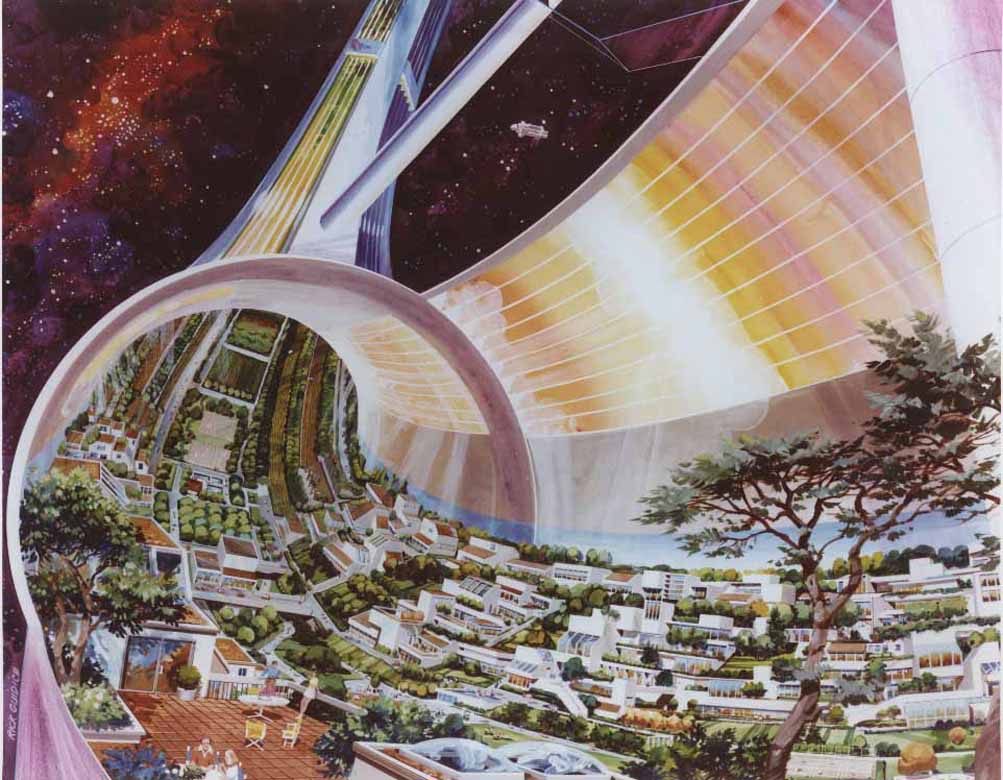
And if you like space colonies
http://settlement.arc.nasa.gov/70sArt/art.html
http://www.nss.org/settlement/L5news/index.html
http://www.nss.org/settlement/ColoniesInSpace/index.html
jacket1024.jpg


scienceyear3.jpg


AC75-1086-1f.jpeg


AC76-0628f.jpeg


AC75-1883.jpeg

I personally think that the "space colony era" was some strange outgrowth of flower-power idyllic world-building or something. They were looking for new ground away from the nastiness of political corruption. And it seems the artwork of the day glossed over all the nitty-gritty engineering details and was 100% conceptual.

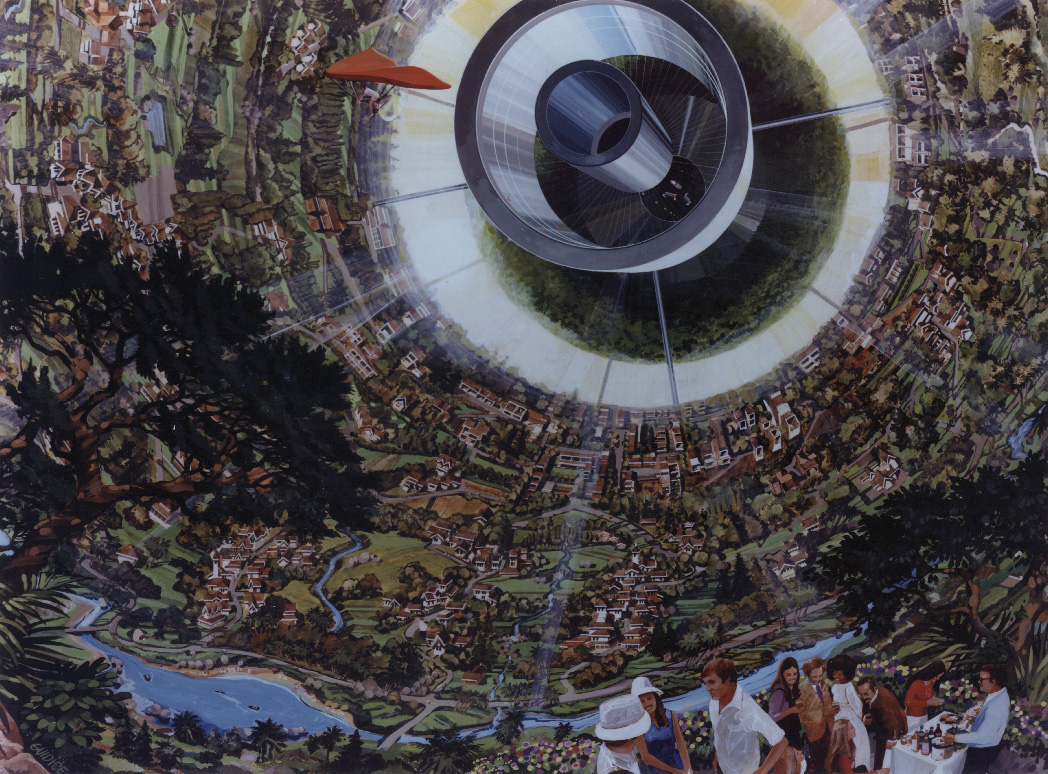
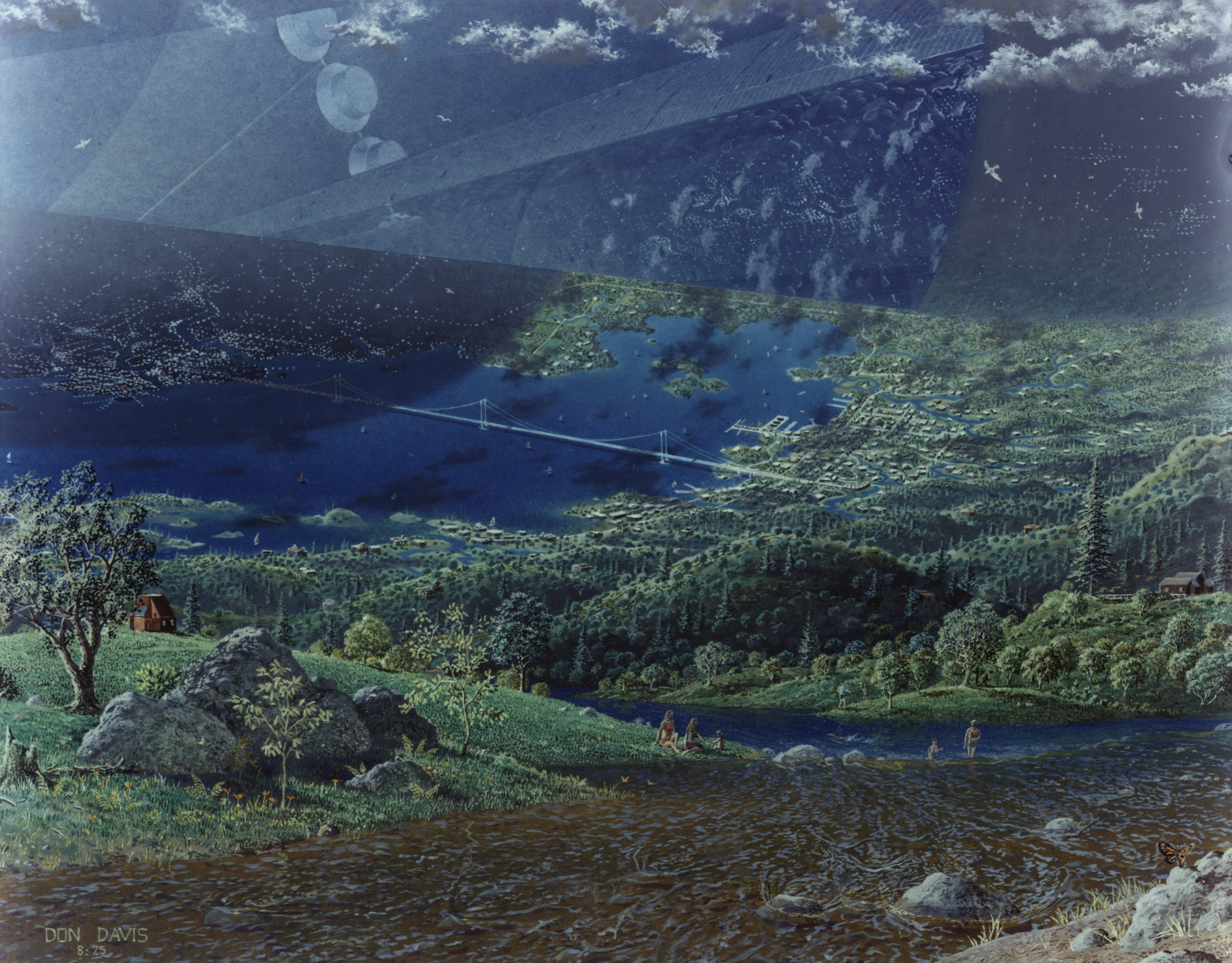
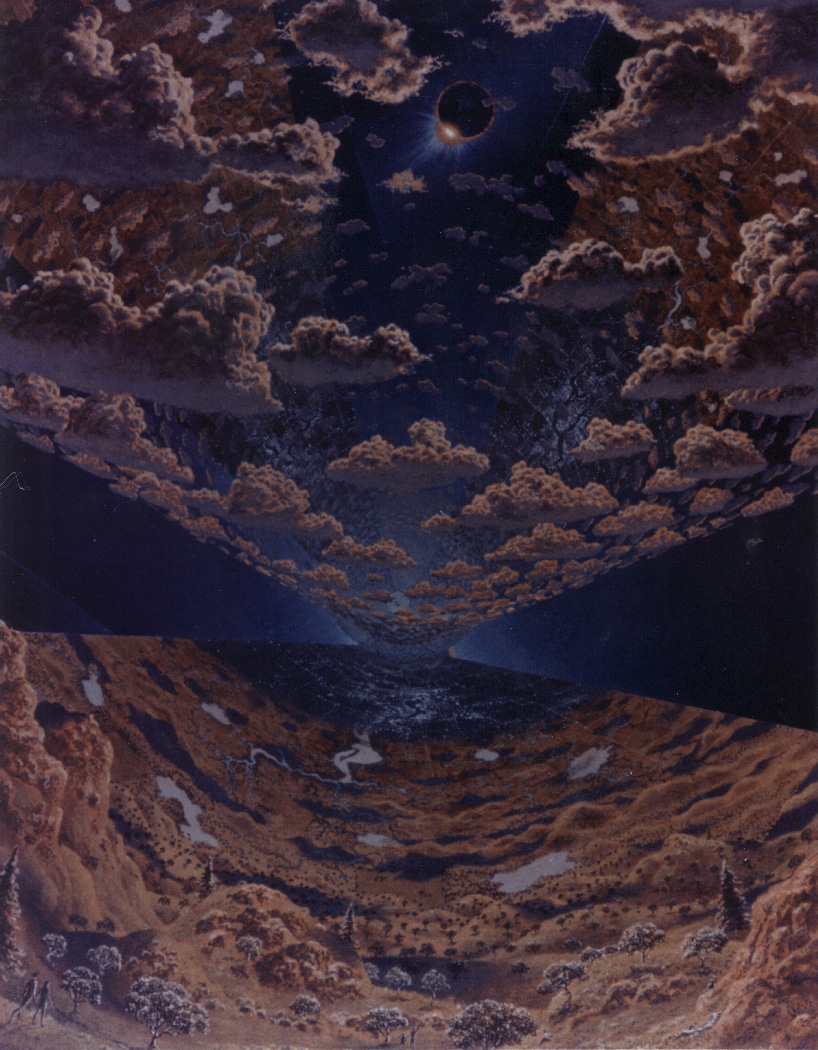
By the way, doesn't this O'Neil Cylinder looks spooky or diseased
AC75-1920f.jpeg


And a cool Star-Trek movie-like STS-131 mission poster!!
No wait that would be Armageddon wouldn't it?
There's more here -- http://sfa.nasa.gov/products.cfm
nasa-1.jpg

Armageddon.jpg

They actually manage to make some of the women look really good!
I better stop before the whole internet gets posted in this thread!

jacket.html
 
Last edited:
It was more along the lines of economics.

Basically Apollo and its related programs didn't have to have an economic return. Apollo was about two things, beating out the Russians and getting some science back. Sure there were spin-offs, but that wasn't the driving factor.

The turning point was Nixon's 1972 Space Policy Review, which effectively killed off Apollo and gave the green light to the Shuttle, but only as a NASA-USAF joint civil/military program.

stsnixon.jpg


From Wiki

On January 5, 1972, Nixon approved the development of NASA's Space Shuttle program, a decision that profoundly influenced American efforts to explore and develop space for several decades thereafter. Under the Nixon administration, however, NASA's budget declined. NASA Administrator Thomas O. Paine was drawing up ambitious plans for the establishment of a permanent base on the Moon by the end of the 1970s and the launch of a manned expedition to Mars as early as 1981. Nixon, however, rejected this proposal.

Note that this was before the 1973 oil crisis and the recession which followed it. Nixon just didn't believe in space exploration, as Eisenhower's VP from 1953 to 1961 he was responsible for directing the US space program, which in 1958 became the NASA program, and always made decisions to hold it back.

NASA has his 1972 presidential statement approving the Shuttle (and announcing officially that there were only "two remaining Apollo missions", finally killing hopes of Apollo 18-20):

http://history.nasa.gov/stsnixon.htm

Naturally all public space programs are conditioned by politics and public budgets, this is why I believe we should celebrate the growth of the private space sector, much more bold than the public sector right now.
 
Last edited:
All of this stuff was dreamed up in the early days of the Shuttle program, where launches were predicted every few weeks. Challenger put an end to that delusion and the Shuttle program was permanently scaled back to a few launches a year. That plus skyrocketing turnaround costs ensured that Shuttle flights would never be cheap enough for large-scale on-orbit construction projects. Even the costs of the ISS had to be spread internationally (sort of). The economics of space live and die by launch costs, and with no heavy lift options and Shuttle launches in the $1 billion range, nothing beyond ISS-scale was ever going to happen.
 
I love this old style... real artwork. It really conveys a sense of emotion and awe, motion, surreal possibility, and excitement. This is the kind of stuff that gave me inspiration and wonder in spaceflight when I was really young.

The modern, CGI stuff is really boring and dead, it invokes none of that. It has no life in it, and is less interesting than a scientific diagram. No wonder there isn't the interest and fervor with spaceflight that there was in the 60s, and even till the 80s.

I mean, here is Orion docked to the ISS. Look how boring and dead this image is:
Orion_ISS_1_%2805-2007%29.jpg


And Dragon being berthed with the SSRMS:
Dragon_ISS.jpg


There's supposed to be motion, but the image... looks like a still life at 7.5 km/s. Oh well... :rolleyes:

Granted, NASA is certainly trying, with stuff like their Armageddon-ripoff poster, but I think they need to be more inspiring than a cool-looking poster with shuttle crews looking as 'serious' as possible... :uhh:

Maybe it's just that spaceflight artwork is boring these days, because these days, spaceflight itself is boring.

I personally think that the "space colony era" was some strange outgrowth of flower-power idyllic world-building or something. They were looking for new ground away from the nastiness of political corruption. And it seems the artwork of the day glossed over all the nitty-gritty engineering details and was 100% conceptual.

I don't think it was about flower-power at all- the artwork may have been a bit idyllic, but the whole concept was an infrastructure of economy in cislunar space. The colonies, were supposed to support engineers and workers that would build, operate, and maintain solar power satellites, that would provide power the growing needs back home.

And there were serious studies done. Both the Stanford Torus and the O'Neill cylinder were serious designs, not flim-flam concepts. You can find out more about the science behind the Stanford Torus here. Of course the real nitty-gritty technical stuff was not dealt with much, but the basic concepts are not nonsense.

By the way, doesn't this O'Neil Cylinder looks spooky or diseased

Yeah, that is because it has (for some inexplicable reason) had the contrast turned down, it should look like this:
oneilleclipse-800%5B1%5D.jpg


All of this stuff was dreamed up in the early days of the Shuttle program, where launches were predicted every few weeks. Challenger put an end to that delusion and the Shuttle program was permanently scaled back to a few launches a year.

I'm pretty sure they figured out before Challenger that their launch rates were absurd. :dry:

 
Last edited:
They used to dream big back then. What happened?

Soviet Union lost the space race, and said until 1993 that "no soviet lunar program ever existed".

Really, the extension of the space race to Mars would have been a very interesting thing, plans and blueprints were ready in the continuity of the Apollo/Saturn - Soyuz/N-1 programs...

Edit : machines will never replace the artist touch and sense of aestethics, I'm certain of that.
 
Last edited:
Well, you can still make art using a machine, but it is not art made by a machine.

That said, almost all of this computer generated stuff is utterly horrible. I'm not saying that it's impossible make worthwhile 3D CGI art, but all, or at least almost all, of the 3D CGI art, and especially space depiction 3D stuff I've seen, is wince-inducing material.

It's like extrapolating the Uncanny Valley to everything you could set your eyes on.
 
I think that the early 70's space art was cool for a few reasons:

1 - it was not too detailed. When you imagine a ship zooming overhead I doubt you re-construct and pay attention to every single crack and crevice and rivet. A lot of that stuff is glossed over and taken for granted. The coolness comes from the art not being too detailed. You are engaging your imagination and sense of wonder when you are presented with a framework or shape and outline, you have fun filling in the details to your own capacity. Everybody is different!

2 - what he said about the uncanny valley! That is so true!

3 - the vibrancy of colors and nice rounded edges add immensely to the piece. Easy on the eyes.

4 - the stuff was new when you first saw it, so it made an impression on you. Your brain was still building connections and molding itself. So it comfortably "fit in" with whatever it saw.

I've added DAP to my kit for making art in that style -- http://mediachance.com/dap/index.html
Perhaps I can set up some screenshots of orbiter and work "backwards". If I get anything good I'll post it here. A few things I've tried already look good. But like any piece of work, it takes time, hours and hours!
 
Last edited:
Back
Top