
Made a map showing the main islands and capital city of Hatsunia:

Last edited:


Made a map showing the main islands and capital city of Hatsunia:


The nation gets deleted if you don't log on for 28 days (60 days if you're on "vacation mode", in which you don't receive any new issues).I was a bit depressed to find that my Scootopotamia has been deleted (again) from disuse. It's just hard to stick with this website for longer than a few months at a time (though their community is admittedly pretty awesome)...
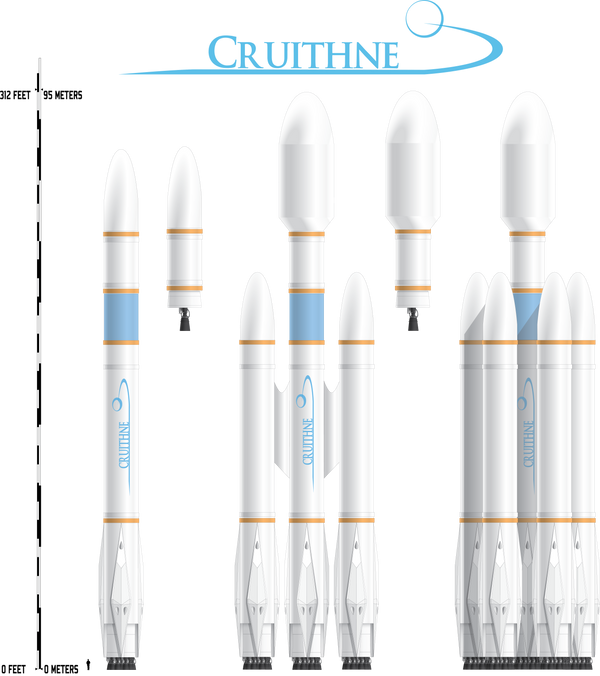
Marquesan said:As a world leader in the most advanced technologies and as a country with one of the strongest economies of any nation, the Free Lands of Marquesan have always sought to reach for the stars. To accomplish the environmentally friendly goal of reaching low earth orbit without using conventional rockets, the Shogunate decided to impement a re-usable orbiter large enough to carry international space station sections or smaller manned space vessels into orbit. A mag-lev track positioned on or near the equator was a natural choice given a large selection of volcanic islands allowing for cheap, natural unlimited power and several territorial location possibilities with elevations above two miles.
The Track.
Deep in the heart of the Borneo rainforest, running northeast along the backbone of the island centered on the equator is a four hundred mile long stretch of Mag-Lev rail track beginning in the tropical rainforest lowlands in a massive reinforced underground bunker and terminating just below the summit of Mount Kinabalu at 13,435 feet having passed through the summit. The termination of the tunnel, often called its crown, is kept free of snow, is guarded 24 hours a day regardless of conditions on the mountain and is sealed by four 5-foot thick airtight reinforced steel blast doors each with twenty 6-inch wide solid steel cylindrical vault locks that secure into the steel and concrete of the tunnel itself. Each door is separated by a 2-foot airgap which is kept at a vacuum. These blast doors are only all open in the event of a launch. The rail track is encased in a 100 ft. wide tunnel that passes evenly through the mountainous spine of the island, gaining just 33 feet in altitude for every mile of track. The tube is comprised of two-foot thick steel ring sections lined in electrically nonconductive carbon composite, shipped in sections and spot welded in place, surrounded by a ten foot thick reinforced concrete sleeve that runs the entire length of the tunnel to its summit. The tube itself is suspended inside the tunnel with a five foot air gap, damped every 45 degrees and every 20 feet in a helical pattern with massive elastomeric buffers, held apart by enormous steel coil springs. Every pylon for the mag-lev track inside the tunnel is also suspended with magnetorheological dampers to eliminate even the slightest harmonic or other vibration from disturbing the alignment of the track.
Power for the track's suspension and for the track itself is provided by geothermal energy from Borneo's numerous active volcanoes. The track itself is a massive helical coilgun design, using ceramic high-RPM electromagnetic bearings for magnetic levitation and superconductive ceramic electromagnetic coils spaced at precice intervals along the track for acceleration, designed to accelerate the Marquesan orbiter gradually to mach six without friction or direct contact before exiting the launch tube. At its base, the tube terminal bunker houses switching assemblies, capacitors, transformers and relays needed to power the track and its systems, along with living, working and recreational areas for the track's 200 full-time and 600-some part time employees. Secured and armored underground storage and mechanical facilities for the orbiters are serviced by a glass-smooth five-mile long runway and massive hydraulic service elevators capable of moving 40,000 tons to and from the bunker, 200 feet underground.
Marquesan's Mass Driver track inside the bunker at the track's start point.

The Vehicle.
The Assisted Launch Orbiter (ALO) is a Single-Stage-To-Orbit launch vehicle designed to deliver manned or unmanned cargo to low earth orbit, re-enter the atmosphere, land horizontally and be sturdy and simple enough to be re-certified for flight within 48 hours of landing. To accomplish this, the ALO was designed around two different kinds of engines designed to work efficiently at different speeds. The vehicle launches in a "Wheels up, engines off" configuration, suspended above its track by magnetic levitation but lands as an aeroplane on a runway along the ALO's glide-path. As the ALO travels along its 400-mile track, it accelerates entirely by magnetic propulsion until it breaks the speed of sound.
At mach 1, the ALO will activate a pair of toroidal, annular-exit aerospike engines powered by L2/O2, a mixture of liquid oxygen and liquid hydrogen. These engines automaticaly adjust for optimum power as altitude, air density and speed change, boosting power gradually to maintain constant g-forces on the orbiter below 5-G. At mach 4 with roughly 100 miles of track remaining, a set of SCRAMJET engines sharing fuel with the twin aerospikes activate, increasing acceleration load to nearly 8 G, but boosting the orbiter to mach 6 by tunnel exit. After exiting the track, both sets of engines will increase to 100% throttle, powering the already hypersonic orbiter spaceward, already pointing 60 degrees from level and more than 13,000 feet above sea level.
The ALO is designed as a lifting-body dart with an overall ballistic coefficient of 0.92 designed along the sears-haack body principle with an optimized, needle-like 5:1 Von Kármán shape nosecone and razor-thin titanium wing shapes used only for stability and direction of air into intakes. 220 feet in length and 60 feet at the widest point of the main body in width, the ALO is one of the largest spacecraft ever to escape earth orbit. Highly advanced composites have been used throughout the ALO to save weight, maximize comfort and insulation and minimize repair costs. Carbon nanofoam insulation used throughout coupled with internal structures made from multiple layers of heavily laminated proprietary Farehyde cloth covering underpinnings of forged titanium spaceframe secured at every point by cutting-edge adhesives and arc-welding, imparting incredible strength and rigidity to the entire vehicle while keeping weight to a bare minimum. This minimizes the effect of re-entry or the frigidness of space on the internal temperature of the orbiter. Skin on re-entry surfaces is made from large, shaped tiles of carbon nanofoam while the majority of the vehicle's skin is made from farehyde under titanium coated by Plasma-Vapor Deposition in Diamond-Like Carbon (DLC) giving the vehicle a distinctive, fluid appearance.
The ALO is designed for travel to low earth orbit and re-entry only, but long service life and frequent launch/reentry cycles were a major priority in its design, so the ability to use low-stress/low-wear launch, fewest possible moving parts, ballistic efficiency at hypersonic speeds and efficient use of renewable fuels were major requirements early in the clean-sheet design. The use of violently expensive construction materials such as high-performance composites, titanium, inconel, carbon nanofoam and DLC coatings in nearly every part of the Orbiter's construction mean that only four vehicles have been produced, named Arcturus, Rigel, Aldeberan and Antares. The four orbiters are used primarily for launch of International Space Station (ISS) componentry and a mixture of civilian and military satellites, but an ambitious manned space program has been started by Marquesan, making unique use of solar sail technology to navigate in space.
The Marquesan Assisted-Launch Orbiter, launching into orbit.


An IT firm organized an unusual race between a carrier pigeon toting a flash drive and Molsonia's fastest internet provider. The bird easily beat the internet, prompting a debate about internet speeds.
"Well, this certainly is eye-opening," exclaims amateur birdwatcher, Klaus Han, with a pair of binoculars dangling from his neck. "Here we are mucking about with our inefficient technology and the birds have us beat! Clearly we need to convert all our inefficient internet into bird-based-broadband! We'll need flocks upon flocks of pigeons and a tight training schedule, but we can do it."


More wonderful pixel-art spacecraft by "The Corparation":
Well, we've had the framework for some time now:N_Molson said:"we need to convert all our inefficient internet into bird-based-broadband"

Now, if someone could port those to Simutrans...


