

You are using an out of date browser. It may not display this or other websites correctly.
You should upgrade or use an alternative browser.
You should upgrade or use an alternative browser.
News Indian space program hit by another launch mishap
- Thread starter N_Molson
- Start date
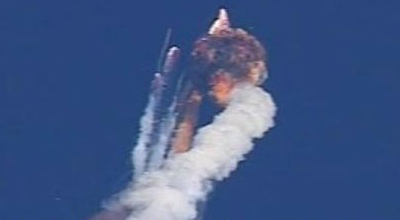

Ouch! Looks like it was something in the first stage according to India.
"Controllability of the vehicle was lost after about 47 seconds because we found the control command did not reach the actuators (of the strap-on boosters)," said K. Radhakrishnan, chairman of the Indian Space Research Organization.
The boosters nozzles were actually out of control very early in the flight, there was nothing to do...

Sky Captain
New member
- Joined
- Jan 29, 2009
- Messages
- 945
- Reaction score
- 0
- Points
- 0
That's quite spectacular failure. The GSLV seems to be ridden with failures there has been more failed launches than succes with this rocket.
Also
Is this correct - solid fuel core and licquid fueled boosters, usually it is vice versa.
Also
The GSLV is propelled off the launch pad by a single solid-fueled core motor and four L40 strap-on boosters.
Is this correct - solid fuel core and licquid fueled boosters, usually it is vice versa.

- Joined
- Feb 6, 2008
- Messages
- 38,965
- Reaction score
- 3,937
- Points
- 203
- Location
- Wolfsburg
- Preferred Pronouns
- Sire
Is this correct - solid fuel core and licquid fueled boosters, usually it is vice versa.
This is correct, the core is derived from the earlier PSLV.

- Joined
- Oct 11, 2009
- Messages
- 3,488
- Reaction score
- 407
- Points
- 123
- Location
- Utrecht
- Website
- www.spaceflightnewsapi.net
Video of the launch:
Sky Captain
New member
- Joined
- Jan 29, 2009
- Messages
- 945
- Reaction score
- 0
- Points
- 0
This is correct, the core is derived from the earlier PSLV.
Hmm, that's highly unusual GSLV is the first rocket I have heard of that uses such strange arrangment with liquid fueled boosters strapped to solid fueled core. Wikipedia article about GSLV says the boosters have 160 seconds burn time while core only 100 seconds. If true it means core burns out before boosters and empty core gets dragged along by still burning boosters for 60 seconds. It is clearly suboptimal.
- Joined
- Feb 6, 2008
- Messages
- 38,965
- Reaction score
- 3,937
- Points
- 203
- Location
- Wolfsburg
- Preferred Pronouns
- Sire
Hmm, that's highly unusual GSLV is the first rocket I have heard of that uses such strange arrangment with liquid fueled boosters strapped to solid fueled core. Wikipedia article about GSLV says the boosters have 160 seconds burn time while core only 100 seconds. If true it means core burns out before boosters and empty core gets dragged along by still burning boosters for 60 seconds. It is clearly suboptimal.
Not that much, since the solid rocket motor produces much more thrust in the short time. Coast phases are a normal feature of solid rocket launch vehicles.
The real burn time is, BTW 110 seconds for the core, and 150 seconds for the boosters. That means the core is only dragged by the boosters for 40 seconds. There is also another good reason for this configuration: The boosters provide attitude control, the core has none.
http://www.isro.org/gslv-d3/gslv-d3.aspx
Last edited:

Sky Captain
New member
- Joined
- Jan 29, 2009
- Messages
- 945
- Reaction score
- 0
- Points
- 0
Yeah, but still GSLV is ineficient launch vehicle with 400 t launch mass and only 5,1 ton LEO payload, Falcon 9 has twice the payload and less initial launch mass while having only 2 stages. A proper liquid fuel core with solid boosters would make GSLV much more efficient

Eh, it's a prank I tell you. They just wanted some Christmas fireworks. They even put a "Merry Christmas" sign in the video :lol:
- Joined
- Feb 6, 2008
- Messages
- 38,965
- Reaction score
- 3,937
- Points
- 203
- Location
- Wolfsburg
- Preferred Pronouns
- Sire
Yeah, but still GSLV is ineficient launch vehicle with 400 t launch mass and only 5,1 ton LEO payload, Falcon 9 has twice the payload and less initial launch mass while having only 2 stages. A proper liquid fuel core with solid boosters would make GSLV much more efficient
The name "Geostationary Space Launch Vehicle" should maybe give you a tiny clue. It is optimized for GTO missions, not LEO missions. 2.5 tons to GTO is not that bad - the Ariane 5 weights 900 tons at lift-off and hauls 7 tons into GTO.

- Joined
- Feb 13, 2008
- Messages
- 5,398
- Reaction score
- 8
- Points
- 0
- Location
- Khimki
- Website
- tigerofsiberia.livejournal.com


- Joined
- Feb 13, 2008
- Messages
- 5,398
- Reaction score
- 8
- Points
- 0
- Location
- Khimki
- Website
- tigerofsiberia.livejournal.com
For reference:


Rtyh-12
Member
2 weird things about that drawing: the burn time for the boosters is 160 not 150 as mentioned by Urwumpe, and when the drawing said "Vikas engine" first I thought that it says "Vinkas".:rofl:
You know you're addicted to Orbiter when...
Ahh, not again!
You know you're addicted to Orbiter when...
Ahh, not again!
- Joined
- Feb 6, 2008
- Messages
- 38,965
- Reaction score
- 3,937
- Points
- 203
- Location
- Wolfsburg
- Preferred Pronouns
- Sire
the burn time for the boosters is 160 not 150 as mentioned by Urwumpe
Complain to ISRO please.
http://www.isro.org/gslv-d3/gslv-d3.aspx
I believe their numbers more than any other calculations. Especially astronautix, because the burn time in astronautix is not the real burn time, but a mathematical approximation to get from total impulse to average thrust.
But nobody cares about what a number means, after all, it is just burn time...

- Joined
- Oct 30, 2009
- Messages
- 14,019
- Reaction score
- 4
- Points
- 0
Space Travel:The Hindu:Space Daily: GSLV Failures Fuel Disappointment And Anxiety.
Deccan Chronicle: GSLV couldn't take the extra weight?.
Hindustan Times: Isro sticks with GSLV.
The Times of India: Disaster leaves Isro with 1 cryo engine.
The Telegraph (India): Isro checks rocket failure data - Experts believe communication wire snapped immediately after lift-off.
Deccan Chronicle: GSLV couldn't take the extra weight?.
Hindustan Times: Isro sticks with GSLV.
The Times of India: Disaster leaves Isro with 1 cryo engine.
The Telegraph (India): Isro checks rocket failure data - Experts believe communication wire snapped immediately after lift-off.
- Joined
- Feb 6, 2008
- Messages
- 38,965
- Reaction score
- 3,937
- Points
- 203
- Location
- Wolfsburg
- Preferred Pronouns
- Sire
Deccan Chronicle: GSLV couldn't take the extra weight?.
That is the most stupid anonymous expert opinion I have ever read... It is completely contradicting real physics, the "expert" was likely somebody who thinks ISS docking videos are fake because there is no "Swoosh" sound.
- Joined
- Feb 13, 2008
- Messages
- 5,398
- Reaction score
- 8
- Points
- 0
- Location
- Khimki
- Website
- tigerofsiberia.livejournal.com
That is the most stupid anonymous expert opinion I have ever read... It is completely contradicting real physics, the "expert" was likely somebody who thinks ISS docking videos are fake because there is no "Swoosh" sound.
But than, we now know that unexpected extra payload may send a Proton to tender waters surrounding Hawaii.
- Joined
- Feb 6, 2008
- Messages
- 38,965
- Reaction score
- 3,937
- Points
- 203
- Location
- Wolfsburg
- Preferred Pronouns
- Sire
But than, we now know that unexpected extra payload may send a Proton to tender waters surrounding Hawaii.
Yes, but that extra ton had different symptoms. This one did just fly straight up, with just a minimal gravity turn, since the initial pitch over did already not happen.
The idea that the cables got severed by the bending loads before the rest of the rocket breaks is also pretty far away from truth, since cables and their connectors are more elastic than most rocket structures. Cable connectors usually fail at the point, when the rest of the rocket does no longer look good.
This guy theorized that the extra payload made the rocket turn faster by gravity than what the control system with only 4° TVC angle can compensate. But that is bollocks. First of all, because it did not turn faster, but slower towards Earth. Second because 4° TVC angle means a torque that goes well beyond what gravity and aerodynamics can produce. You would need maybe just 1° deflection for countering the torques - the full 4° range is needed for having a crisper onset and more freedom of travel for the nozzles - hitting the hard stops of the actuators a few hundred times per minute is not good for the mission.
Similar threads

- Replies
- 4
- Views
- 3K

- Replies
- 1
- Views
- 1K


- Replies
- 3
- Views
- 3K
- Replies
- 1
- Views
- 2K
- Replies
- 2
- Views
- 3K
