Launch News Intelsat 22 atop Proton-M/Briz-M on March 25, 2012

SiberianTiger

News Sifter
News Reporter
Donator
Joined
Feb 13, 2008
Messages
5,398
Reaction score
8
Points
0
Location
Khimki
Website
tigerofsiberia.livejournal.com
Intelsat22_poster.png


Intelsat_Logo.gif
ils.jpg


Intelsat 22 is a new communications satellite built by Boeing for Intelsat, a premier global provider of video and data service via satellite. The fresh spacecraft will operate in geostationary orbit at the 72° East longitude orbital location over the Indian Ocean region.

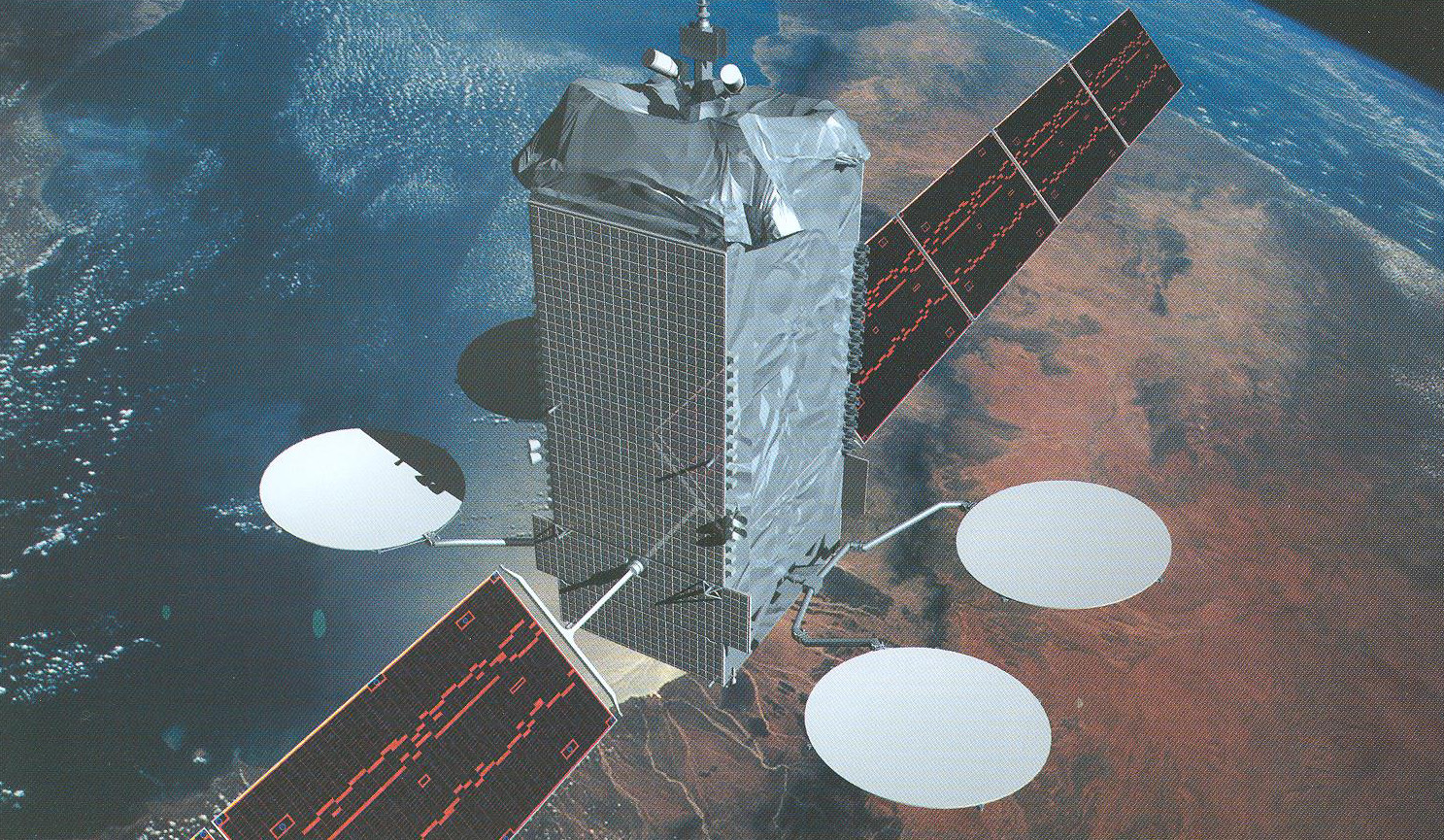
The design of the IS-22 payload is optimized to distribute video, network and voice services. Based on the Boeing 702MP platform, the new satellite carries 24 C-band and 18 Ku-band transponders for commercial use, as well as an Ultra-High Frequency hosted payload to provide service to the Australian Defence Force. The UHF hosted payload's existing, qualified digital receiver technology provides on-orbit tunability and reconfigurability of all channels.

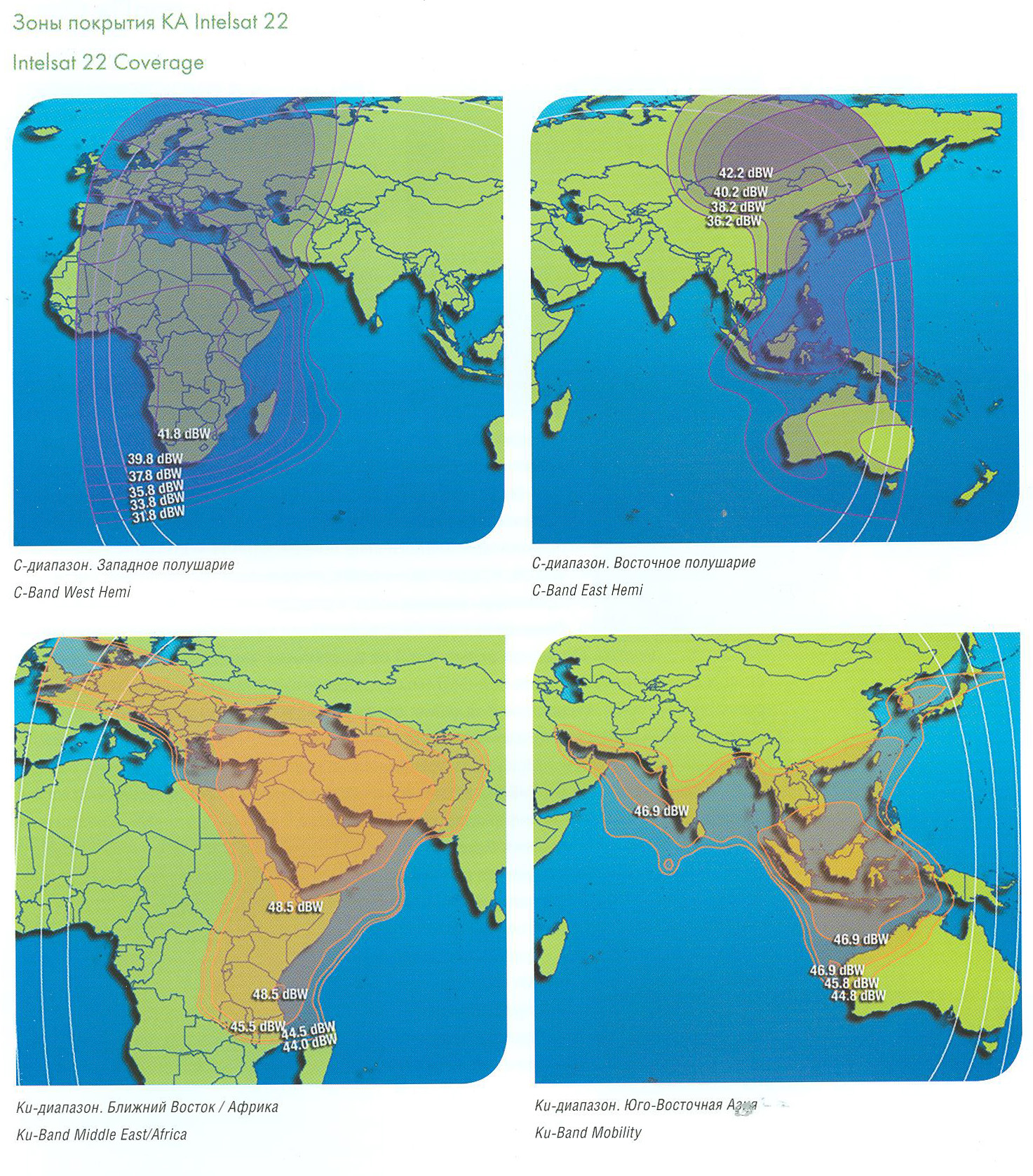
Intelsat 22 features custom-tailored beams, including C-band capacity for Africa and Asia, and an ability to cross-connect between the two regions. Its Ku-band payload will provide coverage of the Middle East and East Africa, with connectivity into Europe. The Ku-band payload includes a mobility beam bridging South East Asia, the Indian Ocean and the coastline of Africa that will support Intelsat's global mobility strategy for maritime and aeronautical applications.

The IS-22 payload is powered by two solar wings, with panels of ultra triple-junction gallium arsenide solar cells.

Intelsat 22 is the first of the four Boeing-built Intelsat satellites that will refresh and add new telecommunications capacity to the operator's global satellite fleet.

Launch location:

Baikonur Baikonur Launch pad no. 200/39 46° 2'23.85"N, 63° 1'54.98"E

baik200-39.png


Launch dates and times:

[table="head"]{colsp=6}Launch times

Time Zone|
Australia - Sydney/UTC+11
|
Baikonur / UTC+6
|
Moscow / UTC+4/
|
Universal / UTC
|
Washington / EST

Launch time (Primary):
|
11:10:32 p.m.​
|
18:10:32​
|
16:10:32​
|
12:10:32​
|
8:10:32 a.m.​

on:
|
Mar. 25, 2012
|
Mar. 25, 2012
|
Mar. 25, 2012
|
Mar. 25, 2012
|
Mar. 25, 2012

{colsp=6}
[highlight][eventTimer]2012-03-25 12:10:32?before|after;%dd% Days %hh% Hours %mm% Minutes %ss% Seconds %c%[/eventTimer] Intelsat 22 launch[/highlight]​

{colsp=6}
[eventTimer]2012-03-26 3:40:32?before|after;%dd% Days %hh% Hours %mm% Minutes %ss% Seconds %c%[/eventTimer] Intelsat 22 Separation From the Launch Vehicle​
[/table]

[highlight]Please bear in mind that this weekend a Daylight Savings Time comes in effect in most European countries, so London local time becomes UTC+1 since this Sunday.[/highlight]

Live Coverage Of The Launch:


PAYLOAD

Intesat-22 (ProtoStar II) is a double purpose communications satellite for Indian Ocean region.

The design of the Intelsat 22 payload is optimized to address high growth service areas, to provide continuity of services and to support Intelsat’s strategic initiatives. The satellite will supply 48 C- and 24 Ku-band 36 MHz equivalent transponders to network services and media customers in Africa, Asia, Europe and the Middle East, providing incremental capacity for commercial and government applications. The Intelsat 22 satellite will feature custom-tailored beams to meet traffic patterns in these high-demand regions including C-band capacity for Africa and Asia, and an ability to cross-connect between the two regions. Its Ku-band payload will provide coverage of the Middle East and East Africa, with connectivity into Europe. The Ku-band payload will include a mobility beam bridging South East Asia, the Indian Ocean and the coastline of Africa that will support Intelsat’s global mobility strategy for maritime and aeronautical applications.

The Intelsat 22 satellite will also host a specialized UHF payload for the Australian Defence Force.
is22_b.jpg


Mission Summary

[table="head"]{colsp=2}Summary
Parameter|Value
Working Orbit:​
|GEO
Orbital Location:​
|72° East
Coverage:​
|Asia, Africa, Europe, the Middle East
Orbit after separation from the launcher:​
|3,791 x 65,000 km, Inc 28.5°
[/table]

Coverage Maps

zonpokr_b.jpg


[table="head"]Characteristics|
Intelsat 22

Customer:​
|
  • Intelsat

Prime contractor:​
|
  • Boeing Space & Intelligence Systems
    Boeing%2BLogo.jpg

Platform:​
|
  • BSS-702MP (Boeing platform for middle class payloads that range in power from six to 12 kilowatt)

Mass at Separation:​
|
  • 6,249 kg

Dry Mass:​
|
  • 2,789 kg

Dimensions (stowed):​
|
  • ?

Payload:​
|
  • C band: 24x72 MHz, circularly polarized beams
  • Ku band: 12x36 MHz, 6x72 MHz, unear polarized beams

Life time:​
|
  • 15 years

|
intelsat-22__1.jpg
[/table]


Launch Vehicle:

[table="head"]{colsp=2}Characteristics

proton-m_en.jpg
|[table="head"]{colsp=2}
Proton-M / Briz-M

Prime contractor:​
|
  • Khrunichev Space Centre
    khrunichev_logo.gif

GRAU Index:​
|
  • 8K82KM

Height:​
| 58.2 m with upper stage and payload fairing

Diameter:​
| max 7.4 m

Liftoff mass:​
| 705 metric tonnes

Payload mass:​
| ~22 tonnes at LEO

1st stage:​
|
  • 6 X RD-275 engines
  • Empty 30.6 tonnes
  • Propellants 419.41 tonnes (UDMH and NTO)
  • Thrust in vacuum 1069.8 tonnes of force
  • Thrust at sea level 971.4 tonnes of force

2nd stage:​
|
  • 1 X RD-0211 engine 3 X RD-0210 engines
  • Empty 11.4 tonnes
  • Propellants 156.113 tonnes (UDMH and NTO)
  • Thrust in vacuum 237.4 tonnes of force

3rd stage:​
|
  • 1 X RD-0213 engine & 1 X RD-0214 vernier engine
  • Empty 3.7 tonnes
  • Propellants 46.562 tonnes (UDMH and NTO)
  • Thrust in vacuum 59.36 (core) + 3.15 (vernier) tonnes of force

Upper Stage:​
|
briz2b.gif

  • GRAU Index: 14S43
  • Common Name: Briz-M
  • Designer & Manufacturer: Khrunichev Space Centre
  • Dimensions: Length 2.654 m, Diameter 4 m
  • Empty Mass 2.2 tonnes
  • Propellants 6 660 kg UDMH + 13 260 kg N2O4
  • Flight time: no less than 24 hours

  • Main Engine: 1 X 14D30
  • Thrust in vacuum 2.0 tonnes of force
  • ISP 328.6 s
  • Main engine restarts: up to 8 times

  • Precision Manoeuvering Engines: 4 X 11D458
  • Thrust in vacuum 400 N each
  • ISP 252 s

  • RCS Engines: 12 X 17D58E
  • Thrust in vacuum 13.3 N each
  • ISP 274 s

Payload Fairing:​
|
  • Diameter 4.35 m
  • Length 11.6 m

[/table]
[/table]

The vehicle's reliability statistics according to http://www.spacelaunchreport.com/log2011.html#rate:

Code:
================================================================ 
Vehicle     Successes/Tries Realzd Pred  Consc. Last     Dates    
                             Rate  Rate* Succes Fail    
================================================================
Proton-M/Briz-M  48    52    .92  .91      6    08/17/11 2001-

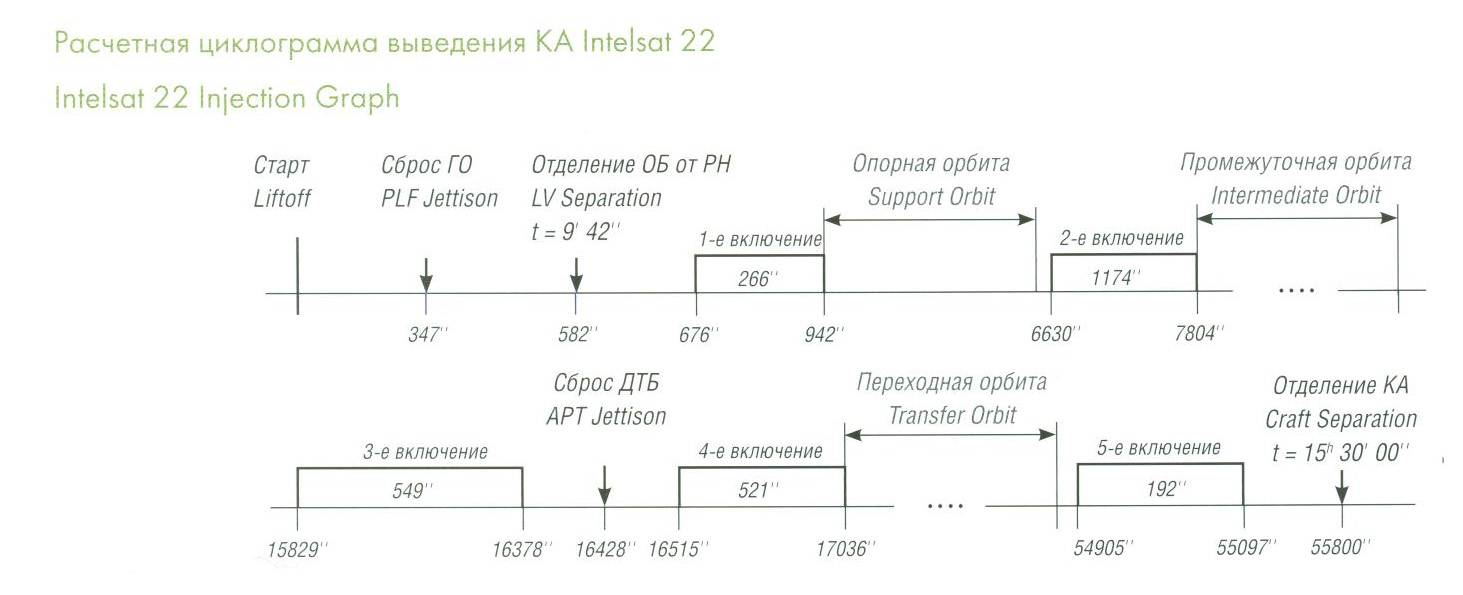
Intelsat 22 Ascent Timeline

[TABLE="head"]Event|Time rel lift-off|Time Moscow|Time UTC|Comment
Lift-off|00:00:00|16:10:32|12:10:32|
1st/2nd Stage Separation|00:02:00|16:12:32|12:12:32|
2nd/3rd Stage Separation|00:05:27|12:15:59|12:15:59|
Payload Fairing Separation|00:05:45|16:16:17|12:16:17|
3rd Stage/Breeze M Separation|00:09:42|16:20:14|12:20:14|
1st Burn Ignition|00:11:16|16:21:48|12:21:48|
1st Burn Shutdown|00:15:43|16:26:15|12:26:15|1st Burn's Duration 00:04:26
2nd Burn Ignition|01:50:30|18:01:02|14:01:02|
2nd Burn Shutdown|02:10:04|18:20:36|14:20:36|2nd Burn's Duration 00:19:34
3rd Burn Ignition|04:23:49|20:34:21|16:34:21|
3rd Burn Shutdown|04:32:57|20:43:29|16:43:29|3rd Burn's Duration 00:09:08
APT Jettison|04:33:47|20:44:19|16:44:19|
4th Burn Ignition|04:35:14|20:45:46|16:45:46|
4th Burn Shutdown|04:43:56|20:54:28|16:54:28|4th Burn's Duration 00:08:42
5th Burn Ignition|15:15:05|7:25:37 (on March 26)|3:25:37 (on March 26)|
5th Burn Shutdown|15:18:17|7:28:49|3:28:49|5th Burn's Duration 00:03:12
Separation of Intelsat 22|15:30:00|7:40:32|3:40:32|in GEO
[/TABLE]
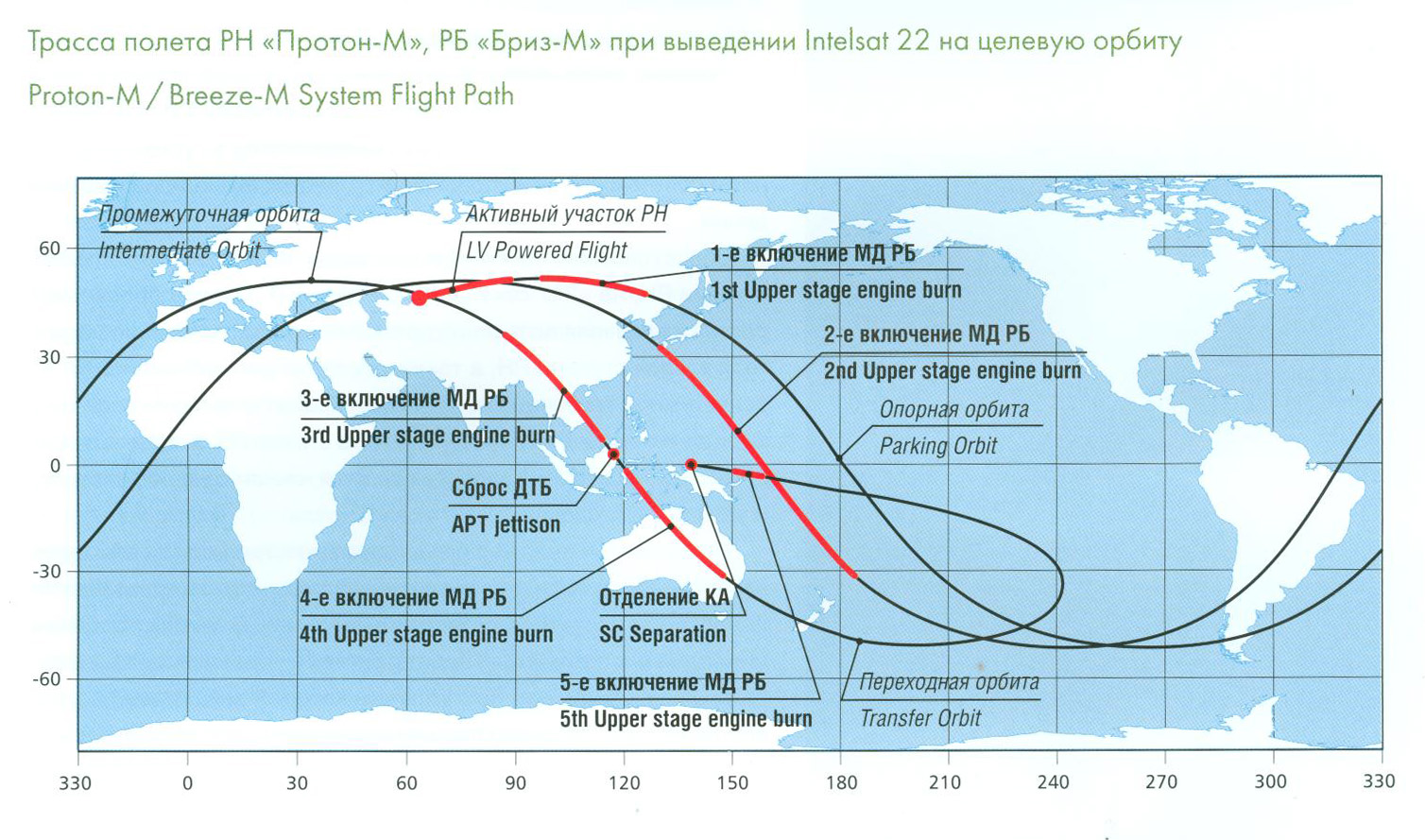
trassa_b.jpg


The final orbit looks very untypical...
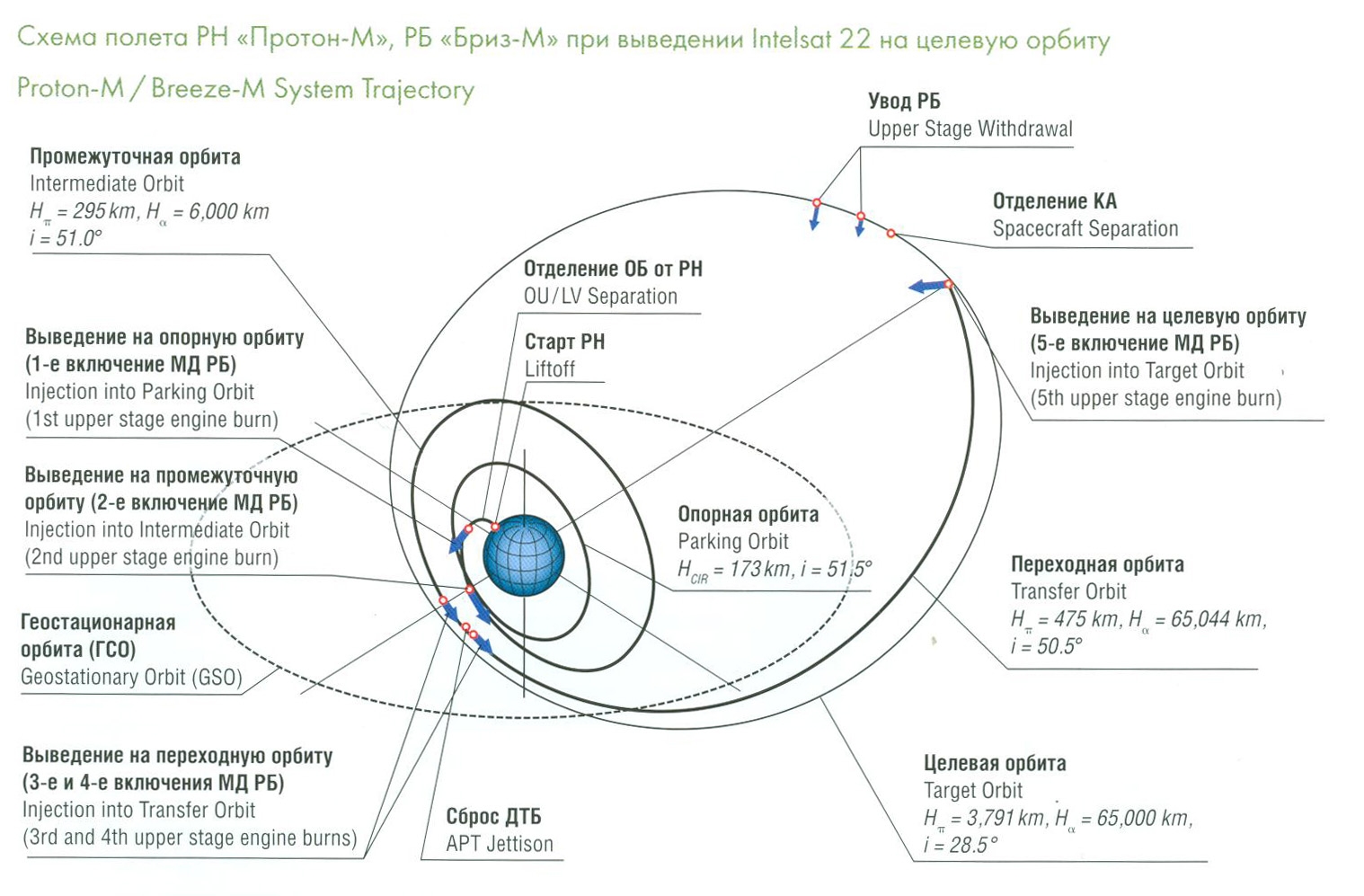
orbit_b.jpg


ciklogr_b.jpg


Weather forecast for Baikonur, Kazakhstan on March 25, 2012 (6 p.m.)

Time|Temps|Wind Chill|Heat Index|UV Index|Dew Point|Relative Humidity|Precip|Snow|Clouds|Visibility|Wind|Weather
6 PM|5°C|1°C|5°C|0 Low|-5°C|47%|10%|2%|38%|16KM|WSW 5.8 m/s
wx_66.png
P Cloudy

Sunrise and Sunset times for the location of launch

Times are local.
Event|Time
Astronomical twilight begins|05:57
Nautical twilight begins|06:33
Civil twilight begins|07:08
Sunrise|07:36
Transit (sun is at its highest)|13:52
Sunset|20:07
Civil twilight ends|20:35
Nautical twilight ends|21:11
Astronomical twilight ends|21:47


References
http://www.federalspace.ru
http://tvroscosmos.ru
http://www.tsenki.com/launch_services/help_information/launch/2011/?EID=88633
http://www.khrunichev.ru
http://tihiy.fromru.com/Rn/RN_Proton.htm
http://www.space-center.ru/ApriEvents.aspx
http://www.satbeams.com/satellites?id=2482
http://forum.nasaspaceflight.com
http://www.novosti-kosmonavtiki.ru
http://www.spacelaunchreport.com
http://www.intellicast.com/Local/Forecast.aspx
http://www.good-stuff.co.uk/suntimes/sunmap.php
 
Few bits of information from NSF:

(1)
According to Mr. Barbosa this will use Briz-M 99537. This appears to be the 1st steps towards the phase IV configuration.
http://www.zenite.nu/orbita/index.php?catid=4

Proton Launch System Mission Planner’s Guide, LKEB-9812-1990
The current Breeze M configuration is capable of providing supersynchronous transfer missions up to 43,000 km apogee altitude. After implementation of additional modifications to the Breeze M and to the ground-based telemetry system, injection to SSTO with apogee altitudes of up to 65,000 km will become possible. The following are among the planned modifications:
- Installation of a new power supply aboard the Breeze M
- An update of onboard trajectory algorithms in the Breeze M control system
- An update of onboard Breeze M control system algorithms that are implemented during continuous rotation about the longitudinal axis
- Modification of the Breeze M control system to control new modes of telemetry data collection and transmission
- Modification of the Breeze M telemetry monitoring system to be able to use new modes of telemetry data collection and transmission
- An update of Breeze M onboard transmitters to enable use of new data transmission mode
- Equipping the ground-based telemetry system with hardware to receive telemetry and trajectory data at long ranges

(2)
The SSTO mission design gains 200kg performance compared to GTO. Expect to see more SSTO missions in the future.

(3,4)
NOTAMs for the current mission:

Code:
[B]A1116/12[/B] -  QWMLW THE RUSSIAN FEDERAL SPACE AGENCY HAS PLANNED A  MISSILE  LAUNCH.  DEBRIS FROM THIS LAUNCH WILL FALL WITHIN AN AREA  BOUNDED BY  2515N/16000E  2600N/16045E  2330N/16335E  2245N/16248E BACK  TO THE  POINT OF ORIGIN.  IN THE INTEREST OF SAFETY ALL  NON-PARTICIPATING AIR TRAFFIC ARE ADVISED TO AVOID THE NOTAMED AREA.   IFR AIRCRAFT UNDER  ATC JURISDICTION SHOULD ANTICIPATE CLEARANCE AROUND  THE NOTAMED AREA. SFC - UNL, 1200-1330Z DLY, 25 MAR 12:00 2012 UNTIL 28  MAR 13:30 2012. CREATED: 16 MAR 04:17 2012

NAVAREA NO.12-0182 Date:2012/03/22 10 UTC

NORTH PACIFIC, WESTERN PART.
DANGEROUS TO NAVIGATION AREA DESIGNATED
DUE TO ROCKET CARRIER ELEMENTS FALL.
1200Z TO 1330Z DAILY 25 TO 28 MAR.
IN ELLIPSE SHAPED AREA CENTERED IN
24-23N 161-46E. LARGE AXIS 216 MILES AND
SMALL AXIS 59.4 MILES. AZIMUTH OF LARGE
AXIS 134 DEGREES.
CANCEL THIS MSG 281430Z MAR.

Photo Gallery of the Mission

Mating of the satellite to the adapter

intelsat_22_033.JPG


intelsat_22_039.JPG


1332137012.jpg


Encapsulation
1332137546.jpg


March 12-21, general assembly of the vehicle
1332224996.jpg


1332330609.jpg


1332330725.jpg


1332330790.jpg


1332330830.jpg


March 23: Rolling out and Erection on the pad

1332500282.jpg


1332500412.jpg


1332500447.jpg


1332500520.jpg


1332500567.jpg


1332500588.jpg


Videos of the pre-flight activities


[ame="http://www.youtube.com/watch?v=d6s5TcR-gEQ"]Вывоз РК� Протон-М � К� Интел�ат-22 (Intelsat-22) - YouTube[/ame]

The video coverage is beginning on TSENKI channels.
 
Thanks for these datas and for the live coverage links, watching now, less than 1 hour until launch.
 
Did I understand that right ?
GTO usually are attained with a single burn to raise the apogee and then a burn to raise the perigee but here SSTO profile is used which means multiple burns at perigee to raise the apogee more fuel efficiently ?
If I search SSTO on google I only find Single Stage To Orbit, so it's hard to find more info on that.

edit: just find out, SSTO stands for super-synchronous transfer orbit. Silly me.
 
Last edited:
Did I understand that right ?
GTO usually are attained with a single burn to raise the apogee and then a burn to raise the perigee but here SSTO profile is used which means multiple burns at perigee to raise the apogee more fuel efficiently ?
If I search SSTO on google I only find Single Stage To Orbit, so it's hard to find more info on that.

edit: just find out, SSTO stands for super-synchronous transfer orbit. Silly me.

Here SSTO means Super-synchronous transfer orbit, an orbit which the apogee is higher than the GSO altitude of 35786 km. Since the delta-v needed to make an inclination change burn at higher altitudes is lower, so the performance to such an orbit is higher: I believe in this case it's roughly 2000 pounds.
 
How can you compute the best (change orbit + change plane) maneuver ?
 
According to Spaceflight Now, we have a success so far : :thumbup:

1228 GMT (8:28 a.m. EDT)
T+plus 18 minutes. The first burn of the Breeze M upper stage has ended successfully, placing the rocket and the payload in a parking orbit. Preflight plans called for the Breeze M to now be in a 107-mile-high orbit.

The next ignition of the Breeze M is scheduled for approximately 1400 GMT (10 a.m. EDT) for a burn lasting 19 minutes, 34 seconds.

1224 GMT (8:24 a.m. EDT)
T+plus 14 minutes. The Breeze M upper stage is now firing for the first of five burns to place Intelsat 22 in its targeted transfer orbit.

1223 GMT (8:23 a.m. EDT)
T+plus 13 minutes. Officials confirm successful shutdown of the Proton's third stage and separation of the Breeze M upper stage.

1219 GMT (8:19 a.m. EDT)

T+plus 9 minutes. The Proton third stage should be nearing the end of its burn to place the Breeze M upper stage and Intelsat 22 in a suborbital trajectory. Beginning at T+plus 11 minutes, the Breeze M stage will fire for more than 4 minutes to reach a low-altitude parking orbit.

1216 GMT (8:16 a.m. EDT)

T+plus 6 minutes. Proton's second stage has separated, and the third stage RD-0213 engine has begun its burn. The rocket's payload fairing has also been released now that the launcher is in the upper atmosphere.

1212 GMT (8:12 a.m. EDT)
T+plus 2 minutes, 15 seconds. The Proton's first stage has shut down and jettisoned, and the second stage engines are firing with a half-million pounds of thrust.

1211 GMT (8:11 a.m. EDT)
T+plus 70 seconds. The Proton rocket has passed the speed of sound and the phase of maximum aerodynamic pressure.

1210 GMT (8:10 a.m. EDT)
Liftoff of the Proton rocket with Intelsat 22, a communications satellite to link Europe, Africa, the Middle East and Asia!

1209 GMT (8:09 a.m. EDT)
T-minus 60 seconds.

1208 GMT (8:08 a.m. EDT)
T-minus 2 minutes. The countdown is being run by a master computer sequencer.

1206 GMT (8:06 a.m. EDT)
T-minus 4 minutes. The exact launch time is 1210:32 GMT (8:10:32 a.m. EDT). It will be 6:10 p.m. local time at the Baikonur Cosmodrome.

1202 GMT (8:02 a.m. EDT)
T-minus 8 minutes. The Proton launcher on the pad weighs about 1.5 million pounds, and it will be powered into the sky by six first stage RD-276 engines producing more than 2 million pounds of thrust.

The Intelsat 22 satellite weighs 13,776 pounds at liftoff.

1155 GMT (7:55 a.m. EDT)
With 15 minutes left in the countdown, the Intelsat 22 satellite is on internal power and all systems are go for launch. We are now streaming live video from Baikonur.

1015 GMT (6:15 a.m. EDT)
Fueling of the Proton rocket has been completed with less than two hours left until launch.

0715 GMT (3:15 a.m. EDT)
The Russian State Commission has met and approved final launch day preparations for today's blastoff of a Proton rocket. Launch day activities include final payload preparations, fueling of the Proton's three core stages with storable propellant, and technical checks of the rocket and Intelsat 22 satellite.

The rocket's Breeze M upper stage was loaded with propellant a few days ago.

Here's a look at some statistics on today's mission. This will be the:

374th Proton rocket launch since 1965
71st International Launch Services Proton
54th Proton M using a Breeze M upper stage since 2001
2nd Proton of 2012
15th Boeing-built satellite on ILS Proton
10th Intelsat satellite launch on ILS Proton

Here's a replay of the launch :

 
Last edited:
Here SSTO means Super-synchronous transfer orbit, an orbit which the apogee is higher than the GSO altitude of 35786 km. Since the delta-v needed to make an inclination change burn at higher altitudes is lower, so the performance to such an orbit is higher: I believe in this case it's roughly 2000 pounds.

But you have to lower the apogee later with the satellite's thrusters.

The main problem is that Russia has a inferior location on the earth than the US/ESA/China.
From Baikonur they could just launch into 46° inclinations, but then they have problems with China etc because of the stages.
And even the southernmost points of Russia: 41° N at the Caspian Sea and 42° N at the Korean border are too far in the north (for comparison, that's Chicago or Napoli).
 
From Baikonur they could just launch into 46° inclinations, but then they have problems with China etc because of the stages.

Yes, AFAIK, the only available launch corridor from Baikonur is 51.6°

So, basically, all the missions have to get through the "ISS corridor", which doesn't make things simpler.

Try to launch a Velcro Proton from Kourou or any near-equatorial base, you will be surprised by the potential power of that rocket... :P
 
Yes, AFAIK, the only available launch corridor from Baikonur is 51.6°

So, basically, all the missions have to get through the "ISS corridor", which doesn't make things simpler.

Right, but actually, two more ground tracks are secured for Protons, for inc 64.8° (historically first for Baikonur, because Kura rocket target range on Kamchatka is this way) and 72.7°:

Azimut.gif


Soyuz-2 seried launched Northwards to the SSO:
141828311.gif


And there was also few cases when Dnepr (and probably, some other rockets) flew southwards, over Kara-Kum desert and Iran, but I couldn't find a diagram for it.
 
According to Spaceflight Now, BreezeM burn#2 is a success :

1705 GMT (1:05 p.m. EDT)

The second burn of the Breeze M upper stage has been accomplished as planned, and the engine ignited for a third time on schedule before the rocket passed out of range of communications stations.

The planned five-hour communications blackout will end several hours before the Breeze M fires for the final time before releasing Intelsat 22.

During the blackout, the schedule calls for the rocket to shut down, jettison an auxiliary propellant tank, and ignite for a fourth burn. Confirmation of those events is expected once ground stations re-establish contact with the Breeze M.

The start of the Breeze M's fifth burn is expected at 0325 GMT Monday (11:25 p.m. EDT Sunday).
 
Launch success confirmed.

Intelsat’s Global Broadband Maritime and Aeronautical Infrastructure Continues to Advance with ILS Proton Launch Success of Intelsat 22

Luxembourg and Reston, VA, 25 March 2012 - Intelsat S.A., the world’s leading provider of satellite services, and International Launch Services (ILS) announced today that an ILS Proton vehicle successfully launched the Intelsat 22 satellite from the Baikonur Cosmodrome in Kazakhstan. Liftoff occurred at 8:10 a.m. EDT (18:10 in Baikonur). After a 15 hour and 30 minute mission, at 11:40 p.m. EDT, the Breeze M successfully released the Intelsat 22 satellite, weighing 6199 kg, into supersynchronous transfer orbit (SSTO) at a 65,000 km apogee.
Built by Boeing Satellite Systems, the satellite will provide C- and Ku-band capacity for media, government and network services customers in Africa, Asia, Europe and the Middle East. In addition, Intelsat 22 will host a specialized UHF communications payload by the Australian Defence Force (ADF).
Once operational in May, it will replace Intelsat 709 at 72° East and is expected to have a useful life of approximately 18 years.
“The launch of Intelsat 22 is a significant milestone in many respects, not the least of which is its role in demonstrating the viability of hosted payloads in delivering customized space solutions for government users. On time and on budget, the delivery of the UHF payload for the Australian Defence Force successfully demonstrates how hosted payloads are embraced by governments seeking cost-efficient access to space,” said Intelsat CEO Dave McGlade.
“In addition, as Intelsat 22 enters service, its customized beams will further progress our global mobility broadband fabric, allowing always-on broadband for ships and planes traversing the world’s busiest transport routes. Intelsat delivers broadband infrastructure everywhere, and the successful launch of Intelsat 22 delivers enhanced satellite capacity for telecommunications leaders in Asia and the Middle East to Africa and Europe, such as the UAE’s Etisalat and Ethio Telecom of Ethiopia.” He continued, “I would like to thank the teams of ILS, Khrunichev, Intelsat and Boeing for their tireless work on Intelsat 22, ensuring a timely launch and precise delivery to orbit for this critical mission.”
ILS President Frank McKenna said, “From contract signing to delivery to orbit, ILS and Khrunichev were squarely focused on launching the Intelsat 22 satellite on schedule and successfully meeting Intelsat’s requirements for this important SSTO mission on ILS Proton. Intelsat is a leader and innovator in the satellite telecommunications industry, having established the first global commercial satellite communications network. It’s a true honor to facilitate Intelsat’s global mobility network with the ILS Proton launch of Intelsat 22, supporting Intelsat’s customers in Africa, Asia, Europe and the Middle East, as well as its hosted payload customer, the Australian Defence Force. We look forward to performing our next mission with Intelsat, the ILS Proton launch of the Intelsat 23 satellite later this year.”
This was the first SSTO mission for ILS Proton and provided an additional 200 kg of performance for this mission. The launch of the Intelsat 22 satellite marks the second ILS Proton launch of the year and the 71st commercial launch overall for ILS. The Proton Breeze M vehicle is built by Khrunichev State Research and Space Production Center of Moscow, one of the pillars of the aerospace industry and majority owner of ILS. Proton has a heritage of 374 missions since its maiden flight in 1965.
 
Spaceflight Now : mission success ! :thumbup:

0410 GMT (12:10 a.m. EDT)

MISSION SUCCESS. International Launch Services and Roscosmos, the Russian space agency, report a successful conclusion to the launch of the Intelsat 22 satellite.

The 6.9-ton spacecraft was released from the Breeze M upper stage on time at 0340 GMT (11:40 p.m. EDT), wrapping up a 15-hour, 30-minute ascent after blasting off from the Baikonur Cosmodrome in Kazakhstan at 1210 GMT (8:10 a.m. EDT) Sunday.

A Proton rocket accelerated the Breeze M stage and Intelsat 22 into a suborbital trajectory, then five burns of the upper stage engine were planned to inject the payload into a supersynchronous transfer orbit stretching more than 40,000 miles above Earth at its highest point.

The targeted perigee was 2,355 miles and the planned orbital inclination was 28.5 degrees. In a statement on its website, Roscosmos said Intelsat 22 separated in its target orbit.

It was the longest flight of a Breeze M upper stage to date, and it was the first commercial flight of the Proton/Breeze M vehicle into a supersynchronous-type orbit, affording 200 kilograms, or about 440 pounds, of extra lift capacity over standard flight profiles.

Built by Boeing Co., Intelsat 22 will provide video, voice and data services over a swath of Earth from Europe and Africa to the Middle East, the Indian Ocean and Asia.

The satellite also carries a hosted UHF communications payload for the Australian Defence Force.

Five apogee maneuevers and three perigee burns of Intelsat 22's on-board engine will circularize the craft's orbit at an altitude of 22,300 miles. Intelsat 22's ultimate operational position will be over the equator at 72 degrees east longitude.

Alexander Horwitz, an Intelsat spokesperson, said Intelsat 22 will reach geosynchronous orbit by mid-April and enter service in May.
 
Back
Top