SSU Development thread (4.0 to 5.0) [DEVELOPMENT HALTED DUE TIME REQUIREMENTS!]

Status
Not open for further replies.
I've given the new aero stuff a few tries and everything seems to work pretty good, except for a few things. The Testing scenarios/KSC15 final approach scenario is an instant CTD on loading. Both EDW scenarios work great until Orbiter is supposed to transition the vehicle to a landed state when it CTDs. Nothing in log indicates any issues.

I also had a CTD there when I updated the branch with the trunk. As the only thing that had changed was the STS-107 payloads, I deleted them from the scenario and it worked. I didn't investigate any further yet.

As for the rollout, there is still work to do.

---------- Post added 03-24-19 at 02:28 PM ---------- Previous post was 03-23-19 at 09:35 PM ----------

Those should be fixed now.
 
I can confirm that the KSC15 final approach scenario CTD has been fixed. It did reveal a major problem though, that following the guidance diamond leads to a violent crash several thousand feet short of the runway, nowhere close to the threshold of the runway. There is zero chance of a recovery unless you realize this long before. Maybe the target coordinates for KSC15 is off?
 
I can confirm that the KSC15 final approach scenario CTD has been fixed. It did reveal a major problem though, that following the guidance diamond leads to a violent crash several thousand feet short of the runway, nowhere close to the threshold of the runway. There is zero chance of a recovery unless you realize this long before. Maybe the target coordinates for KSC15 is off?


"... violent crash..."


:rofl:
 
"... violent crash..."


:rofl:
I consider gear-up belly landings slow crashes where you only skid along the runway while what I'm seeing is a full-on violent Controlled Flight Into Terrian (CFIT), aka crash.
 
OMG ! Were you hurt ?
 
I can confirm that the KSC15 final approach scenario CTD has been fixed. It did reveal a major problem though, that following the guidance diamond leads to a violent crash several thousand feet short of the runway, nowhere close to the threshold of the runway. There is zero chance of a recovery unless you realize this long before. Maybe the target coordinates for KSC15 is off?

The coordinates are fine.
A while back I had to disable an integrator in Autoland guidance, as it made the NZ command "lazy" during the second half of the pull-up, and from then on, although AUTO lags the diamond, it has always gotten to runway. If you are following the diamond (in CSS) there should be no problems.
What can cause that is trouble in the other axis: the infamous rudder/aileron force fight, which causes the vehicle to fly a large beta, thus bleeding energy fast. A sign of this is the rudder trim integrator saturating (6º), and this is displayed in the VERT SIT display. This sometimes happens when rolling out of the HAC, other times when there is tons of wind in the OGS. I haven't been able to fix this... :facepalm: I can only recommend flying without wind... :shrug:

---------- Post added at 08:24 PM ---------- Previous post was at 06:48 PM ----------

Well, it's official. :thumbsdown:
Went to D3D9 to debug the APU sound issue and it shuts the computer down after 1 or 2 seconds. It started doing that when using the NVIDIA GPU maybe 2 or 3 years ago, so I had to use the Intel integrated GPU since, but now that one also "pulls the plug". :compbash:

The only positive thing is that I just ran MOGE and the sound issue algo shows up there, so I think I can debug it. :shrug:

 
Is the lag in the control inputs correct? It seems to be a bit on the heavy side, around 1.5 seconds from control input to actual deflection of the aero surfaces. I'd thought that the FCS would be a bit more responsive than that. I think they trimmed it a bit after PIOs of ALT-5 (orbiter bounced twice on the runway due PIO) and STS-3 (Columbia almost lost her body flap by tail-scraping into the ground due to a PIO, reportedly John Young was not happy afterwards)..
 
Is the lag in the control inputs correct? It seems to be a bit on the heavy side, around 1.5 seconds from control input to actual deflection of the aero surfaces. I'd thought that the FCS would be a bit more responsive than that. I think they trimmed it a bit after PIOs of ALT-5 (orbiter bounced twice on the runway due PIO) and STS-3 (Columbia almost lost her body flap by tail-scraping into the ground due to a PIO, reportedly John Young was not happy afterwards)..

I have no idea... :uhh: We don't have the PIO filter in the pitch axis, as I don't know what it is.
Anyway, the aerosurface command/data path is still missing the ASAs and MDM FAs (which will not be done now), so it might not get faster. Currently it depends on framerate.

On a broader note: the whole "data from-subsystem-to-GPC" and then "command from-GPC-to-subsystem", and what runs on pre-step vs post-step needs to be reviewed, so transport lag is as small as possible. One of many things to do... :shrug:

---------- Post added at 11:34 PM ---------- Previous post was at 10:44 PM ----------

The APU sound issue should now be history. Each APU now plays an instance of each sound, so they should be independent (which now sounds so cool that I spent some maybe 10 minutes starting and stopping them :lol:).

I added a new ticket for some SRB issues I found, but there is one extra thing I didn't put there as it probably should be discussed. The only photo I've seen* of the SRBs for STS-62A doesn't show the bottom segments, but I'd bet that it had (at least) the 3 rings (plus foam) that were being used since 1984 or so. It's possible that they had 4 as apparently the FWC wasn't as strong as the metal one, but that's probably too much speculation in a row. I vote for 3 rings, as the other SRBs had at the time.


*) It's amazing that no more photos of that stack show up... :facepalm: :facepalm:
 
I added a new ticket for some SRB issues I found, but there is one extra thing I didn't put there as it probably should be discussed. The only photo I've seen* of the SRBs for STS-62A doesn't show the bottom segments, but I'd bet that it had (at least) the 3 rings (plus foam) that were being used since 1984 or so. It's possible that they had 4 as apparently the FWC wasn't as strong as the metal one, but that's probably too much speculation in a row. I vote for 3 rings, as the other SRBs had at the time.
I made mine according to photos of the last remaining flight-set of FWC SRMs, the one that is mated to the MPTA-ET and Pathfinder at the US Space & Rocket Center. It's only the non-motor components that are mock-ups, while the actual SRMs are real. They do match the schematics of the FWC SRM we have, from the DM-6 FWC SRM test firing summary document.
 
I made mine according to photos of the last remaining flight-set of FWC SRMs, the one that is mated to the MPTA-ET and Pathfinder at the US Space & Rocket Center. It's only the non-motor components that are mock-ups, while the actual SRMs are real. They do match the schematics of the FWC SRM we have, from the DM-6 FWC SRM test firing summary document.

AFAIK, the test firings didn't need those rings, as they were for water impact loads.... it's a real PITA trying to make things without info. :uhh:
 
AFAIK, the test firings didn't need those rings, as they were for water impact loads.... it's a real PITA trying to make things without info. :uhh:
AFAIK, the ones on display are real flight hardware, they were going to be used for one of the VLS missions, these weren't test hardware. When the AF lost interest in being a joint partner in the NSTS, there were enough hardware at VAFB for three flights, that included three flight sets of FWC SRMs or 12 motor segments stored in the SRB Refurbishment And Subassembly Facility (SRSF).
 
AFAIK, the ones on display are real flight hardware, they were going to be used for one of the VLS missions, these weren't test hardware. When the AF lost interest in being a joint partner in the NSTS, there were enough hardware at VAFB for three flights, that included three flight sets of FWC SRMs or 12 motor segments stored in the SRB Refurbishment And Subassembly Facility (SRSF).

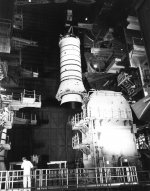
According to this photo at KSC, the rings are installed at the launch site.
182638main_SRBinspect3.jpg

So in this case, what is on display might not be accurate. :shrug:
 
The APU sound issue should now be history. Each APU now plays an instance of each sound, so they should be independent (which now sounds so cool that I spent some maybe 10 minutes starting and stopping them :lol:)

Thanks for the APU sound fix. Actually it is pretty cool to hear three different and indipendent units :thumbup:

As far as the problem with guidance crashing the orbiter on approach did you fix this too? Cause I ran the KSC 15 scenario and SSU preflared and landed flawlessly..
 
Last edited:
Are you talking about the Instafoam sections? Those are added at the launch site as the very last thing as those are located in high traffic areas. It was the same with the old pre-STS-114 bipod aero ramps, those were poured and sculpted by the KSC ET techs after they had installed the bipod struts (the ETs were delivered without them) as it was also a heavy trafficked area of the stack. Some other high traffic areas used bright red soft/hard covers.

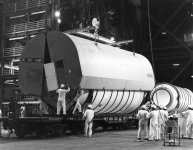
And they only covered hardware which was already there as shown in this photo of one of the STS-1 SRBs.
 

Attachments

  • STS1-0237-79P-335-11.2.79.jpg
    STS1-0237-79P-335-11.2.79.jpg
    143.7 KB · Views: 336
  • STS1-0221-79P-303-FIRST SRB MOTOR SEGMENTS ARRIVE AT KSC-9.27.79.jpg
    STS1-0221-79P-303-FIRST SRB MOTOR SEGMENTS ARRIVE AT KSC-9.27.79.jpg
    213.8 KB · Views: 368
Last edited:
Thanks for the APU sound fix. Actually it is pretty cool to hear three different and indipendent units :thumbup:

As far as the problem with guidance crashing the orbiter on approach did you fix this too? Cause I ran the KSC 15 scenario and SSU preflared and landed flawlessly..
This must have been some error on my part. I've managed several landings with no problems,
 
Are you talking about the Instafoam sections? Those are added at the launch site as the very last thing as those are located in high traffic areas. It was the same with the old pre-STS-114 bipod aero ramps, those were poured and sculpted by the KSC ET techs after they had installed the bipod struts (the ETs were delivered without them) as it was also a heavy trafficked area of the stack. Some other high traffic areas used bright red soft/hard covers.

And they only covered hardware which was already there as shown in this photo of one of the STS-1 SRBs.

The foam was probably for aerodynamic effect, as it wasn't there in the early flights. But on top of the foam there are rings bolted to the segment.
 
The foam was probably for aerodynamic effect, as it wasn't there in the early flights. But on top of the foam there are rings bolted to the segment.
The rings were always there is the point, they just added the foam over them (so you can't see them). There was nothing installed at the launch site, except for the nozzle and the aft skirt.
 

Attachments

  • SRM_aft_segment_foam.jpg
    SRM_aft_segment_foam.jpg
    189.6 KB · Views: 352
Last edited:
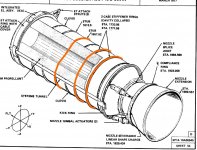
One main difference between the FWC segments and the steel segments were the outer diameter. The steel segments have a OD of 146" (3.7084 m) while the FWC segments have an OD of 150" (3.81 m). Also, per the DM-6 test fire summary document, the FWC aft segment has two stiffener rings built in (that's what those rings are called). The FWC SRM aft segment had two separate sub-segments, one upper which was made of the same D6AC steel as the regular SRM and one bottom segment which used the new FWC graphite-epoxy composite material. This is where the stiffener rings were located.
 
Last edited:
The rings were always there is the point, they just added the foam over them (so you can't see them). There was nothing installed at the launch site, except for the nozzle and the aft skirt.

Nop.
Look at this photo and compare with the one I posted earlier today:
540055main_launchpad-threearms.jpg

The black rings (and the foam below) weren't in the shipping photo. They are bolted at the launch site.

Plus:
img7.jpg
 
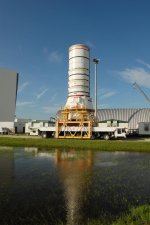
It's just the covers and the foam that goes on in the RPSF, nothing more. The stiffener rings are already there. I have included a photo of the Ares 1X aft motor segment which has some of the foam missing over its stiffener rings, showing that there's nothing behind it. I have also included a cropped photo of the left aft FWC segment of the Pathfinder display, showing the case stiffener rings on it.
 

Attachments

  • 2009-3901.jpg
    2009-3901.jpg
    131.2 KB · Views: 356
  • PathfinderampFWC-SRB5.jpg
    PathfinderampFWC-SRB5.jpg
    306.8 KB · Views: 366
Status
Not open for further replies.
Back
Top