News The Space Shuttle for Flightgear 3.6

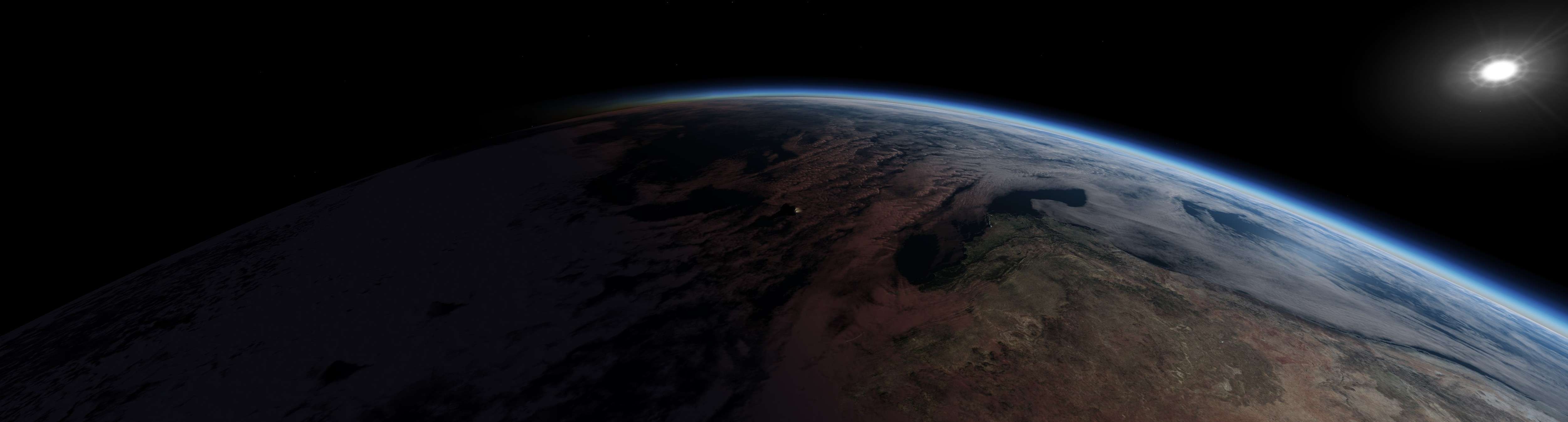
Another development cycle closes, and I'm proceeding to milestone testing - which means plenty of pretty views.


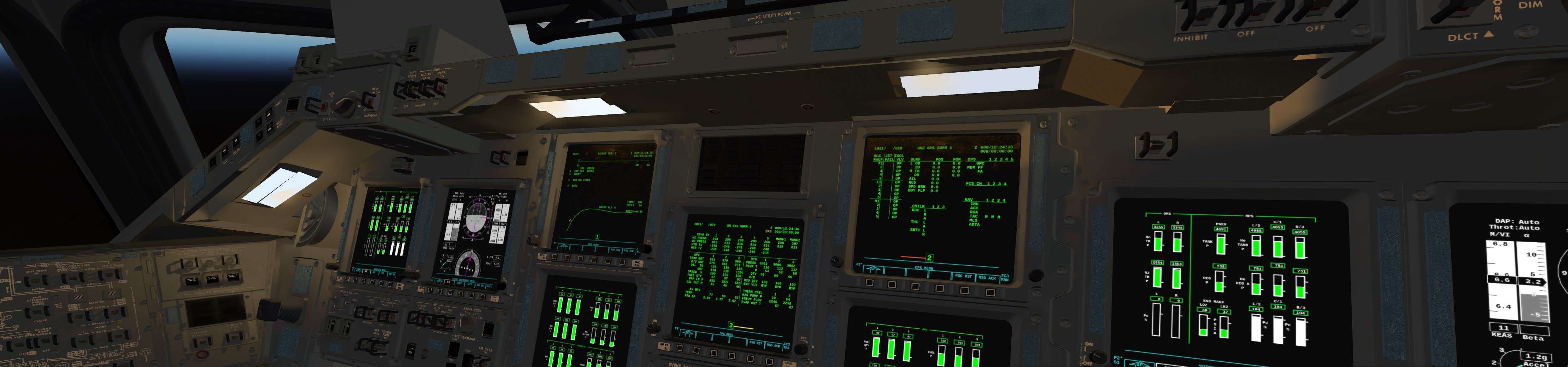
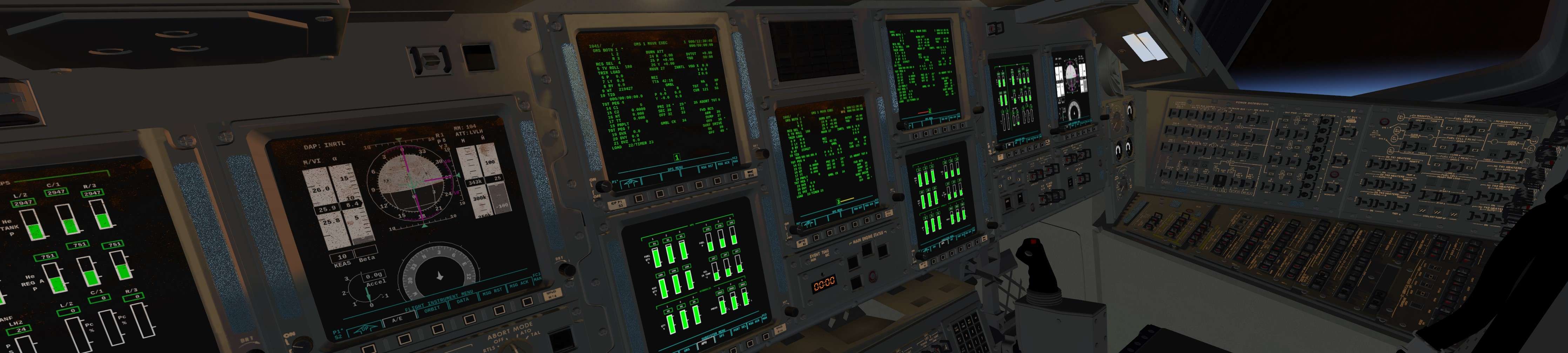
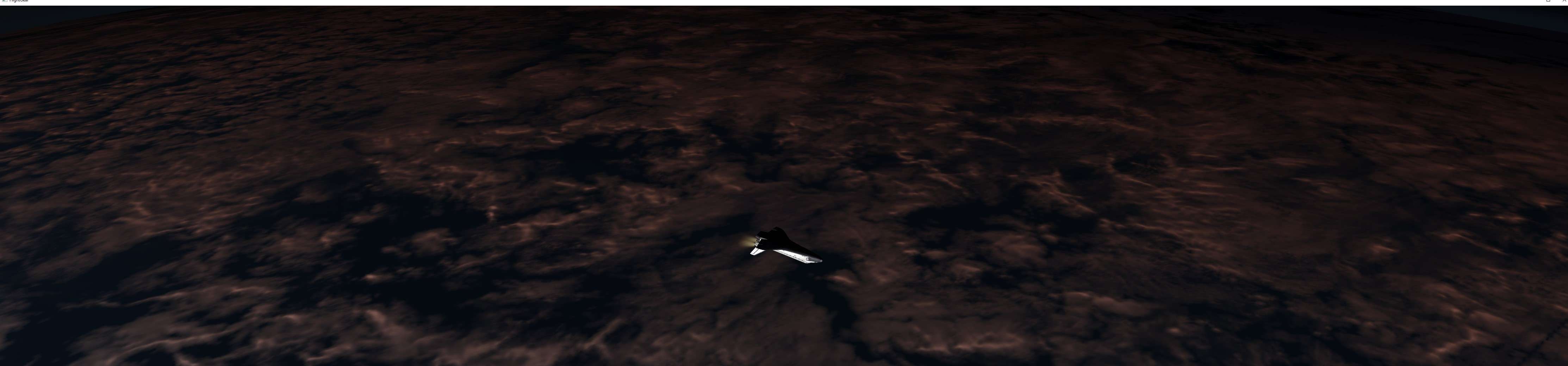
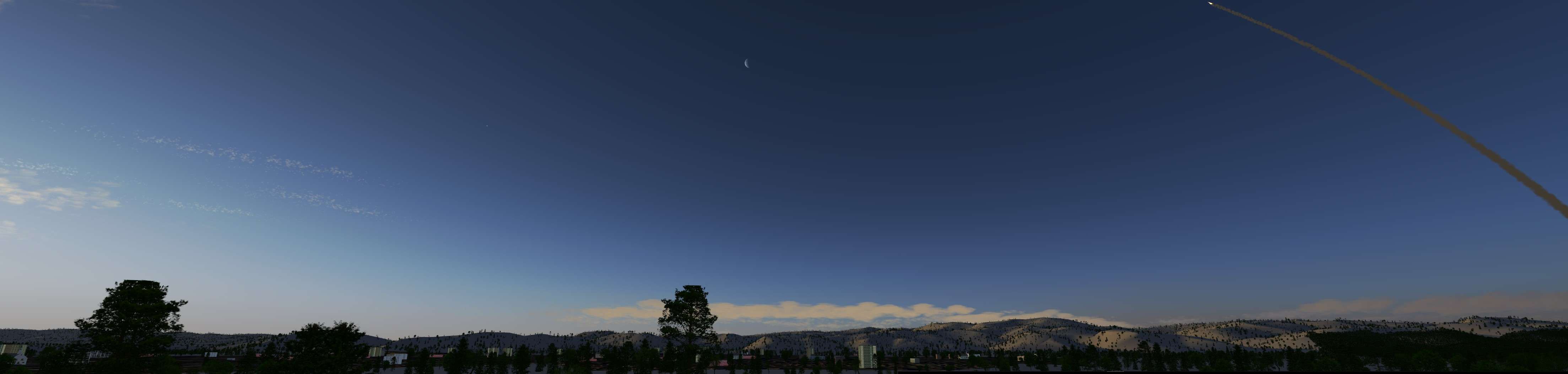
Shuttle meets ISS - a relatively fast dusk flyaround maneuver. Orbital DAP to free, establish a constant pitch rotation of 0.4 deg/s, use THC in NORM to keep ISS centered in COAS view, use radar ranging to manage the distance and conpensate for centrifugal force, and we're slowly going around the station.

Actually it's a fairly busy maneuver at that speed...

shuttle_flyaround00.jpg


Look at those clouds!

shuttle_flyaround01.jpg


The station seen through the COAS recticle.

shuttle_flyaround02.jpg


Last sunlight seen through the overhead windows.

shuttle_flyaround03.jpg


And, as we rotate around, the lights of Paris above - or below, dependent on how your coordinate system is arranged :)

shuttle_flyaround04.jpg


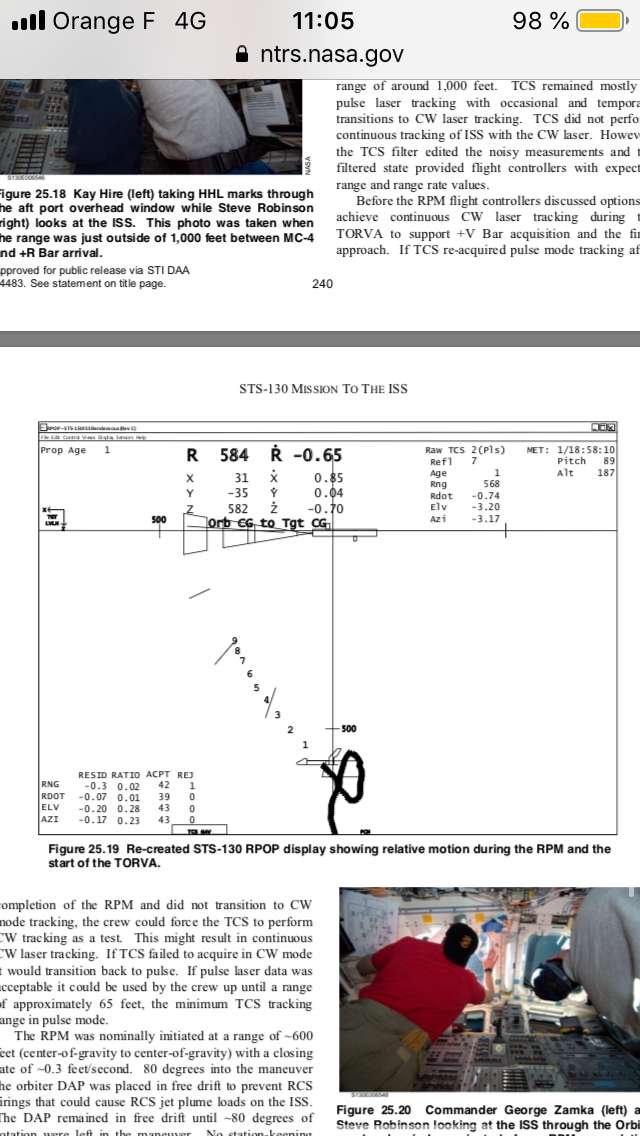
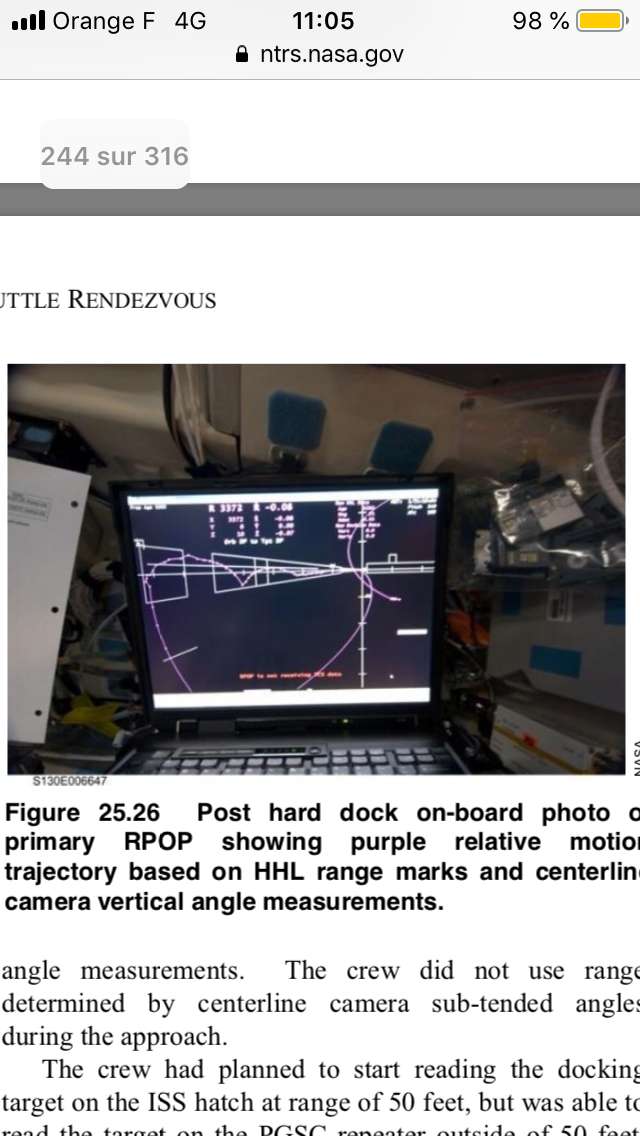
Are you considering implementing an RPOP tool (like the one they used on their onboard laptop computer)? We had it for Orbiter 2010 (unfortunately it doesn't work with O2016) and it was a great aid in flying and monitoring precise proximity operations and flyarounds (plus the extra realism added)
 
Are you considering implementing an RPOP tool (like the one they used on their onboard laptop computer)?

I'm not familiar with the tool (basically I'm still reading my way into the more intricate parts of Rendezvous literature...) - but based on past experience, if someone is interested in a system, the system has really flown (or was planned to fly), there's sufficient documentation and an implementation is possible, I try to get it into the sim.

it's how we got the OMS kit and OMS assist burn capability after all...
 
Some more impressions from testing various scenarios:

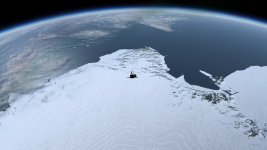
Antarctica from a 730 x 640 nm orbit - made possible by lugging the 1500 fps variant of the OMS kit into orbit and sitting through 8 minute long OMS-1 and OMS-2 burns. Kit is dry at this point, but the remaining propellant should be more than enough to de-orbit - it might be prudent to do an aerobraking pass to lower apoapsis before the final entry though... Admittedly I have little flight experience with such high orbits, but the view surely is great.

shuttle_milestone_11_01.jpg


shuttle_milestone_11_03.jpg


Aw, that sucks. Second engine fails in a droop guidance test.

Droop guidance actually worked fine, but I messed up royally - first I forgot to switch the good engine to 109% power and lost precious propellant and altitude before I remembered, then as a result MECO was a messy affair with residual rotation - and rather than wait for the system to do a proper ET-Sep, I should have forced it early on - not doing so cost me another few precious seconds. The biggest mistake then was to transit to MM 301 too early - which in a TAL automatically forwards to 304 and switches Aerojet DAP on - which is a pretty poor tool at acquire a good entry attitude.

By the time I had corrected that, I was already too deep in the atmosphere for the RCS to get me to a good attitude and I burned up.

Well - better keep them cue cards handy, procedure is there for something...

shuttle_milestone_11_02.jpg


Second abort scenario tested was a single engine TAL to LeTube - that worked rather well (probably because this time I did remember proper procedure...)

Passing the coast of Spain

shuttle_milestone_11_04.jpg


Over Southern France on the HAC

shuttle_milestone_11_05.jpg


... and down on the ground - coming right out of the HAC there was cloud cover with rain underneath - TACAN nav accuracy and poor visibility do not add up to a comfortable combination - in fact I over-ran the runway somewhat (off into the green with ~ 40 kt) - I suppose in reality some gear damage would have been the result.

shuttle_milestone_11_06.jpg
 
The new version of the Space Shuttle Flight Manual (both Standard and Deluxe edition) referring to milestone 11 is out (259 pages for the deluxe edition.)!

flight_manual_deluxe.png


Please download and enjoy the version of your choice! Plenty of news on COAS, OMS kit, rendezvous and proximity operations, new dialogs,...
 
A sum up of my last test sessions.

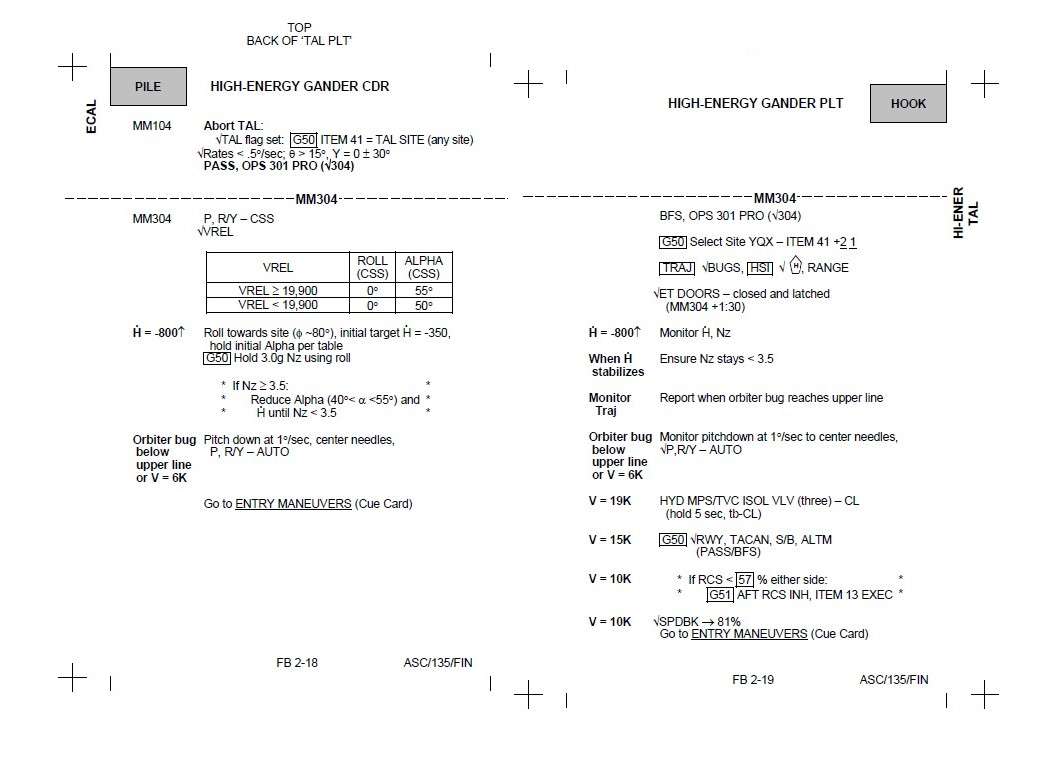
High Energy TAL to Gander.
An Exotic TAL that would have been useful in case of a triple engine failure between 20 and 22000 fps of inertial Speed for a Launch to ISS ( 51.6 ° of Inc)

Procedure developped in the 2000's .
At those speeds, too much velocity for a normal Gander TAL and not enough speed for a TAL to Shannon once Ocean was crossed.
Really exotic and smart one.

The checklist menu

DFT1lK.jpg


And the sum up


https://forum.flightgear.org/viewtopic.php?f=19&t=35763
 
In case you were wondering - development is still happening:)

Currently I'm busy to enable the cue card binders to be usable in the cockpit - right now you can attach some systems procedure binders to the velcro and browse through them - because that might be awkward in a stress situation, each page can pop up in a separate window when clicking on it.

shuttle_cuecards02.jpg


Otherwise I've done some basic stuff (which Orbiter had for ages, but I had to code from scratch) - management routines for grabbing payloads from space (this alters the number of objects to be simulated...) and for things like assemby - so now we can grab a satellite and return it to Earth.

Thanks to Waybe Bragg, we also now have the Hubble Space Telescope as a (challenging) rendezvous target (unless you bring the OMS Kit of course...).

And for training purposes, I've added a scenario overlay which allows to quickly jump to specific tasks - using a scenario overlay, one can for instance set Shuttle and rendezvous to specific positions, or set a Shuttle internal state (failures...) or such like - that's kind f orthogonal to saving/resuming a state as one would do when simulating a mission in real time.
 
Finally getting the CAM matrix voting problem under control - here's GPC 2 after failing to sync with the redundant set (on orbit here being composed of 1-3) in step 2 - in step 1 it votes against 1 and 3, but then in step 2 the algorithm decides that as a minority being voted out, it can't vote against others any more, so it indicates self-fail.

shuttle_cam.jpg


Okay, this is a pretty exotic part of Shuttle operations... but we now have it anyway.
 
A genuinely different perspective for a change. In reality, the Shuttle has often been escorted by fighter jets in its last flight phase - so I've wondered how it looks from the cockpit of such a jet.

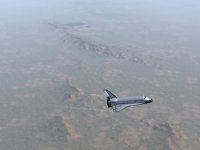
To re-create the experience, I recorded a Shuttle TAEM trajectory to Edwards AFB, fed that to the AI system of FG, got myself into the cockpit of an F16 and tried to intercept the incoming spacecraft.

It turns out to be a really difficult maneuver - for an early intercept the F-16 needs to climb high and hit full AB, but quickly switch into full brake mode because it's simply not meant to descent at 7000 ft/min, so it's a bit hard not to overshoot the Shuttle, basically engine idle and full spoilers do the job

From the Shuttle cockpit, TAEM is a sedate affair - nothing much happens, lots of straight-line flight while one has a chance to look at the NAV filters and does a few last minute weather adjustments. Also, it feels pretty slow going after the entry phase. From the F-16, it feels nothing like that, it's a hectic scramble to intercept followed by a completely mad spiral dive.

In formation just before HAC:

f16_shuttle01.jpg


...and during HAC

f16_shuttle02.jpg


Good radar lock as the Shuttle dives into final approach:

f16_shuttle03.jpg
 
I'm happy to announce that the next milestone of the Shuttle is tagged and will soon be widely available via the standard FG download option.

There's quite some work under the hood, but the big new thing is the option to grapple payloads (or push them away if you're not careful...). Also, there's now the concept of a 'Scenario' which quickly gets one into an interesting mission phase, and there's support to velcro cue cards in-sim into their positions.

Here's some impressions of the pre-milestone tests I've done:

Fuel dump during an RTLS:

shuttle_ms12_01.jpg


ET separation and pitchup before Nz-holding phase:

shuttle_ms12_02.jpg


Alpha transition (in the event, I was high on energy so I got to experience S-turns later):

shuttle_ms12_03.jpg


Night portion of the orbit, after TI burn in transit to ISS:

shuttle_ms12_04.jpg


ISS in view:

shuttle_ms12_05.jpg


Approaching a satellite for capture:

shuttle_ms12_06.jpg


Stationkeeping in capture position:

shuttle_ms12_07.jpg


And... grabbed in the first attempt:

shuttle_ms12_08.jpg


View from the payload specialist station:

shuttle_ms12_09.jpg


Off into the sunset...

shuttle_ms12_10.jpg
 
The new version of the Space Shuttle Flight Manual (both Standard and Deluxe edition) referring to milestone 12 is out!

flight_manual_deluxe.png


Please download and enjoy the version of your choice!

The milestone itself is now also available via the standard FG download.

***

Since then, I've been busy going through the details of the MPS workbook and implementing them in the devel version - so that's a preview of what is to come for the next milestone. The various ascent failure scenarios are now supported in quite some detail, we're going to have data and command path failures, PASS and BFS specific CWS messages, red-lined engines which are dangerous to run, isolatable and non-isolatable leaks in the Helium system, failures of the cutoff switches or the ET sep switch and their software alternatives,... Basically a lot of the original procedures should now be fully doable (with meaningful steps).

I've also added an ascent failure trainer that presents a random fault scenario in three difficulty levels (the highest difficulty may not always be survivable - there's 3EO possible and that doesn't always end well...) - so one can specifically train diagnostics and fault response during ascent.
 
Development has been paused due to a growing family (baby daughter...), but we're finally back on track with new collaborators on board and a new milestone in preparation.

So - what's happening?

* rework of the displays, the SM pages now include the limit sensing messages so values which are out of limits are shown with an up or down arrow and in overbright

* yet more aerodynamical tables worked into the flight dynamics model

* the CWS messages which can appear have been expanded quite a bit, with both PASS and BFS specific messages

* we now have a nice notepad that automatically records communication with MCC, so for instance a Delta state update is available in written form

* more scenarios to quickly enter a particular phase of the Shuttle experience

* many small bugfixes...

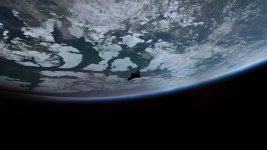
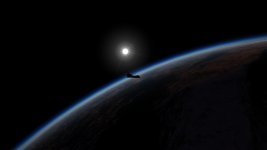
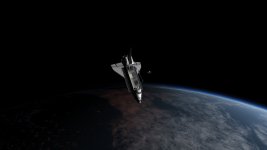
Here's a couple of screenshots showing the Shuttle in a 450 mile high polar orbit using the OMS kit, deploying a satellite:

shuttle_ms13_01.jpgshuttle_ms13_02.jpgshuttle_ms13_03.jpgshuttle_ms13_04.jpg
 
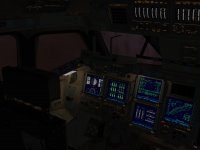
Here are also a few interior views to highlight the displays (GinGin has done lots of work in that area - also a big thanks to the SSU folks for letting us use their font for the displays):

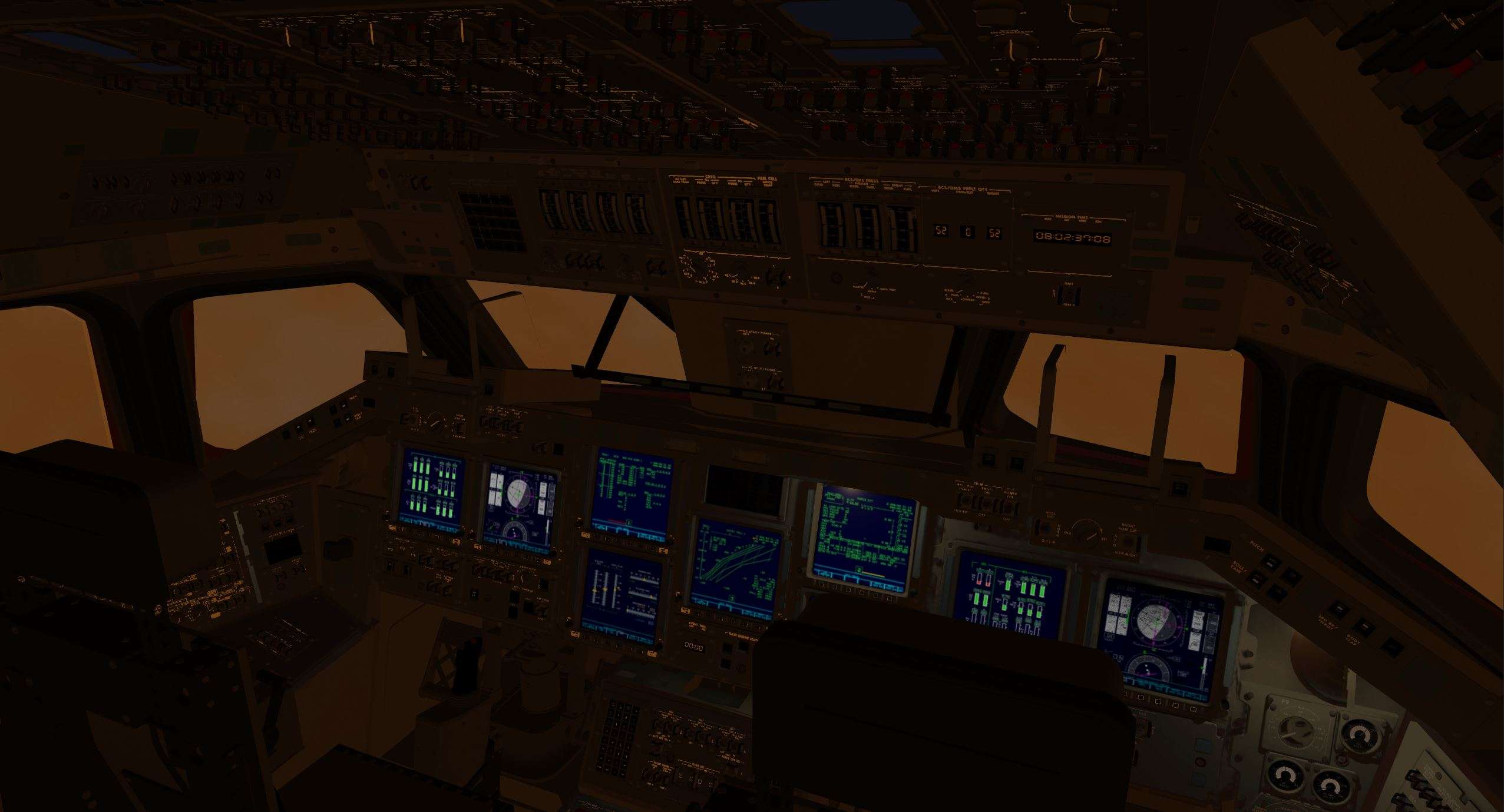
Early entry phase during night, some plasma builtup outside:

shuttle_entry02.jpg

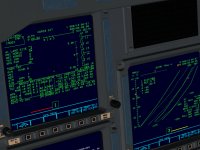
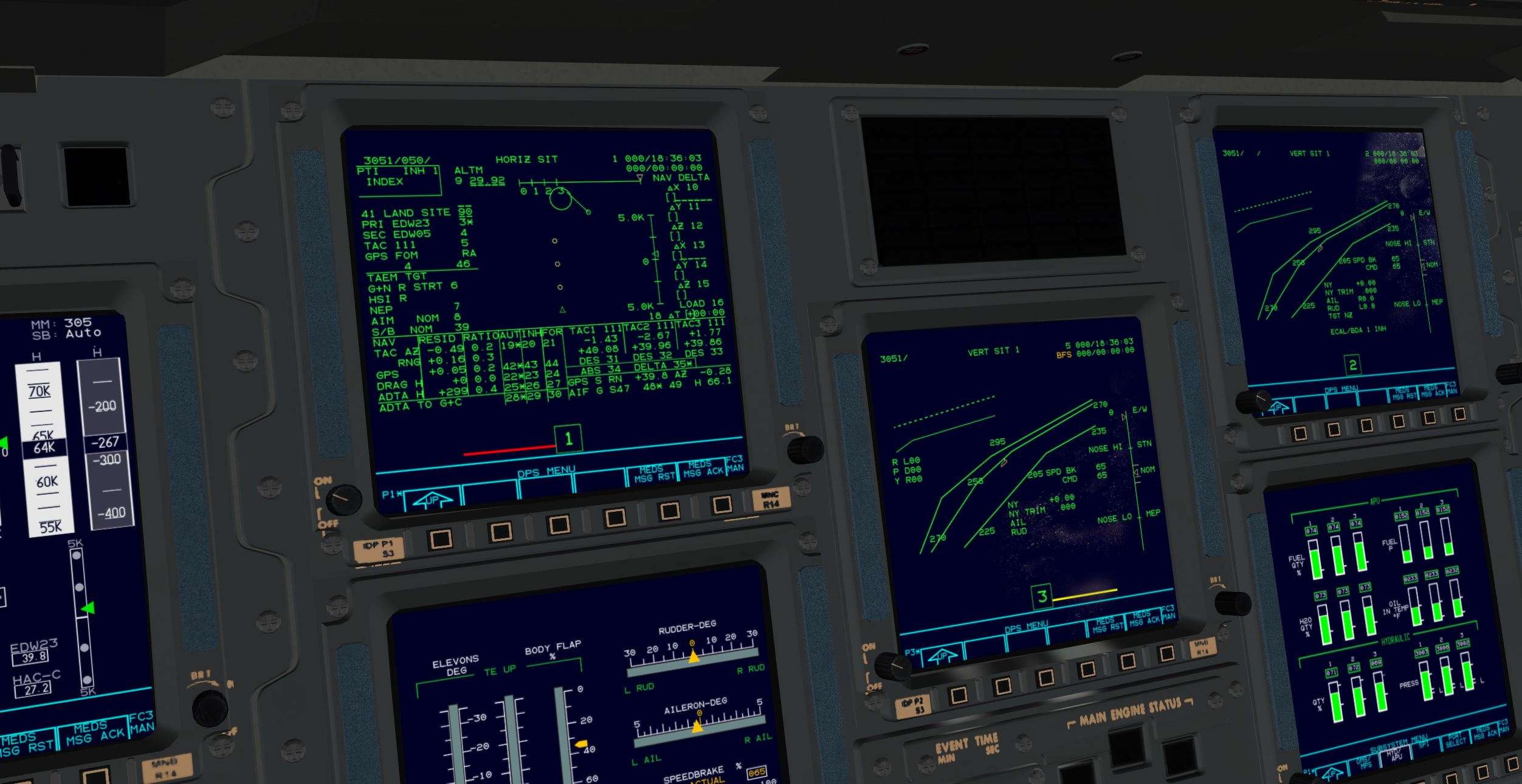
A detail view of the DPS displays later in the entry - TACAN data has just been incorporated on HORIZ SIT and ENTRY TRAJ 4 is the BFS version of the display. We're headed for a lakebed landing at White Sands.

All items on SPEC 50 are actually functional - you can force or inhibit data incorporation into the filter, deselct the individual TACAN receivers, do a Delta state update via voice communication, select a different TAEM pattern and/ or aim point for energy management, the system produces a dilemma when it can't decide between different data sources...

shuttle_entry06.jpg
And overflying the landing zone in early morning light...

shuttle_entry07.jpg
 
Indeed, a big thanks to the SSU team for those close to real fonts.
That gives an even deeper immersion.

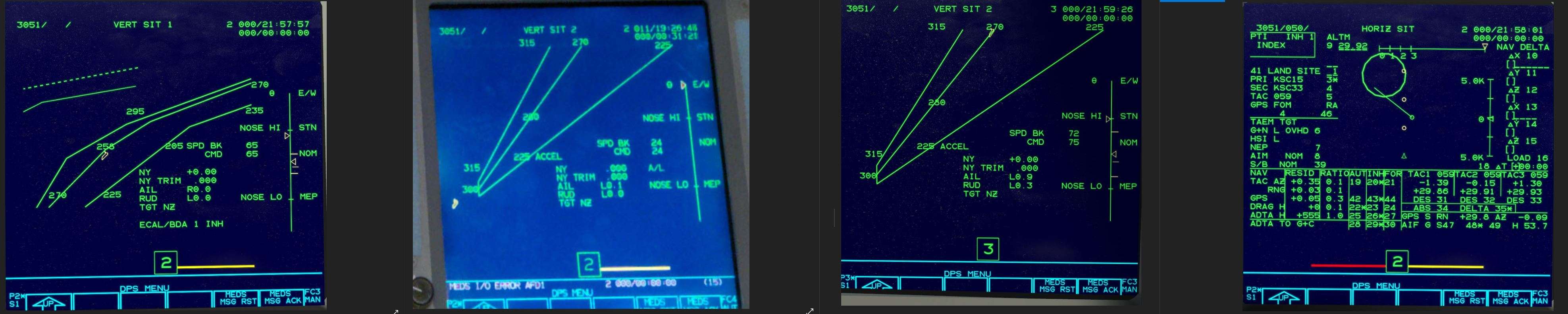
Some of the display changes mentionned for the OPS 3 entry part (based on OI-33 dps software version)


Wx7KhM.jpg

FyjZk4.jpg


Some screenshots from my last sessions.

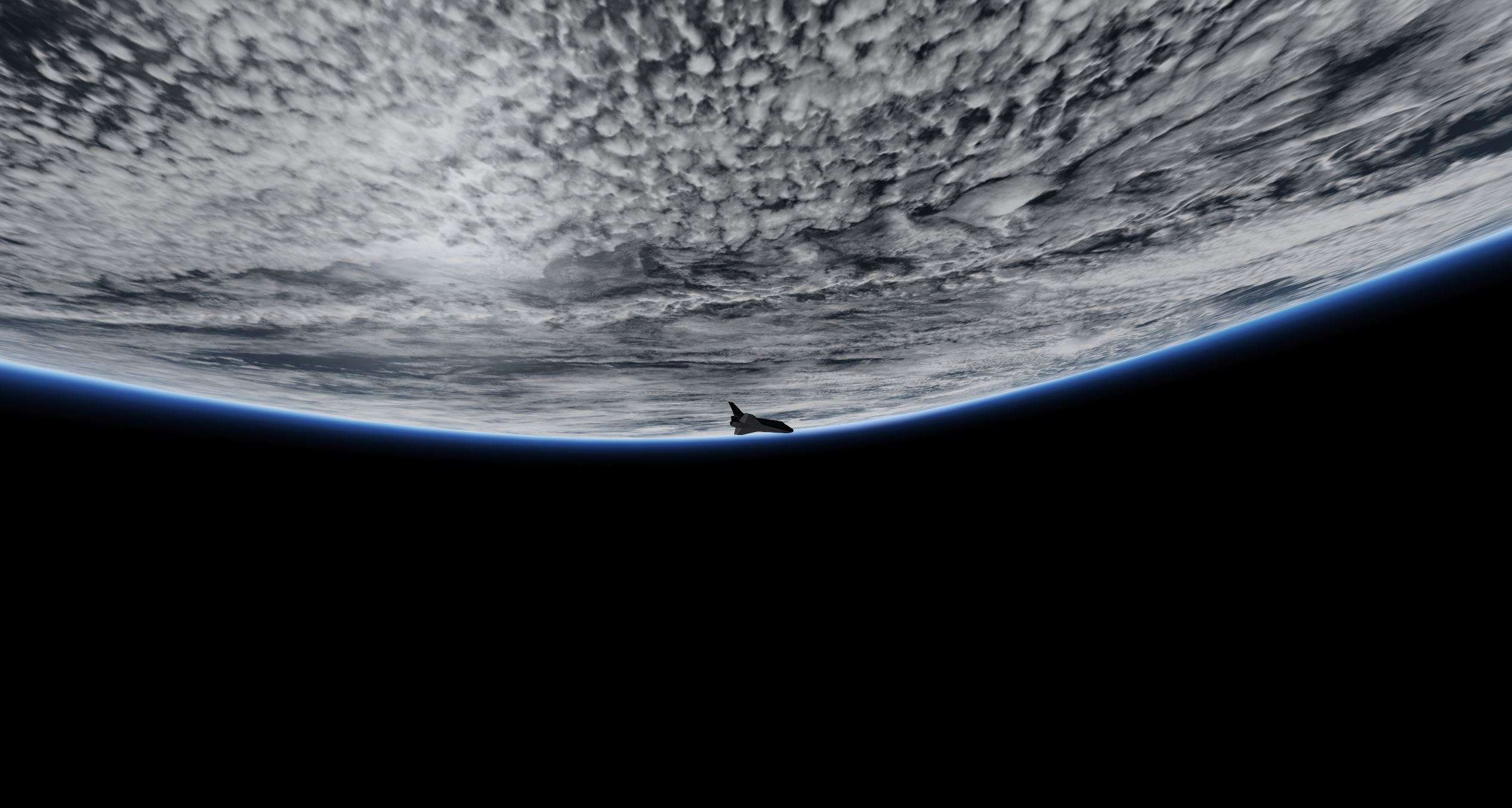
Coasting phase above clouds waiting for entry interface

Iiw5Q7.jpg


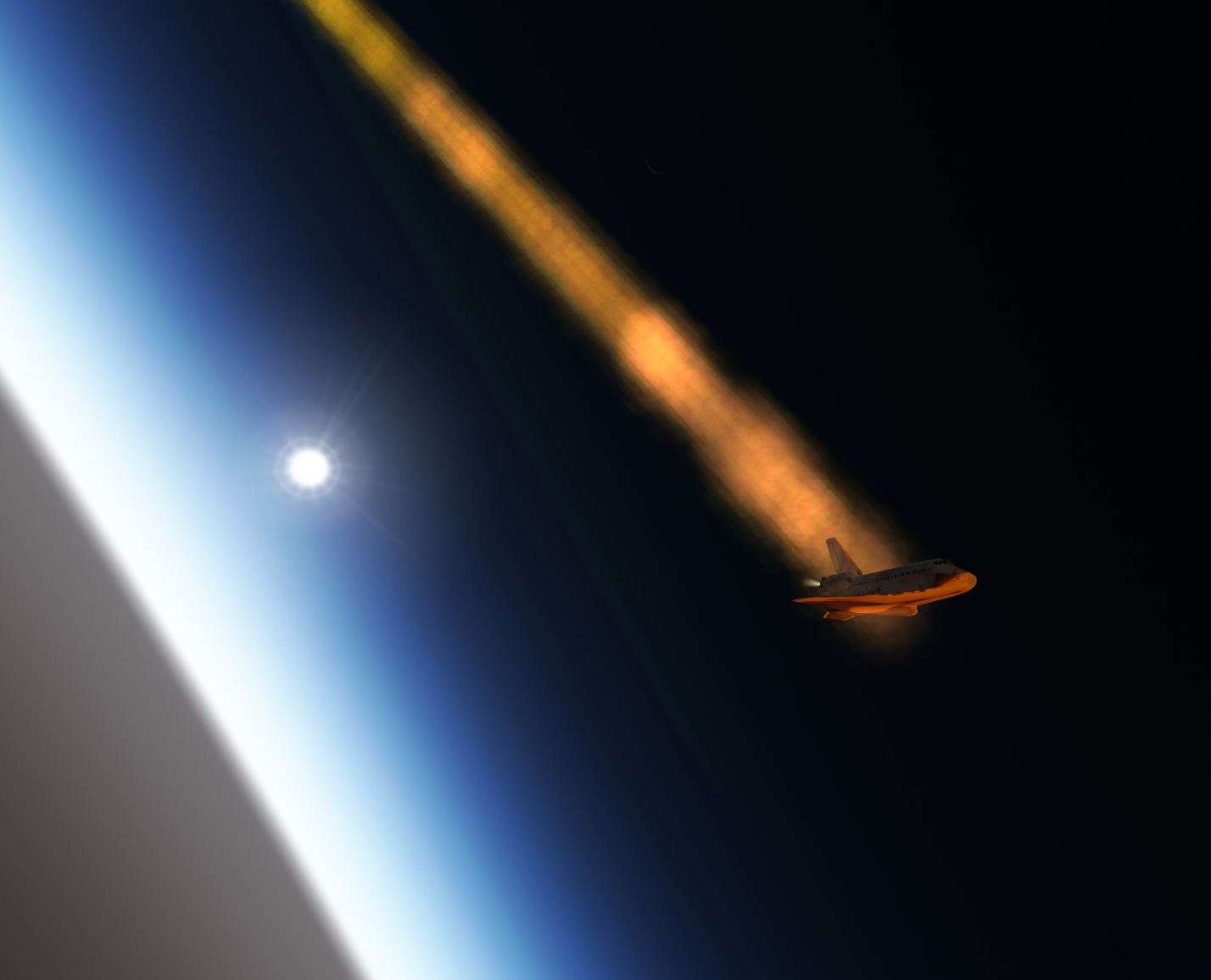
Intense glowing

e9itgl.jpg


8V8dey.jpg


TAEM Straight in for Runway 23 lakebed at Edwards.
Nominal profile : on glide slope and on speed , hence an actual total energy close to the nominal one ( triangle marker position in the yellow energy ladder right of the vertical situation dps display )

fZpBIy.jpg


Tiny Shuttle sighted on a nearby airport

wkkioT.jpg


Touchdown

mgctub.jpg
 
The last days I spent re-tuning the NO Y JET entry DAP which was too unstable to bear the FDM improvements (well, actually I endet up re-implementing it from scratch to fix a few design flaws).

(For those who are not into the gory details - the Shuttle is a yaw unstable vehicle during entry. Usually the RCS jets fire to prevent sideslip from building up, but when they're low on propellant, something else has to be done. The NO Y JET works by using the ailerons to roll - that creates a yawing moment. Using this yawing moment sideslip can be commanded to be a non-zero angle. In this case the non-zero beta introduces a rolling moment which can be used for maneuvering).

When is used to a normal entry, the whole experience is pretty weird, because the Shuttle rolls really slowly. In fact, it initiates any roll by rolling into the opposite direction to build sideslip and then gradually accelerates to the commanded roll rate. Especially the roll reversals are excruciatingly slow and one has to build a good sinkrate well ahead of the maneuver as well as use alpha modulation to make it all work.

But... you can't beat the propellant consumption, it all works on airfoils only.

Since it's not an experience that's easily captured in a screenshot, I can offer this one - prior to touchdown after a night entry, only the touchdown zone is illuminated.


shuttle_ms13_05.jpg
 
prior to touchdown after a night entry, only the touchdown zone is illuminated

Nice field of view depth.
You forgot to clean the dust on the Commander PFD :D


Those polar screenshots above made me hanker after a Polar Long Haul trip.
I tried to base it on STS 62 A that would have been the first Polar Mission from Vandenberg in 1986.

STS 62 A
STS 62 A Polar Express

At the limits of everything performance wise, the usage of an OMS kit of 1000 fps was a huge help for such high altitude/inclination targets (500 Nm/ 80°)

Here is the link of that Journey highlights

A high altitude Journey


2zq3Mk.jpg
 
An early morning low-inclination launch, it's still dark on the ground, but the bright SRB flame lights up the clouds...

shuttle_ms13_tal01.jpg


Separation, and the Shuttle proceeds onward into the dawn light, everything nominal so far...

shuttle_ms13_tal02.jpg


... but we lose an engine. TAL abort is declared immediately, and the OMS propellant dump is started. The Shuttle starts to proceed towards Banjul, the standard TAL site for low inclination. Two engines are quite enough to keep us on the desired trajectory, so Africa, here we come!

shuttle_ms13_tal03.jpg


Leaving the US coast, there's already light on the clouds over the Atlantic ocean. If you look closely, you can distinguish the bright OMS and RCS flames of the propellant dump and the nearly invisible flame of the main engines.

shuttle_ms13_tal04.jpg


Darn - we've lost a second engine. Droop guidance engages automatically, pitching the Shuttle up steeply to avoid letting the trajectory fall below 275.000 ft (at this altitude, the ET might blow due to heating). To assist the maneuver, the last engine is throttled up to 109% performance. As the engine consumes propellant, the Shuttle gets lighter so eventually even a single engine can keep us from falling down. Likewise Single Engine Roll Control (SERC) has engaged - by gimbaling the last engine we can control pitch and yaw, but no longer roll, so the RCS jets now fire to do the job. The resulting roll is very very sluggish, so we do not roll to heads-up attitude with the ET attached.

shuttle_ms13_tal05.jpg


... and droop guidance has disengaged we're back on the trajectory. But the droop maneuver costs a lot of propellant, so we won't be able to make it even to Banjul. We're going to have an OPS 3 entry into the atmosphere, which is good, they're less wild than the OPS 6 version, but still - a bailout somewhere over open water is going to be a really rotten prospect, but there's Cape Verde a few hundred miles before Banjul - so we change the TAL site to there and keep our fingers crossed.

shuttle_ms13_tal06.jpg


MECO with little propellant to spare - the next minute is very hectic and shows why there's a commander and a pilot needed - the commander rolls the Shuttle to proper entry attitude, the pilot checks that the ET umbilical doors are properly closing, that the MPS propellant dump is initiated, and then the commander changes to OPS 3 before the atmosphere is felt too much.

shuttle_ms13_tal07.jpg


The heat shield is already glowing before we reach proper entry attitude.

shuttle_ms13_tal08.jpg


Turns out we're still a bit far off - the last resort is to activate low E flight rules. This means rough phugoids - the Shuttle bounces into the atmosphere, back out and falls back in - but this way we squeeze every mile we can possibly get out of the energy we have. The display flashes a high-g warning, entry is still on the rough side...

shuttle_ms13_tal09.jpg


ENTRY TRAJ display shows the rather strange signature of the phugoids...

shuttle_ms13_tal10.jpg


... but eventually we reach the nominal trajectory and can de-activate low E flight rules - back to a nominal entry then - we're going to make it to a solid runway after all, no bailout over open water.

shuttle_ms13_tal11.jpg


The Shuttle banks sharply using nominal entry guidance.

shuttle_ms13_tal12.jpg


Clouds over water seen from the Commander perspective... also note that on the SPI we can see trim is really off, we need lots of ailerons to keep in attitude. That's because we're flying an abort, there was no time to dump the FRCS propellant... About now is the time to activate the ammonia boilers to provide cooling of the systems at lower altitudes...

shuttle_ms13_tal13.jpg


TACAN of Cape Verde is acquired, air data probes are out, QNH at the landing site has been transmitted, a rather surprised controller at Amilcar Cabral International Airport has been told that he'll soon see a Shuttle coming in, all traffic around the airport has been diverted - and the Commander is seeing a nominal TAEM

shuttle_ms13_tal14.jpg


Turning into the HAC, morning light playing across the displays...

shuttle_ms13_tal15.jpg


It's a bit cloudy, broken cover, but we can't be picky now, can we?

shuttle_ms13_tal16.jpg


Descending into final approach...

shuttle_ms13_tal17.jpg


... and landing at Amilcar Cabral International Airport... Well, we were hoping to get into space today, but at least we didn't end up swimming in the Atlantic...

shuttle_ms13_tal18.jpg
 
Back
Top