Launch News Antares' Return to Flight - Cygnus OA-5

Kyle

Armchair Astronaut
Addon Developer
Joined
Mar 17, 2008
Messages
3,915
Reaction score
350
Points
123
Website
orbithangar.com
Aiming for a launch on October 17, 2016 at 00:03 UTC. Cygnus' name is the Alan G. Poindexter.

NSF Article: https://www.nasaspaceflight.com/2016/10/cygnus-antares-rollout-comeback-mission/

The next Cygnus spacecraft is currently undergoing final processing with her Antares launch vehicle, a key milestone ahead of the upcoming launch to the International Space Station (ISS), which is now set to take place on Sunday. The OA-5 mission will mark the first time the extended Cygnus spacecraft has flown with the upgraded Antares and the Castor 30XL Upper Stage.

Rollout pic:
t5KsgUM.jpg
 
Orbital ATK: Mission Update: OA-5 Space Station Cargo Resupply:
Mission Update - October 16, 2016

Today’s launch of Orbital ATK’s Antares rocket is postponed 24 hours due to a ground support equipment (GSE) cable that did not perform as expected during the pre-launch check out. We have spares on hand and rework procedures are in process. The Antares and Cygnus teams are not currently working any technical issues with the rocket or the spacecraft.

New launch date: October 17, 2016; 7:40 p.m. EDT / 23:40 UTC.
 
Live coverage of the launch on NASA TV:
 
New T-0 at 23:45:36 UTC.
 
T-90 seconds.

---------- Post added at 12:46 AM ---------- Previous post was at 12:44 AM ----------

T0, liftoff!!!

---------- Post added at 12:50 AM ---------- Previous post was at 12:46 AM ----------

Glushko delivers again... 1º stage shutdown and separation.

---------- Post added at 12:50 AM ---------- Previous post was at 12:50 AM ----------

Fairing separation and 2º stage ignition!

---------- Post added at 12:54 AM ---------- Previous post was at 12:50 AM ----------

2º stage burnout! Orbit: 360x213.62x51.617

---------- Post added at 12:55 AM ---------- Previous post was at 12:54 AM ----------

Cygnus separation!

---------- Post added at 12:57 AM ---------- Previous post was at 12:55 AM ----------

They just had a CTD in their graphics :rofl:
 
Docking Today!

Cygnus is ready for capture by the ISS crews today.

Live coverage to begin on NASA TV starting 5:45 a.m.

Current Twitter updates on ISS Updates@ISS101:


---------- Post added at 06:01 PM ---------- Previous post was at 06:00 PM ----------

Ready for 250m hold from ISS

---------- Post added at 06:02 PM ---------- Previous post was at 06:01 PM ----------

Ready to enter orbital sunset in a couple of minutes.

---------- Post added at 06:03 PM ---------- Previous post was at 06:02 PM ----------

Flight engineers Takuya Onishi and Kate Rubins are responsible for today's capture.

---------- Post added at 06:06 PM ---------- Previous post was at 06:04 PM ----------


---------- Post added at 09:00 PM ---------- Previous post was at 08:57 PM ----------

Live coverage begins now!

---------- Post added at 09:02 PM ---------- Previous post was at 09:00 PM ----------

Orbit 2 team now working, taking over the job from orbit 1 team, which was responsible for the capture of Cygnus earlier.

---------- Post added at 09:13 PM ---------- Previous post was at 09:02 PM ----------

Expedition 50/51 to be launched in mid-November.

---------- Post added at 09:15 PM ---------- Previous post was at 09:13 PM ----------

Waiting for video communication regaining around 9:20a.m. EDT.

---------- Post added at 09:16 PM ---------- Previous post was at 09:15 PM ----------

ISS 251 statute miles, just south of Sri Lanka. Now in orbital night.

---------- Post added at 09:21 PM ---------- Previous post was at 09:16 PM ----------

253 statute miles, west coast of Australia. Just regained video comm from ISS.

---------- Post added at 09:22 PM ---------- Previous post was at 09:21 PM ----------

[ame="https://twitter.com/ISS101/status/790180936495357957"]ISS Updates on Twitter: "#Cygnus almost in place for berthing, ROBO controllers are using the Centerline Berthing Camera to very precisely position the spacecraft."[/ame]

---------- Post added at 09:23 PM ---------- Previous post was at 09:22 PM ----------

Robotic arm now in motion.

---------- Post added at 09:27 PM ---------- Previous post was at 09:23 PM ----------

Reached 100cm, now moving closer to 40cm.

---------- Post added at 09:48 PM ---------- Previous post was at 09:27 PM ----------

Regaining video communication.

---------- Post added at 09:50 PM ---------- Previous post was at 09:48 PM ----------

260 statute miles above southern Pacific, prepare for orbital sunrise.

---------- Post added at 09:50 PM ---------- Previous post was at 09:50 PM ----------

Satellite handover for steady video communication continues.

---------- Post added at 09:52 PM ---------- Previous post was at 09:50 PM ----------

Video comm resumed. 259 statute miles. Cygnus illuminated by orbital sunrise.

---------- Post added at 10:08 PM ---------- Previous post was at 09:52 PM ----------

About to go for standby mode.

---------- Post added at 10:10 PM ---------- Previous post was at 10:08 PM ----------

I am losing patience now. It is too long.

---------- Post added at 10:12 PM ---------- Previous post was at 10:10 PM ----------

I have to quit now. Sorry. I need to sleep now. Have a nice day.

---------- Post added at 10:13 PM ---------- Previous post was at 10:12 PM ----------

Good luck, Cygnus.
 
Last edited:
Cygnus to undock today!

30509478486_5fff4559ab_o.jpg


Live coverage to begin at 8 a.m. EST.


Latest Update

[ame="https://twitter.com/ISS101/status/800681185437425665"]ISS Updates on Twitter: "#Cygnus now in the release position, Cupola Robotics Workstation now being configured for the robotic release of the craft. https://t.co/lRFdmMRJDc"[/ame]

Official NASA Press Statement:US Cargo Ship Set to Depart Space Station, Live NASA TV Coverage

One month after launching from NASA’s Wallops Flight Facility in Virginia, Orbital ATK’s Cygnus cargo spacecraft is set to leave the International Space Station at 8:20 a.m. EST Monday, Nov. 21. Live coverage of the spacecraft departure will begin at 8 a.m. on NASA Television and the agency’s website.

Experiments delivered on Cygnus supported NASA and other research investigations during Expeditions 49 and 50, including studies in biology, biotechnology, physical science and Earth science – research that impacts life on Earth. Investigations included studies on fire in space, the effect of lighting on sleep and daily rhythms, collection of health-related data, and a new way to measure neutrons.

Five hours after departing the station, the Saffire-II experiment will intentionally ignite a fire inside a module aboard the uncrewed spacecraft. The second in a series of three, the experiment allows researchers to study a realistic fire on an exploration spacecraft. Instruments on the Cygnus will measure flame growth, oxygen use and more. Results could determine microgravity flammability limits for several spacecraft materials, validate NASA’s material selection criteria, and help scientists understand how microgravity and limited oxygen affect flame size. The investigation is important for the safety of current and future space missions.

Cygnus also will release four LEMUR CubeSats from an external deployer on Friday, Nov. 25, sending them to join a remote sensing satellite constellation that provides global ship tracking and weather monitoring.

The spacecraft will remain in orbit until Sunday, Nov. 27, when its engines will fire twice, pushing it into Earth's atmosphere, where it will burn up over the Pacific Ocean.

Nasaspaceflight.com:Cygnus OA-5 mission prepares to depart Station after one month mission

After nearly one month at the International Space Station, Orbital ATK’s Cygnus OA-5 spacecraft is set for unberth and departure operations this Monday morning. The to-date flawless “Alan Poindexter” Cygnus is scheduled to be unberthed from the nadir port of the Unity (Node-1) module and depart the Space Station ahead of release from the Station’s robotic arm at 08:20 EST.

After arriving at Station and being berthed to the nadir port of the Unity module, the ISS crew has spent the last 30 days unloading 2,342 kg (5,163 lb) of supplies from Cygnus and repacking the craft with 1,300 kg (2,866 lb) of trash for disposal via burn up in Earth’s atmosphere.

With OA-5’s berthed mission at an end, astronauts aboard the ISS and ground robotic controllers at MCC-H will unberth Cygnus from Node-1 nadir and set the craft free for the next phase of its mission.

After being cleared for unberthing by MCC-H, the vestibule between Cygnus and ISS will be depressurized before the 16 bolts that secure Cygnus to the Space Station are commanded to “drive” to their release positions.

The 16 bolts will be driven in two stages and will physically disconnect Cygnus from the main structure of the ISS while the SSRMS (Space Station Remote Manipulator System) holds the spacecraft firmly in the grasp of its snares inside the Latching End Effector (LEE).

Once the bolts are released, ground robotic controllers at MCC-H will carefully translate Cygnus 10 meters away from the Station and ease it through a series of maneuvers on the end of the SSRMS to bring the Alan Poindexter into its proper release attitude.

Once Cygnus is in position, MCC-H will give a “go” to release the snares inside the LEE.

At this point, astronauts Shane Kimbrough and Thomas Pasquet will release the SSRMS LEE snares, “letting go” of Cygnus and allowing it to fly under its own systems.

The release is scheduled for 08:20 EST (13:20 GMT).

The SSRMS will then be translated away from Cygnus while the craft holds its position relative to the Station.

During this time, controllers in MCC-H, Cygnus Mission Control Center in Dulles (MCC-D), and astronauts in the Cupola module of the ISS will carefully monitor Cygnus for any signs of misbehavior.

If the Cygnus does not behave as intended, any one of the three control facilities can initiate an emergency abort procedure to quickly and safely back Cygnus away from the ISS – though the odds of this being needed are slim.

If all goes to plan, once the SSRMS is moved to a safe distance, ISS controllers in MCC-H and Orbital ATK controllers at MCC-D will conduct a series of system checks prior to Cygnus’ opening departure burns.

Cygnus will then fly itself out of the Keep Out Sphere (KOS) of the Station before eventually departing the Approach Ellipsoid, marking the point where joint operations between NASA and Orbital ATK will end.

Orbital ATK’s controllers in Dulles will then take control of Cygnus for the remainder of its Low Earth Orbit journey.


---------- Post added at 08:58 PM ---------- Previous post was at 08:55 PM ----------

This thread is for the complete OA-5 mission. It will include the Saffire-II experiment as well. So, I decided not to post it in the ISS Updates thread so as to keep uniformity and continuous updates throughout the whole OA-5 mission. Dear moderators and administrators, feel free to move this thread if necessary. Thanks.

---------- Post added at 09:00 PM ---------- Previous post was at 08:58 PM ----------

Live coverage has started!

---------- Post added at 09:02 PM ---------- Previous post was at 09:00 PM ----------

GO for release at 8.20 a.m. EDT!

---------- Post added at 09:05 PM ---------- Previous post was at 09:02 PM ----------

Orbit raising to 60 miles above the ISS to be conducted later.

---------- Post added at 09:07 PM ---------- Previous post was at 09:05 PM ----------

ISS now 256 statute miles approaching California, about to enter orbital sunrise.

---------- Post added at 09:07 PM ---------- Previous post was at 09:07 PM ----------

Orbit 1 team now working.

---------- Post added at 09:11 PM ---------- Previous post was at 09:07 PM ----------

[ame="https://twitter.com/ISS101/status/800687620695015424"]ISS Updates on Twitter: "Mission Control has given a GO for #Cygnus release. @astro_kimbrough & @Thom_astro reviewed the release procedure & report readiness."[/ame]

---------- Post added at 09:14 PM ---------- Previous post was at 09:11 PM ----------

ISS 253 statute miles, passing over Mexico.

---------- Post added at 09:23 PM ---------- Previous post was at 09:14 PM ----------

And Cygnus is released!

7.22 a.m. Central time near Columbia.

---------- Post added at 09:24 PM ---------- Previous post was at 09:23 PM ----------

1.5 meters.

---------- Post added at 09:25 PM ---------- Previous post was at 09:24 PM ----------

4 meters

The release picture

[ame="https://twitter.com/ISS101/status/800691074029277184"]ISS Updates on Twitter: "RELEASE - The SS Alan Poindexter is flying free, released for a week-long free flight after its #ISS cargo delivery. https://t.co/44lDXrmweh https://t.co/qy6fZWUPS2"[/ame]

---------- Post added at 09:25 PM ---------- Previous post was at 09:25 PM ----------

4.5 meters

---------- Post added at 09:26 PM ---------- Previous post was at 09:25 PM ----------

7.25 a.m. CT Departure Burn.

---------- Post added at 09:27 PM ---------- Previous post was at 09:26 PM ----------

[ame="https://twitter.com/ISS101/status/800691720295825408"]ISS Updates on Twitter: "#Cygnus has recovered from Free Drift and initiated a three-minute departure sequence. https://t.co/44lDXrE75P https://t.co/2LiSPRT3J9"[/ame]

Departure Burn nominal.

---------- Post added at 09:28 PM ---------- Previous post was at 09:27 PM ----------

ISS 252 miles above Peru.

---------- Post added at 09:28 PM ---------- Previous post was at 09:28 PM ----------

The departure picture.

[ame="https://twitter.com/ISS101/status/800692137616666624"]ISS Updates on Twitter: "#Cygnus sets sail on a week-long free flight dedicated to the SAFFIRE in-space fire experiment & the release of four CubeSats. https://t.co/8BCWQEKxK8"[/ame]

---------- Post added at 09:30 PM ---------- Previous post was at 09:28 PM ----------

Departure burn now complete, confirmed by ground control.

---------- Post added at 09:31 PM ---------- Previous post was at 09:30 PM ----------

Cygnus passed 200m Keeps Out Sphere.

---------- Post added at 09:34 PM ---------- Previous post was at 09:31 PM ----------

Cygnus to approach the approach ellipsoid 10 minutes from now.

---------- Post added at 09:38 PM ---------- Previous post was at 09:34 PM ----------

ISS 257 miles above Argentina.

---------- Post added at 09:39 PM ---------- Previous post was at 09:38 PM ----------

Orbit raising 1 will begin 11.30 a.m. later.

---------- Post added at 09:40 PM ---------- Previous post was at 09:39 PM ----------

Sapphire 2 experiment to begin 12.30 p.m.

---------- Post added at 09:41 PM ---------- Previous post was at 09:40 PM ----------

Live coverage ended!

Congratulations, Cygnus!

---------- Post added at 09:46 PM ---------- Previous post was at 09:41 PM ----------

Unfortunately, I will not be around the forum to provide live coverage of the Sapphire 2 experiment and the orbit raising maneuver updates later as it would be late at night (midnight) here in Penang by the time the events start. I will hit the sack in an hour time. So, I wish you

Good Luck, Cygnus!
 
Farewell, Cygnus OA-5! and Saffire II experiment report

Z12AFS-350x139.jpg


Spaceflight101.com:Cygnus Spacecraft closes out successful Mission after Fire Experiment & Satellite Deployment

The Cygnus OA-5 cargo craft closed out a very successful mission Sunday night via a targeted destructive re-entry over the Pacific Ocean, capping a flight of 41 days that saw Cygnus deliver a fresh batch of cargo to the International Space Station, complete the second Spacecraft Fire Experiment and deploy a group of small CubeSats.

Cygnus was loaded with around 1,265kg of trash and no-longer-needed items when being unberthed and released at 13:22 UTC on Monday, setting sail on a free flight of nearly a week to complete the second part of its mission dedicated to the SAFFIRE Experiment and a CubeSat Deployment.

Having checked off the last objective of its mission, Cygnus was set for another day of free flight before setting up for the fiery end of its mission. The spacecraft conducted an orbit-lowering maneuver Sunday evening to prepare for a final retrograde deorbit burn, stepping on the brake to slow down and drop itself out of orbit. The six-minute deorbit burn was precisely calculated to set up for re-entry over a remote stretch of the Pacific Ocean to ensure any surviving parts of the spacecraft impact far from populated land masses and away from shipping lanes.

Still weighing in at over five metric tons, Cygnus slammed into the dense layers of the atmosphere at 23:36 UTC and drag quickly built up to a destructive force – first ripping off the spacecraft’s two circular solar arrays before triggering the onset of fragmentation of the spacecraft with the pressurized cargo module breaching, causing an explosive release of air. Any parts surviving the extreme temperatures of re-entry were expected to harmlessly impact the Pacific Ocean.

Other relevant news source:

Nasaspaceflight.com:Destructive re-entry marks end to successful Cygnus OA-5 mission

Here are updates on the Saffire II experiment by NASA

NASA Sets Space Fire in Second Round of Fire Safety Experiments

Tuesday, Nov. 22, 2016

All updates are posted in Eastern Standard Time

6:00 p.m: The Saffire team has successfully downlinked images from the nine samples tested in Saffire-II. The first sample has a thin sheet of poly(methyl methacrylate) (PMMA), also known as plexiglass, that is being used to ignite Nomex, a commercially available, flame-resistant material that is used on spacecraft for cargo storage bags and as a fire barrier. The second sample is a plexiglass sheet (5 cm wide x 29 cm long x 10 cm wide), a material that is used for spacecraft windows. The Saffire investigators will continue to downlink data and images on Tuesday and Wednesday nights and provide additional updates as they are available.


Monday, Nov. 21, 2016

All updates are posted in Eastern Standard Time

9:30 p.m.: All nine samples have burned and preliminary telemetry indicate that data and images were recorded as expected for all 9 samples and flow visualization. The Saffire-II hardware performed very well and there were no issues. The team will spend tonight downlinking the sensor and image data and begin analysis of the dataset tomorrow morning. Updates on Tuesday will include preliminary sensor data and images from the burns.

8:04 p.m.: Samples 1-6 have been ignited and we’ve captured more than 106,000 images. Samples 1-4 were a silicon material at different thicknesses. Samples 5 and 6 were the same cotton-fiberglass blend that was burned on Saffire-I; one was at the same flow speed as Saffire-I and the other was at the flow speed planned for Saffire-III. Samples 7-9 up next! The images will be downlinked to Orbital ATK overnight and transferred to researchers at NASA-GRC for analysis tomorrow. Initial images will be released as they are available.

7:14 p.m.: We've received confirmation that the first Saffire-II test sample has been ignited.

6:04 p.m.: Orbital ATK has confirmed that the Saffire-II experiment is powered and we are receiving telemetry. We remain on track for a 7:00 p.m. sample ignition.

More information on Saffire II experiment:

From Spaceflight101.com:

Cygnus gently fired its thrusters to move out of the vicinity of the Space Station before placing itself into an orbit about five Kilometers above that of ISS.

Safely in free flight, Cygnus powered up the SAFFIRE-II experiment payload five hours after departing the Space Station.

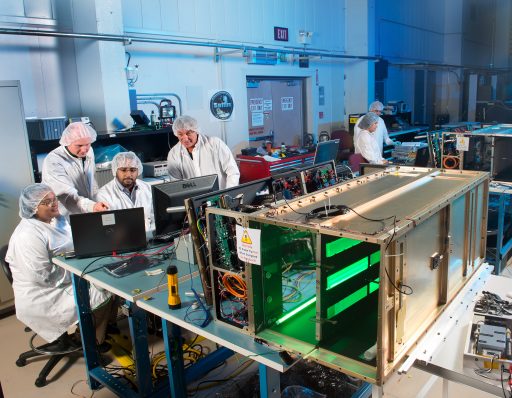
SAFFIRE-II – the second Spacecraft Fire Experiment – follows up on the first SAFFIRE run in June on the Cygnus OA-6 mission but is substantially different in its experimental setup and objectives. While SAFFIRE-I studied a large scale fire using a 1.0 by 0.4-meter piece of fabric, SAFFIRE-II set out to ignite nine smaller samples to examine the Zero-G flammability of different materials.

saffire_components-512x398.jpg


Saffire II hardware-Photo: NASA

The SAFFIRE experiments make use of the Cygnus spacecraft as a vessel to conduct experiments not possible within the strict safety regulations of ISS as a crewed spacecraft.

The uncrewed end-of-mission portion of Cygnus flights offer a safe testbed as no humans or expensive hardware is exposed to a potentially dangerous experiment. Nevertheless, SAFFIRE still is designed with safety in mind – igniting samples in a controlled environment and a closed sample container, also employing several safety barriers to prevent inadvertent ignition.

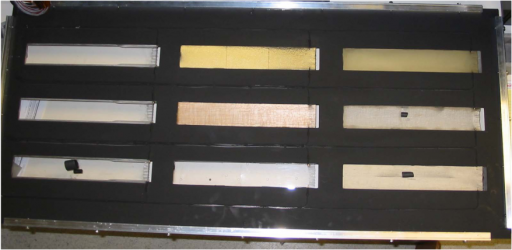
The first SAFFIRE Experiment ignited the largest intentional fire ever set in space and employed cameras and different sensors to document flame growth, temperatures and oxygen use to assess how microgravity and limited oxygen affect the properties of a fire. SAFFIRE-II hosted nine different sample cards, each 5 by 30 centimeters in size, ignited by a hot wire at the bottom and monitored by cameras and various temperature, airflow and oxygen sensors.

The SAFFIRE-II samples were selected from materials commonly found on spacecraft to assess the fire hazards they may pose in a microgravity environment. Four samples were a silicon material of different thickness, samples 5 & 6 were the same cotton-fiberglass blend ignited on SAFFIRE-I, and the others were Nomex and acrylic glass samples.

ExperimentConfig2-512x250.png


SAFFIRE II Sample Card – Photo: NASA

NASA’s Glenn Research Center is in charge of the experiment with representatives present at Orbital ATK’s Dulles Mission Control facility to send commands for the activation of the experiment for some checkouts before committing to igniting the first sample. Ignition of the first sample was confirmed at 0:14 UTC on Tuesday and it took around two and a quarter hours for all samples to burn.

According to the SAFFIRE Project, the experiment hardware functioned as intended and data & images were recorded for all samples plus air flow data to put the combustion dynamics into the required context of airflow and oxygen availability. Within 24 hours of the initiation of the experiment, NASA released the first videos of the Nomex and Plexiglas samples.

The overall goal of SAFFIRE-II is to assess the flammability of different spacecraft materials as well as their Maximum Oxygen Concentration (MOC) flammability limits. Scientists will now comb through a wealth of data delivered by SAFFIRE-II to come to firm conclusions on the flammability of the materials and to learn more about flame spread dynamic in space which has been a challenge in previous experimental setups.

Cxypdt9XEAA9YII1525-512x299.jpg


Photo: NASA Glenn

Despite decades of combustion experiments run in space, only few tests have studied spacecraft fire safety and none have studied environment sizes typical for a spacecraft fire due to obvious concerns of conducting this type of experiment in an inhabited spacecraft. Due to the lack of firm data, spacecraft manufacturers use models and standards for terrestrial fires when designing spacecraft fire safety systems.

Although this approach has been successful thus far, there is inherent risk given the level of uncertainty in modeling large-scale fires in space. SAFFIRE is the first experiment to address the need for firm data on material flammability and flame spread dynamics to make future spacecraft safer.

News on Saffire III experiment

SAFFIRE-III is planned to fly on the Cygnus OA-7 mission next year and will again involve a large piece of fabric identical to that ignited on the first study, but burn at a different air flow speed to reveal the effect of flow dynamics on the propagation of the flame front. More SAFFIRE studies are currently in development to move beyond the original plan of only three tests given the success shown by the first experiments.

News on Cubesats deployment

IMG_8040-512x341.jpg


Photo: Spire Global

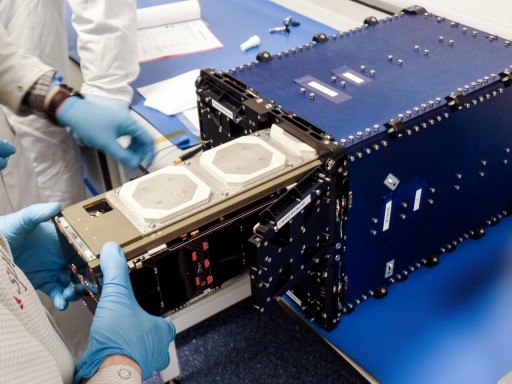
With the SAFFIRE experiment complete and data safely downlinked to the ground, Cygnus was set for one more task – deploying a group of four Lemur-2 CubeSats via an external NanoRacks CubeSat Deployer, NRCSD for short. This was not the first Cygnus flight with an external NRCSD, but the first to release the satellites into a higher orbit than ISS.

The CubeSat community desires to deploy their satellites into orbits where their operational life matches the longevity of the orbit to a) get the most use out of their spacecraft and b) avoid populating Low Earth Orbit with large numbers of dead satellites that pose collision hazards. Releasing satellites from ISS gives them an orbital life of six to twelve month (depending on solar activity), though operational CubeSat missions could operate well beyond one year.

So far, NASA had not accepted launching CubeSats into a higher orbit than ISS due to the obvious concern of the satellites passing through the Station’s orbital regime as they slowly descent towards the atmosphere. Cygnus OA-5 was the first mission approved to deliver satellites to an orbit 100 Kilometers above that of ISS, increasing the orbital lives of the small satellites to over two years, possibly as many as five years.

Lemur2-1-Joel-Getting-Placed-in-Deployer-512x384.jpg


Photo: Spire Global

Cygnus fired up its BT-4 main engine twice on Friday, lifting itself into an orbit of 495 by 504 Kilometers ahead of deploying the Lemur-2 satellites in pairs at around 21:05 UTC on Friday and 0:10 UTC on Saturday.

Nicknamed Sokolsky, Xiaoqing, Anubhavthakur and Wingo, the four satellites join the constellation of weather & ship-tracking satellites of Spire Global that currently operates 16 active satellites launched on different vehicles. The Lemur-2 satellites comply with the 3U CubeSat form factor and measure only 30 by 10 by 10-centimeters in size, hosting a pair of instruments – SENSE dedicated to tracking ship traffic on a global scale via the Automatic Identification System, and STRATOS that uses GPS signals which penetrate Earth’s atmosphere to measure parameters relevant to weather forecasters.

What's up in the future?

The next Cygnus flight is currently planned for mid-March 2017, utilizing a United Launch Alliance Atlas V rocket after a late change from Orbital’s Antares – a decision made jointly by NASA and Orbital ATK to bet on the schedule-assurance provided by Atlas V given the importance of the OA-7 mission for the overall 2017 ISS utilization plan.

For ISS logistics, two more missions are coming up before the end of the year launching from Kazakhstan and Japan. The Russian Progress MS-04 spacecraft has entered final preparations for a Thursday liftoff from the Baikonur Cosmodrome ahead of an automated docking to the Station on December 3. This will be followed by the launch of Japan’s HTV-6 mission atop an H-IIB rocket on December 9 to set up for a robotic capture of the cargo craft on the 13th.

Farewell, OA-5 and Congratulations, NASA!
 
Back
Top