Gaming Addon creators wanted , for an IOS space simulator.

JCARRION

New member
Joined
Feb 26, 2012
Messages
33
Reaction score
0
Points
0
Hi all.
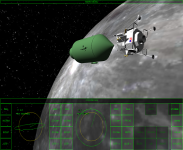
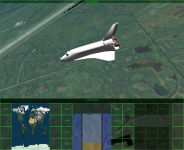
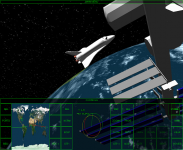
We are at the final stages of development of a Space Simulator app for iPads. It is pretty much an Orbiter running on IOS, with obviously a bit less of graphics detail , etc.. . All the major elements are there.

ok . We are planning to launch it in abt 3 months , and we are contemplating the possibility of creating addons ( mainly spacecrafts and missions ) . Given the IOS acthitecture , that would not and can not be an "open" system that everybody is able to submit spacecrafts , etc.. It requires a bit more complicated stuff, so the idea is to appoint an addon-creator company as the one and only that will be entitled to create (and sell!) ships and missions , besides the default ones shipped with the main program.

and that would cost you nothing less and nothing more than 10 spacecrafts modelled in Max/FXB at medium resolution . *(those will be the standard ones shipped with the app ) .

If any company/individual is interested on become the one and only appointed addon creator/publisher... just send us a PM.
 

Attachments

  • 20128412521.png
    20128412521.png
    195.5 KB · Views: 197
  • 2012841273.png
    2012841273.png
    257.7 KB · Views: 181
why limit to only one entity? To my knowledge, competition is a good drive for development, two or three entities should be the optimal number, just my two cents though.
 
Hi . Well , the problem is that in order to create (sell-able ) addons in the apple iTunes store there is a "critical mass" of sales , that make the whole thing profiltable or not-at all , as there are some minimum expenses (100$/year iTunes mechant account membership ) , publicicty , etc..

But most importantly , we are expecting that addon-vendor to supply us -in return for the license to do further addons - with the whole lot of ships ( i.e. space shuttle , apollo stack ( Saturn / CSM/ LEM) , N1 +NK-LOK ) and something new (sort of futuristic ) interplanetary vessel . And that's something that no addon-creator would do , if we grant licences here and there.

Anyway ... good point .. I ll discuss it with the rest of the team !

cheers
 

Attachments

  • 201284171359.png
    201284171359.png
    410.1 KB · Views: 119
Last edited:
You say this is pretty much Orbiter on iOS.

Are you using any code from Orbiter? If so, I believe that prohibits you from making any profit whatsoever from this.

Someone please correct me if I'm wrong.
 
You say this is pretty much Orbiter on iOS.

Are you using any code from Orbiter? If so, I believe that prohibits you from making any profit whatsoever from this.

Someone please correct me if I'm wrong.

I don't think he's using code from Orbiter, even if that was possible.

But it might indeed be difficult finding someone on this forum who wants a profit from their work anyhow.
 
I don't think he's using code from Orbiter, even if that was possible.

But it might indeed be difficult finding someone on this forum who wants a profit from their work anyhow.

His screenshots make it hard to tell. (At least on my phone it does.) In any case, its very highly based off of Orbiter. :P

But I tend to agree with your second point. People have jobs already (or don't) and creating add-ons a way to give back to the community.
 
You say this is pretty much Orbiter on iOS.

Are you using any code from Orbiter? If so, I believe that prohibits you from making any profit whatsoever from this.

Someone please correct me if I'm wrong.

No, It is not Orbiter on IOS. It is a Space Simulation on IOS , with functionality similar to Orbiter. but has nothing from Orbiter. For a number or reasons:

1->Basicly , Orbiter would not run on IOS, as It requires nowdays a multi-core , gigaHz level processor.

2->Orbiter bases all ITs internal states on double precision floats, that are prohibibely expensive in a IOS machine

3->The Shaders orbiter uses are using OpenGL , that simply can't work on IOS.

So there's simply not a single line of code from Orbiter.

Also , from the design point of view, It is a bit easier. While still retaining the basic playability , It won't run plugins ( as is a different project) , It can't use DLLs , ships , missions or anything related.
Also , the MFDs, are way simpler , as in an ipad the lack of mouse forbids those small buttons , so the basic mfds are way simpler :

In other fronts, we have developed what we think a better solution to the problem (i.e. the 3D orbit panel , allows you to spin -by sliding the finger- a 3d-miniplanet with Its orbit in 3D , while in Orbiter , It is not quite clear if an orbit intersects , or not , the planet.

With that 3D orbit panel , we got rid also of the align orbital planes , as It is redundant now .

Also , our orbits are suprisingly computed by finite elements - like the NUM option , but in real time -, so in a way the orbit you see in the orbit mfd is always the actual orbit (I ll take into accounts other planet's gravity ,etc ).

More differences , the controls are now just another MFD , as there's simply not space for more (also , the ipad not having a keyboard..... ).

The planets are spherical, with no sunrise albedos ,etc..
The stars are actually random , no real position stars.

The orrery ( cellestial positioning of bodies ) assumes certain simplifications , such as a flat elliptic (other than pluto) , simplifiying a lot interplanetary travels.

Anyway .. this is just mean to be a simulation to play while commuting ,or on the plane , with the iphone/ipad . We have no pretensions to make anything better than orbiter.

If you want , It is much more similar to that Space Simulator from Microsoft from the 90s...

Cheers
J
 
No, It is not Orbiter on IOS. It is a Space Simulation on IOS , with functionality similar to Orbiter. but has nothing from Orbiter. For a number or reasons:

1->Basicly , Orbiter would not run on IOS, as It requires nowdays a multi-core , gigaHz level processor.

2->Orbiter bases all ITs internal states on double precision floats, that are prohibibely expensive in a IOS machine

3->The Shaders orbiter uses are using OpenGL , that simply can't work on IOS.

So there's simply not a single line of code from Orbiter.

Also , from the design point of view, It is a bit easier. While still retaining the basic playability , It won't run plugins ( as is a different project) , It can't use DLLs , ships , missions or anything related.
Also , the MFDs, are way simpler , as in an ipad the lack of mouse forbids those small buttons , so the basic mfds are way simpler :

In other fronts, we have developed what we think a better solution to the problem (i.e. the 3D orbit panel , allows you to spin -by sliding the finger- a 3d-miniplanet with Its orbit in 3D , while in Orbiter , It is not quite clear if an orbit intersects , or not , the planet.

With that 3D orbit panel , we got rid also of the align orbital planes , as It is redundant now .

Also , our orbits are suprisingly computed by finite elements - like the NUM option , but in real time -, so in a way the orbit you see in the orbit mfd is always the actual orbit (I ll take into accounts other planet's gravity ,etc ).

More differences , the controls are now just another MFD , as there's simply not space for more (also , the ipad not having a keyboard..... ).

The planets are spherical, with no sunrise albedos ,etc..
The stars are actually random , no real position stars.

The orrery ( cellestial positioning of bodies ) assumes certain simplifications , such as a flat elliptic (other than pluto) , simplifiying a lot interplanetary travels.

Anyway .. this is just mean to be a simulation to play while commuting ,or on the plane , with the iphone/ipad . We have no pretensions to make anything better than orbiter.

If you want , It is much more similar to that Space Simulator from Microsoft from the 90s...

Cheers
J

It's much easier just to say no. :lol:

Alright then, gotcha. I wish you and your team luck in this endeavor, and in your quest to find add-on devs. :tiphat:
 
hey ;) , I was just practising .. for the day that Orbiter's team layers fall over us like hailstorm!

Cheers
j
 
How about the financial side of it? I know, it isn't nice to talk about the money, but lets just pretend, I misunderstood it:

you want a (one man) team of exclusive dedicated add-on developers for your IOS project to provide spacecraft and scenery for your simulation.

But you plan of course, to make some limited amounts of money with the simulation to compensate for the annoyances that Apple throws at you.

Now, the tricky part: The add-on team should not be part of your project as subcontractor, but deliver the spacecraft that should be there. How? Wouldn't it make more sense to have a classic contract? Which spacecraft, how many spacecraft, which quality aspects, how much artistic freedom, at which points will you want to interfere in the design process?

PS: Your point 1 is wrong. I barely manage to let Orbiter use 60% of my old Duron CPU here. The rendering of Orbiter is the bottleneck, not the physics. Sadly the mobile devices today have GPUs, but no GPGPUs with OpenCL-like abilities... that would be rock'n'roll for state vector propagation.
 
How about the financial side of it? I know, it isn't nice to talk about the money, but lets just pretend, I misunderstood it:

you want a (one man) team of exclusive dedicated add-on developers for your IOS project to provide spacecraft and scenery for your simulation.

But you plan of course, to make some limited amounts of money with the simulation to compensate for the annoyances that Apple throws at you.

Now, the tricky part: The add-on team should not be part of your project as subcontractor, but deliver the spacecraft that should be there. How? Wouldn't it make more sense to have a classic contract? Which spacecraft, how many spacecraft, which quality aspects, how much artistic freedom, at which points will you want to interfere in the design process?

PS: Your point 1 is wrong. I barely manage to let Orbiter use 60% of my old Duron CPU here. The rendering of Orbiter is the bottleneck, not the physics. Sadly the mobile devices today have GPUs, but no GPGPUs with OpenCL-like abilities... that would be rock'n'roll for state vector propagation.

No , I m afraid I didnt explained it correctly.

We are a team of 4-5 programmers which have been coding for the last 8 months to create a Space simulator project for IOS ( and android , but that's other story ).

We have been quoted around 1K USD per model (mid-poly count) , so that;s around 30Ks. So we were considering an echange of the models for free , in echange of a "license" to publish -for money - addons for our project.

i.e. : Studio "A" creates the required 3D models as per specs.
Studio "B" (us) , sells the SpaceSimulator on the IOS.. for a profit.

Then Studio "A" *and only *Studio "A" has the license to sell further addons for our SpaceSimulator.

If the SpaceSimulator is a big hit (say hypotetically 100K-500K copies ) , then the market for addons' , I mean the EXCLUSIVE market for addons is a very juicy one.

Back to the CPUs , etc.. computers (as in PCs ) are really fast on doing math. The problem with IOS , is that the ARM cpus are extraordinarly *sloooow* doing those math , so any double-precision math is out of question. Indeed we have to use fixed precision 64 bit arithmethic, a bit dodgy , but orbits seems surprisingly stable.

Even without rendering , a direct port of Orbiter into a 1GHZ ARM cpu (the ones in iphones ) would run at a whooping 3 spf (Seconds per Frame!! , not frames per second ) . Totally out of the question.

O.t.o.h , We are on the edge of achieving 30 fps , which is pretty much acceptable for a pocket application .

cheers
J
 
Wait a minute... you don't use the VFP of it? Should be still better than 64 bit fixed point calculus, the 4S has a full VFP not the lite version like many other Cortex ARMs in mobile devices. I am pretty sure, you can have a decent BLAS implementation working on the VFPv3, but I am no ARM expert then... I only like some features of the ARM CPU.

I would say it is simpler you act as single point of contact* for your space simulator customers and have a spacecraft design team as "subcontractor". This way, you can also spread the risks a bit fairer and have a clearer project structure. If you need the resources for another project, the subcontractor can buy the game engine "shares" of the project and do all of it.

And if the customers don't want it that much, both of you lost only a bit of time, can terminate the project with good feelings and nobody had to put all eggs into one basket, or bear more risks than the others.

* Very important and often not done for intentional happy buck passing. Not having a SPOC is violating the first rule of capitalism: Make it as easy as possible for the customer to give you his money.
 
1->Basicly , Orbiter would not run on IOS, as It requires nowdays a multi-core , gigaHz level processor.

Actually, I'm currently running orbiter on a very old laptop that has way less computing power than the iPad. Just sayin' that a space simulator on the iPad doesn't "obviously" have to look worse than Orbiter.

Anyways, about the business model... While I'm not in a position currently to seriously consider the offer, I'm not sure if I would consider it if I could. One problem I see is that you don't provide a business study with expected sales of the main program, which would be the only way I could get an idea of how well my add-ons will actually sell. You don't give any pricing for your game, so I don't know how much I might be able to ask for add-ons. There's simply no information here that could let me make a business decision. I am basicaly contributing for free to a game. That's called investment. What I get out of it is not a payoff, but only the right to do payed work for it, although exclusively so, which can or cannot be a good thing. Sure, if I'm the only one able to sell add-ons, noone else can cut in on my cake. But this also means that there's much less cake to begin with. If there were several people making add-ons for it, the program might sell a lot better, and I might actually be able to make more money off of it as when I was the only one that can sell add-ons, but only to so many people.
By making the meshes for the actual game to win this right, I am essentially investing in your project, but instead of getting a fair share in it, I get a dubious business opportunity. It's a high risk.

On the other hand, you mentioned that you thought about 3000 dollars per model. That makes me wonder a bit what quality you really have in mind, another thing you have been a bit vague here (although I assume you have a PDF with exact design specs ready to send to applicants... you do, do you?). It's also not quite clear how the job will be handed out. Do I just present my resume, and if you like my work best, I get the Job? Or do I have to show up with a part of the meshes already done? The second will provide further deterrant to anyone who might be interested, while the first can land you in a huge legal mess if the author doesn't deliver satisfactory work and you have to consider getting the meshes from somewhere else.

If you're short on the money (and who isn't) I would suggest crowdsourcing for a small project like this. There's plenty of unemployed guys in low-wage countries that will make your 10 meshes for only 10K, and call it the largest paycheck of their lives.
On the other hand, Your current model of letting somebody invest without making him an actual partner, will mostly attract people that think they can shave it close by dropping quality, especially since they won't have any competition later on.

Another thing worth thinking about: You need meshes for your program, but what you offer in return is partly coding work (at least I assume). You won't get the best meshes this way. No small studio will be interested in the risks involved here, no large studio could be interested in anything other than buying you wholesale, so single persons are pretty much the only one's that will apply. They have to know how to Mesh and to Code at the same time, and they're probably doing it in their free time. The quality will suffer, and even if the whole thing pans out, add-on releases will be few and far apart.
 
Last edited:
That would be cool not to try to take us the finest developpers over there. Orbiter needs them. Thank you.
 
If the best quote you got for mid-poly models was $1k per, I don't think you were looking hard enough, tbh.
 
If the best quote you got for mid-poly models was $1k per, I don't think you were looking hard enough, tbh.

I know right?

Ever heard of BlendSwap or Turbosquid?
 
I know right?

Ever heard of BlendSwap or Turbosquid?

Yep ,. we know them . The quality is so-so , and more importantly ,the models are not homogeneous -meaning that the LEM has been modelled by mister Ahsvarashi , and the Apollo CM was modelled by Mr Roshiksy , with a diferent poly count , use of shaders ,etc...

We'd need someone to build the fleet (shuttle , apollo moonshot , russian moonshot , and maybe geminis ) on the same guidelines of sharing materials , shaders and a consistent poly count.

That's the reason we are looking for a experienced rocket modeller.

Cheers

---------- Post added at 08:56 AM ---------- Previous post was at 08:50 AM ----------

Wait a minute... you don't use the VFP of it? Should be still better than 64 bit fixed point calculus, the 4S has a full VFP not the lite version like many other Cortex ARMs in mobile devices. I am pretty sure, you can have a decent BLAS implementation working on the VFPv3, but I am no ARM expert then... I only like some features of the ARM CPU.

.

Our physics guy has benchmarked both the latest 4S , Ipad2 and iPad3 .
The bottleneck is definitely on the CPU. Problem is that ARMs have floating point/vector units that deal with Single precision (IEE) floats (32.bits ) . But for anything of this size (planets orbits , etc) we need double precision floats. These are computed very sloooooooooooooooooooly by software (the ARM lacks a efficient double floating logic ) , so at the end of the day , given the most operations we need is simple integration (forces-Accel-Vel-Pos ) , that can be achieved in a faster way by astute logic on fixed point 64 bits/
 
Our physics guy has benchmarked both the latest 4S , Ipad2 and iPad3 .
The bottleneck is definitely on the CPU. Problem is that ARMs have floating point/vector units that deal with Single precision (IEE) floats (32.bits ) . But for anything of this size (planets orbits , etc) we need double precision floats. These are computed very sloooooooooooooooooooly by software (the ARM lacks a efficient double floating logic ) , so at the end of the day , given the most operations we need is simple integration (forces-Accel-Vel-Pos ) , that can be achieved in a faster way by astute logic on fixed point 64 bits/

I remember reading that recent implementations of the cortex support double precision operands in SIMD instructions. Not sure how much this applies to the iPhone. When Microsoft made the mutation ad against Linux, they should have better targeted ARM CPUs, it is pretty hard to find two different manufacturers that produce the same ARM CPU despite using the same standards.
 
Actually, I'm currently running orbiter on a very old laptop that has way less computing power than the iPad. Just sayin' that a space simulator on the iPad doesn't "obviously" have to look worse than Orbiter.

Anyways, about the business model... While I'm not in a position currently to seriously consider the offer, I'm not sure if I would consider it if I could. One problem I see is that you don't provide a business study with expected sales of the main program, which would be the only way I could get an idea of how well my add-ons will actually sell. You don't give any pricing for your game, so I don't know how much I might be able to ask for add-ons. There's simply no information here that could let me make a business decision. I am basicaly contributing for free to a game. That's called investment. What I get out of it is not a payoff, but only the right to do payed work for it, although exclusively so, which can or cannot be a good thing. Sure, if I'm the only one able to sell add-ons, noone else can cut in on my cake. But this also means that there's much less cake to begin with. If there were several people making add-ons for it, the program might sell a lot better, and I might actually be able to make more money off of it as when I was the only one that can sell add-ons, but only to so many people.
By making the meshes for the actual game to win this right, I am essentially investing in your project, but instead of getting a fair share in it, I get a dubious business opportunity. It's a high risk.

On the other hand, you mentioned that you thought about 3000 dollars per model. That makes me wonder a bit what quality you really have in mind, another thing you have been a bit vague here (although I assume you have a PDF with exact design specs ready to send to applicants... you do, do you?). It's also not quite clear how the job will be handed out. Do I just present my resume, and if you like my work best, I get the Job? Or do I have to show up with a part of the meshes already done? The second will provide further deterrant to anyone who might be interested, while the first can land you in a huge legal mess if the author doesn't deliver satisfactory work and you have to consider getting the meshes from somewhere else.

If you're short on the money (and who isn't) I would suggest crowdsourcing for a small project like this. There's plenty of unemployed guys in low-wage countries that will make your 10 meshes for only 10K, and call it the largest paycheck of their lives.
On the other hand, Your current model of letting somebody invest without making him an actual partner, will mostly attract people that think they can shave it close by dropping quality, especially since they won't have any competition later on.

Another thing worth thinking about: You need meshes for your program, but what you offer in return is partly coding work (at least I assume). You won't get the best meshes this way. No small studio will be interested in the risks involved here, no large studio could be interested in anything other than buying you wholesale, so single persons are pretty much the only one's that will apply. They have to know how to Mesh and to Code at the same time, and they're probably doing it in their free time. The quality will suffer, and even if the whole thing pans out, add-on releases will be few and far apart.

Well , we are definitely not trading "meshes" for coding . The coding is pretty much done (being curerntly betatested on iphones/pads/droids ) . Has been 4x8 pretty much 4 man-years of programming . We are not a 1 dude "indie" studio , most of us have 10+ years exp on PS2/PS3 development (me on particular more than 20 years on professional AAA games for Playstation ) .

We even have 1 artist ,for the 2D stuff , logos ,etc.. The offer in question was to trade some models for the exclusive to develop addons for the app.

Pricing model ? well , that deppends on our publisher , but that would be on the region of 5 quid (we are based on uK ) that would be around 6 dollars .

Pricing model of the addons ? Entirely up to the appointed developer. While not expert on this , Id suggest something very cheap , on the dollar range or so.

Expected copies ? Man : In this industry the sales forecasts are traditionally worthless . Games planned to sell millions , sell a couple dozen copies, and viceversa. If you see in the gaming industry anyone that gives you a hard estimate of sales, then he is not in the game. Other than big franchises (GTA,etc) , the final sales figures are totally lotery . Deppends on the project , the mood of the customers , the quality of the marketing and 100 other factors imposible to model beforehand .
Since orbiter is for free (and not quite sure how many downloads ) , the only similar reference would be that F-Sim thing , by all means an inferior product (basicly , landing the shuttle is just one of the zillion missions we include ) , they have apparently shipped 300.000 downloads, so It seems to be a market for the space sim fans.

Does it involve risk? Well , if the risk is working a couple weeks modelling 10-30 ships , with no more cost than the time , that's nothing compared to the expenses we are gambling on it . From the studio's office rent , to the servers/ITcosts, the programmers wages ,.taxes , etc.. So this is not "we do the code , you do the meshes" . Meshes (or people able to make them ) are a millions , most of them creating them for fun/free.

Programming o.t.o.h is a full time expensive job , with more C++ app coders charging 50+ by the HOUR.

so that's de deal , free models in echange of a license. If you think that's risky , fair enough , -so far we had a couple poeple interested- . But don't think by a second that is like contributing to 50% of the project just for doing a dozen meshes. We could get that almost for free (just for the people rocking up at the studio trying to fish the 3D modeller job , making tests ). We are more interested to have a continous -quality- spacecraft modeller adding models sellable as addons- (1$ ?) once the project is shipped . If our estimates are sound , that would be a very juicy market.

anyway ,.... Thanks for your advice.
J
 
Programming o.t.o.h is a full time expensive job , with more C++ app coders charging 50+ by the HOUR.

50 Euro is expensive? God bless my rich customers! :hailprobe:
 
Back
Top