
You are using an out of date browser. It may not display this or other websites correctly.
You should upgrade or use an alternative browser.
You should upgrade or use an alternative browser.
Humor Random Comments Thread
- Thread starter Tex
- Start date


mojoey
Bwoah
- Joined
- May 26, 2011
- Messages
- 3,623
- Reaction score
- 0
- Points
- 61
There's no such thing as multitasking... It's "rapid task switching", I thought my boss was going to die of apoplexy as he was griping at me to multitask a few years ago.
When I'm going to be yelled at anyway, I always try to make it worth my while.
My brother taught me that the best way to handle being in trouble, is to tell them that it seemed like a good idea at the time.
Mind you, he's been in the same job for 12 years, and well...he's my brother, take this advice with a grain of salt


Czech is a weird word. Czech is actually Tchèque in French, and it is pronounced the same way as in English. However, in English, the z is suddenly transformed into an h in order to form the ʃ (ch) sound. In French, the ch is there, and the t prevents from pronouncing like chèque, with a soft ch. The z is meaningless and should be replaced by h, no?
For once, English seems inconsistent. Usually, French is a pro in
inconsistencies...
For once, English seems inconsistent. Usually, French is a pro in
inconsistencies...
Last edited:

PenguinMan94
New member
- Joined
- Nov 13, 2013
- Messages
- 22
- Reaction score
- 0
- Points
- 0
Is it just me or do I not mind Comic Sans?
Last edited:

Last edited:
PenguinMan94
New member
- Joined
- Nov 13, 2013
- Messages
- 22
- Reaction score
- 0
- Points
- 0
Comic Sans
Yeah it seems to be an older 2000's kind of thing.
Yeah it seems to be an older 2000's kind of thing.
Linguofreak
Well-known member
Czech is a weird word. Czech is actually Tchèque in French, and it is pronounced the same way as in English. However, in English, the z is suddenly transformed into an h in order to form the ʃ (ch) sound. In French, the ch is there, and the t prevents from pronouncing like chèque, with a soft ch. The z is meaningless and should be replaced by h, no?
"Cz" was at one point used for /tʃ/ and related sounds in a number of Slavic languages with Latin orthographies. Polish, from what I've read, is the only major east European language that still uses "cz" instead of "č", but the historical usage of "cz" for /tʃ/, and the fact that English tends not to use diacritics, are why "Czech" is spelled that way in English. It's not a native English spelling.

It seems that I'm rarely actually in touble here at work, but I can sure stir some up. Last two weeks have been some evidence of that...
Our work management processes have been heading downhill over the past few years. And I have some oddball qualifications that (every now and again) I have to serve as a QA inspector. As a worker, I "know" how something is supposed to be hooked up, work, etc. But in my capacity as a QA inspector I have to make sure all the i's are dotted and t's are crossed. 3 times in the past 3 weeks the work packages were flat out wrong and I wouldn't sign off (much to the chagrin of the managers). I can be as hard nosed as they can.
The best part is, they cannot "force" me to sign. It's illegal to interfere or coerce a QA rep in the performance of their duty (mandatory jail and fine). And in this environment, just about any bad press would cause some managers to be unemployed.
Our work management processes have been heading downhill over the past few years. And I have some oddball qualifications that (every now and again) I have to serve as a QA inspector. As a worker, I "know" how something is supposed to be hooked up, work, etc. But in my capacity as a QA inspector I have to make sure all the i's are dotted and t's are crossed. 3 times in the past 3 weeks the work packages were flat out wrong and I wouldn't sign off (much to the chagrin of the managers). I can be as hard nosed as they can.
The best part is, they cannot "force" me to sign. It's illegal to interfere or coerce a QA rep in the performance of their duty (mandatory jail and fine). And in this environment, just about any bad press would cause some managers to be unemployed.

Where I work we had a big wig who liked to send all his emails in bright blue comic sans. The guy was high up on the totem pole but he could never figure why people had trouble taking him seriously. I guess none of his flunkies had the heart to tell him it was his stupid choice of font.
Re. causing trouble at work: I find that being really good at my job and acting professional gives me a lot more leeway in doing things the way I want them done, instead of the way idiots (who suck at their jobs) want them done. It causes trouble sometimes, but in the end they can't do what I do, so they lose. And I've been there long enough and gotten good enough to build people's confidence in me.
Re. causing trouble at work: I find that being really good at my job and acting professional gives me a lot more leeway in doing things the way I want them done, instead of the way idiots (who suck at their jobs) want them done. It causes trouble sometimes, but in the end they can't do what I do, so they lose. And I've been there long enough and gotten good enough to build people's confidence in me.

MaverickSawyer
Acolyte of the Probe
It seems that I'm rarely actually in touble here at work, but I can sure stir some up. Last two weeks have been some evidence of that...
Our work management processes have been heading downhill over the past few years. And I have some oddball qualifications that (every now and again) I have to serve as a QA inspector. As a worker, I "know" how something is supposed to be hooked up, work, etc. But in my capacity as a QA inspector I have to make sure all the i's are dotted and t's are crossed. 3 times in the past 3 weeks the work packages were flat out wrong and I wouldn't sign off (much to the chagrin of the managers). I can be as hard nosed as they can.
The best part is, they cannot "force" me to sign. It's illegal to interfere or coerce a QA rep in the performance of their duty (mandatory jail and fine). And in this environment, just about any bad press would cause some managers to be unemployed.
Considering your job... Thank you much for doing that.

I dig it. I know I am by no mean irreplacable. There's multitudes of way that I could lose my job. The problem is that I'm one of the few that can actually do what they say they can do. There's plenty (and I mean plenty) about nuclear power that I don't understand, the way some of this stuff works is a mystery to me. Designed in they 60's with equipment that should be listed as antique, it's a testament to the design that this stuff works at all. The problem is that all this analog equipment "works" in a nuclear environment, solid-state stuff, not so much. Zoomies make things act weird.
"Modern" instument mechanics can be trained in a matter of 12-18 months. That training would be totally lost in the nuclear industry. A transmitter is a transmitter is a transmitter, signal in-signal out, but some of this stuff I'd only seen in textbooks. When I moved from fossil power to nuclear, I was amazed that this stuff worked at all.
Think Orion MPCV (fossil) vs Gemini or Apollo (nuclear)
But it works, It's just a bit manpower intensive. Some of our managers can't seem to understand that you can't run a nuclear plant like a production factory.
Remember the scene in Apollo 13 where Ed Harris wanted to find the drawings, the torque value of some bolts and the name of the guy who torqued them? We have that level of accountability.
"Modern" instument mechanics can be trained in a matter of 12-18 months. That training would be totally lost in the nuclear industry. A transmitter is a transmitter is a transmitter, signal in-signal out, but some of this stuff I'd only seen in textbooks. When I moved from fossil power to nuclear, I was amazed that this stuff worked at all.
Think Orion MPCV (fossil) vs Gemini or Apollo (nuclear)
But it works, It's just a bit manpower intensive. Some of our managers can't seem to understand that you can't run a nuclear plant like a production factory.
Remember the scene in Apollo 13 where Ed Harris wanted to find the drawings, the torque value of some bolts and the name of the guy who torqued them? We have that level of accountability.
Last edited:

- Joined
- Jun 2, 2008
- Messages
- 2,299
- Reaction score
- 447
- Points
- 98
- Location
- Valmorea
- Website
- www.fabri91.eu

Freedom's big, yo.
Woah.
But yes, in most fictional settings (BSG for example, but also Star Wars and Star Trek) "fighters" tend to be strangely small to real examples, such as that P-47 (not sure though, was it that big?) or this Su-33:

MaverickSawyer
Acolyte of the Probe
I dig it. I know I am by no mean irreplacable. There's multitudes of way that I could lose my job. The problem is that I'm one of the few that can actually do what they say they can do. There's plenty (and I mean plenty) about nuclear power that I don't understand, the way some of this stuff works is a mystery to me. Designed in they 60's with equipment that should be listed as antique, it's a testament to the design that this stuff works at all. The problem is that all this analog equipment "works" in a nuclear environment, solid-state stuff, not so much. Zoomies make things act weird.
"Modern" instument mechanics can be trained in a matter of 12-18 months. That training would be totally lost in the nuclear industry. A transmitter is a transmitter is a transmitter, signal in-signal out, but some of this stuff I'd only seen in textbooks. When I moved from fossil power to nuclear, I was amazed that this stuff worked at all.
Think Orion MPCV (fossil) vs Gemini or Apollo (nuclear)
But it works, It's just a bit manpower intensive. Some of our managers can't seem to understand that you can't run a nuclear plant like a production factory.
Remember the scene in Apollo 13 where Ed Harris wanted to find the drawings, the torque value of some bolts and the name of the guy who torqued them? We have that level of accountability.
So does aviation. God help you if you anger the FAA, because no one else can! :lol:
Agreed, I think that's why the QA manager likes that I'm on his team. I spent 10 years working on Naval Aircaft. The mindset carried over to the power industry nicely.
Unless you happen to be a bean counting manager who's annoyed that I'm in between him and a job completion.
Unless you happen to be a bean counting manager who's annoyed that I'm in between him and a job completion.

For once, English seems inconsistent.
FOR ONCE? Ha... [ame="http://en.wikipedia.org/wiki/Ghoti"]Hahahahahaaaaa![/ame]
Seriously, consistent pronounciation rules are almost nonexistant in english when compared to other languages.

- Joined
- Mar 31, 2012
- Messages
- 2,296
- Reaction score
- 4
- Points
- 0
Czech is a weird word. Czech is actually Tchèque in French, and it is pronounced the same way as in English. However, in English, the z is suddenly transformed into an h in order to form the ʃ (ch) sound. In French, the ch is there, and the t prevents from pronouncing like chèque, with a soft ch. The z is meaningless and should be replaced by h, no?
As Linguofreak noted, it makes perfect sense if you are Polish :thumbup:
You want to write /tʃɛx/. In Polish, we use cz for /tʃ/ and ch for /x/, which gives you Czech.
It's the French spelling which actually makes sense, not English one. Again, you want to write /tʃɛx/. One problem is that French has no /x/ sound, so it becomes /k/, thus /tʃɛk/. But after this point, it is just a simple transliteration:
/t/ = T
/ʃ/ = ch
/ɛ/ = e
/k/ = que.
In English, if you were writing phonetically, you should be writing Check.
(Now, why the French still use baroque spellings like que instead of simply k is beyond me, but on the other hand I must admit that it gives the language some charm. I mean, Qu'est-ce que, definitely looks better than keske, n'est-ce pas?)
Seriously, consistent pronounciation rules are almost nonexistant in english when compared to other languages.
Indeed. Polish spelling is considered very difficult, but it's only because certain sounds can be written in two ways, i.e.
/x/ = ch or h (well, technically, h is for /:/ but modern Poles tend to say /x/ everywhere)
/ʐ/ = rz or ż
/ɲ/ = ni or ń
etc.
This makes writing difficult unless you know more detailed rules, or you have just learned which word is spelled which way.
But reading is very straightforward.
Last edited:
Linguofreak
Well-known member
Woah.
But yes, in most fictional settings (BSG for example, but also Star Wars and Star Trek) "fighters" tend to be strangely small to real examples, such as that P-47 (not sure though, was it that big?) or this Su-33:
The P-47 was fairly big for its era. Sci-fi fighters tend to be in the same size range as WWII fighters. Modern real life fighters tend to have the same wingspan as a WWII fighter, but are proportioned differently, and tend to have the length and weight of a WWII bomber.
That was a great post kamaz. It is always impressive to see the differences in the national words. Another great example is Montreal, which is pronounced as it is in English, while in French, we remove the t ("Monréal").
Pronounciation is definitely the biggest challenge in English. French is also sometimes hard on this one...Seriously, consistent pronounciation rules are almost nonexistant in english when compared to other languages.

- Joined
- Nov 23, 2008
- Messages
- 1,681
- Reaction score
- 4
- Points
- 38
Woah.
But yes, in most fictional settings (BSG for example, but also Star Wars and Star Trek) "fighters" tend to be strangely small to real examples, such as that P-47 (not sure though, was it that big?) or this Su-33:
HMmmmm
Nah, I disagree. I mean sometimes, but I wouldn't just say MOST.
X wings and related craft are about the same as typical present day combat aircraft

Tie-bomber
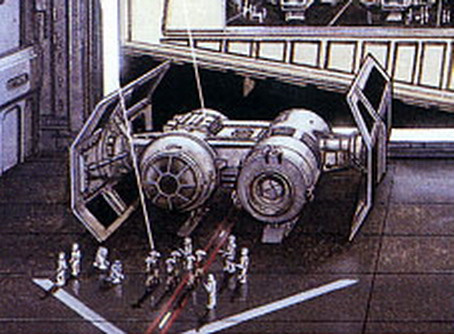
Even the miniscule tie fighter is pretty big

Some things like the Jedi interceptor are rediculously tiny, but they are specialty fighters, common in the movie but rare in the universe.
Last starfighter:
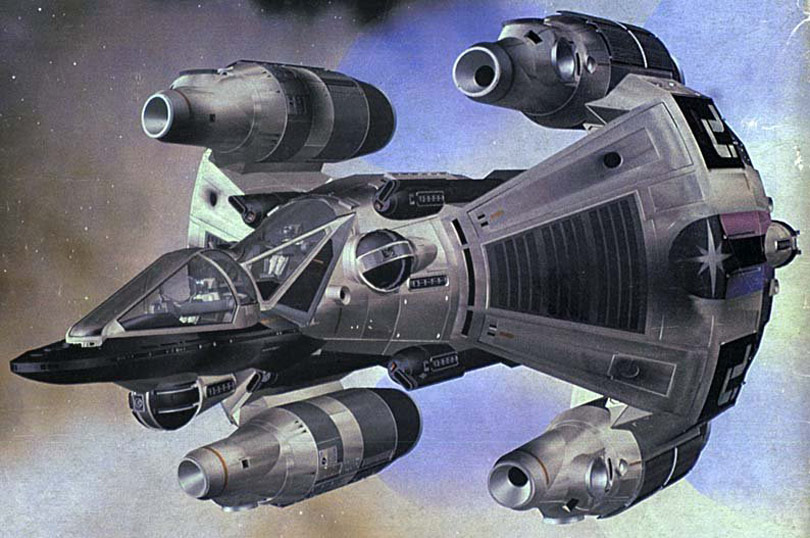
This thing looks pretty big

Stargate fighter, not tiny either

Personally I think starfighters typically just look small compared to all the gigantic sci-fi ships that frankly would dwarf even an aircraft carrier
- Joined
- Mar 31, 2012
- Messages
- 2,296
- Reaction score
- 4
- Points
- 0
Pronounciation is definitely the biggest challenge in English.
I had 7 semesters of English in high school, and in that time we went through 9 English teachers. (1990s in Poland -- functional English was enough to get you a management job in a Western corp, hence the rotation). Anyway, the hard part was that each one of them had a different view on the correct pronounciation of the word schedule. Literally, it sometimes happened that the pronounciation correct one month would be wrong next month. Per Webster:
schedule
noun sched·ule \ˈske-(ˌ)jül, -jəl, Canada also ˈshe-, British usually ˈshe-(ˌ)dyül\
...take your pick.
I completely stopped caring what is the "correct" English pronounciation after finding this map: http://imgur.com/a/28S4v
Last edited:
Similar threads

- Replies
- 7
- Views
- 4K


- Replies
- 34
- Views
- 9K
