
MarkWatney2015
The Desktop Orbinaut
- Joined
- Oct 14, 2016
- Messages
- 1,274
- Reaction score
- 1,627
- Points
- 128
- Location
- San Jose Del Monte, Bulacan
- Preferred Pronouns
- He/him
Must be a major onboard programming error then


Must be a major onboard programming error then

Must be a major onboard programming error then


I don't think so, otherwise the plan would be to land with only 43 seconds of prop."Engine failure" is a bit severe for the engine. Looks like it performed too well ! It probably never received the cutoff command and burned all its fuel like an honest rocket engine is supposed to do

I'm sorry, this is total BS.
How is putting a little unmanned probe (something several nations have done) harder than sending humans back to the moon, to stay this time?
And may I remind you, Artemis 1, even though it was not supposed to land, completed it's design mission perfectly.

Isn't Vostochny supposed to replace Baikonur, and wasn't that location chosen because of the access to 51.6º orbits? Luna 25 was launched into a 51.7º orbit, so I guess that those people will have to be evacuated every time there is a launch from Vostochny to the ISS.... Anyway, so no extra difficulty there. And the rocket didn't go in the "opposite direction", the spy sats usually launched from Vostochny go North, Luna 25 went East, which is "standard".the mission is so difficult that it was necessary to temporarily evacuate the population from the houses, as the rocket took off in the opposite direction
Completely irrelevant for Luna 25 at the time it failed. It was (simply) changing orbits.no one has ever been able to land the apparatus, but the pole of the Moon


Ah, but that worked fine.the mission is so difficult that it was necessary to temporarily evacuate the population from the houses, as the rocket took off in the opposite direction
As said before, totally irrelevant. And NASA is sending humans to the exact same place.no one has ever been able to land the apparatus, but the pole of the Moon
I'm not interested in an argument, you took my message, which I sent to Thunder Chicken, which had a painful joy from a failed missionAll you are trying to do is make yourself feel better about your country's space program.
I'm not either, it just felt like you were attacking my country's space program.I'm not interested in an argument

We‘re finished, sorry.Take it private, guys.
I'm not interested in an argument, you took my message, which I sent to Thunder Chicken, which had a painful joy from a failed mission

 t.me
t.me
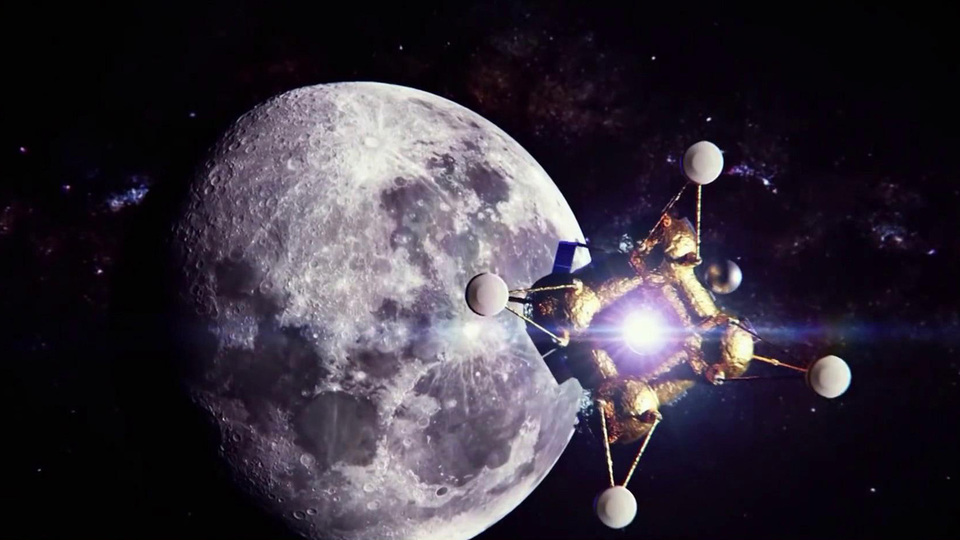
 www.1tv.ru

 tass.ru
a repeat of the mission in 2025 is also being consideredOf course, the article does not mention how the development and schedule is accelerated...
 tass.ru
a repeat of the mission in 2024 is also being considered
Роскосмос рассмотрит возможность повторения миссии на Южный полюс Луны в 2025-2026 годах
Незавершенная миссия не ставит "на стоп" освоение Луны, отметил гендиректор корпорации Юрий Борисов
But that would require that a flight prototype was constructed for the mission, which is rather unusual in Russian spaceflight. The procedure more common in the western world, and became even here unusual in the late 1990s, due to the higher costs over a classic subsystem mockup.


